
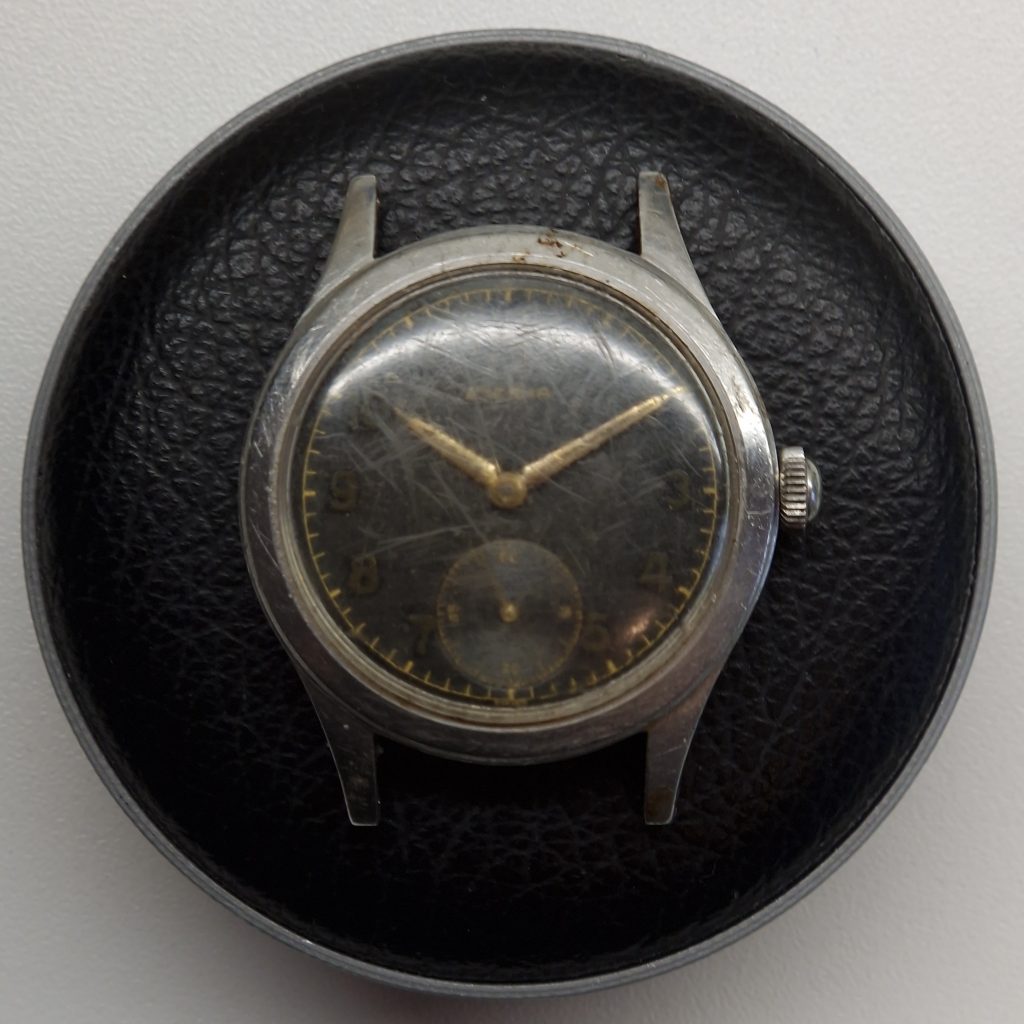
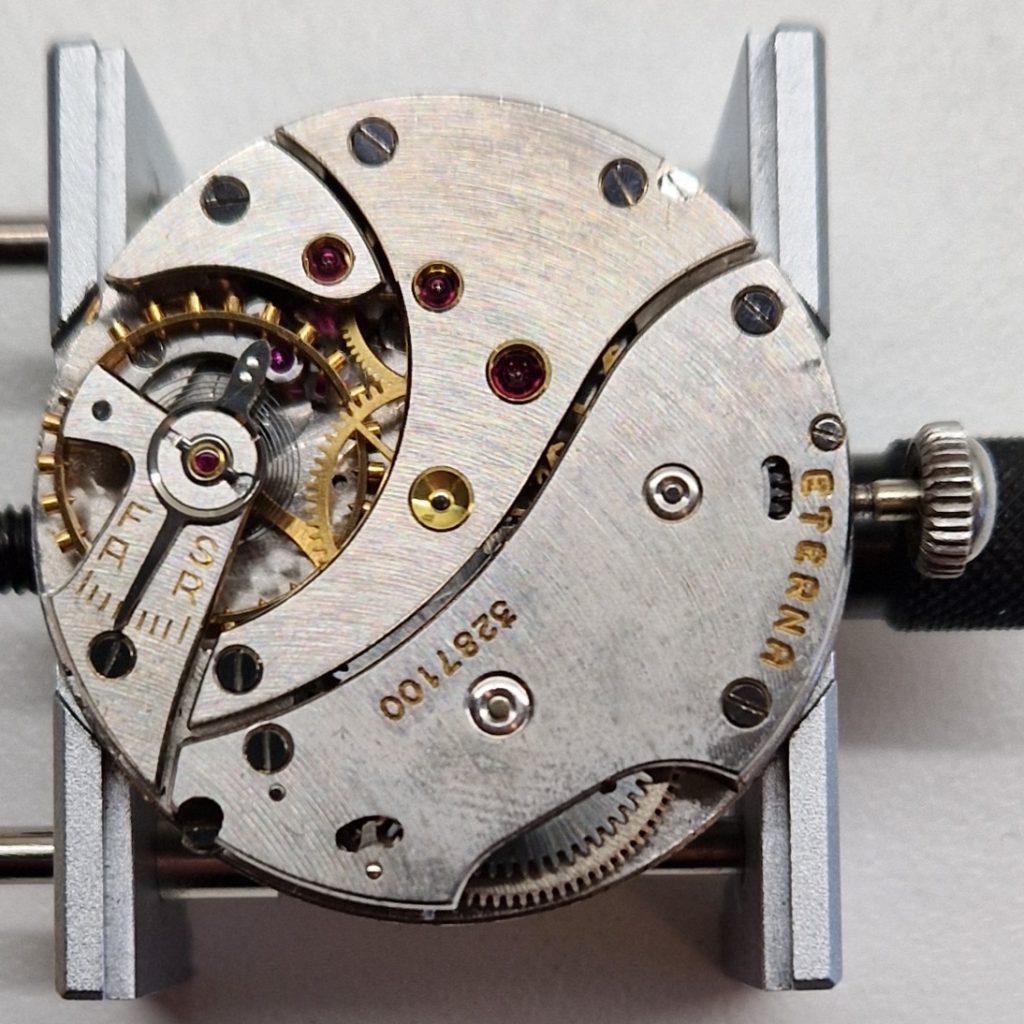
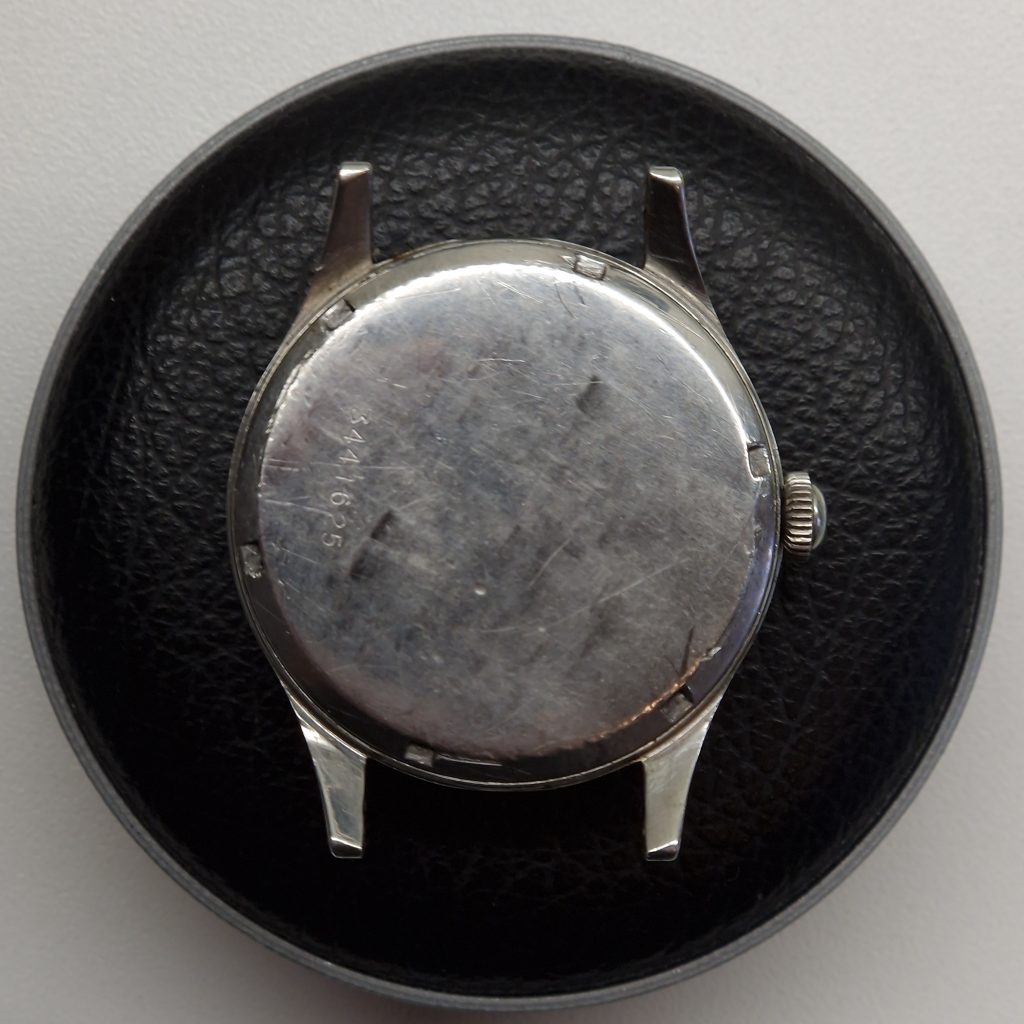
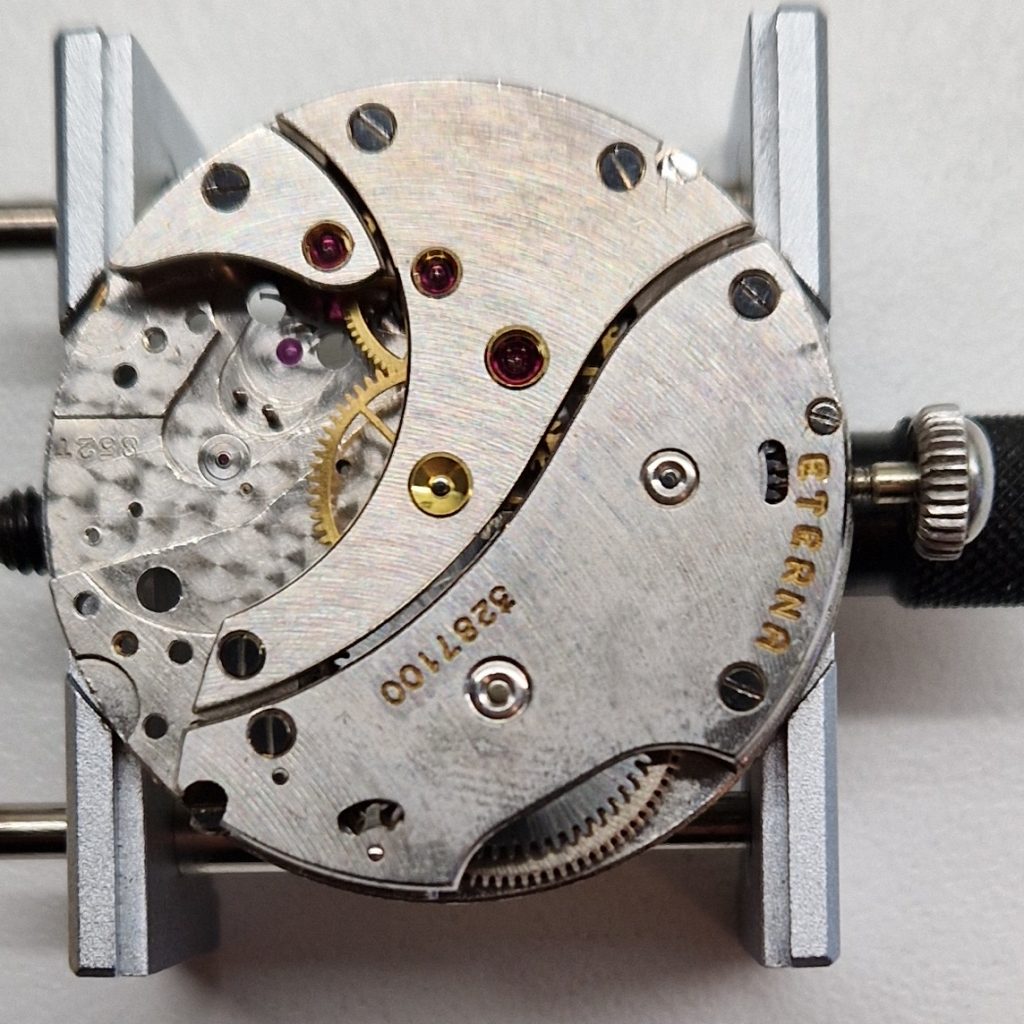
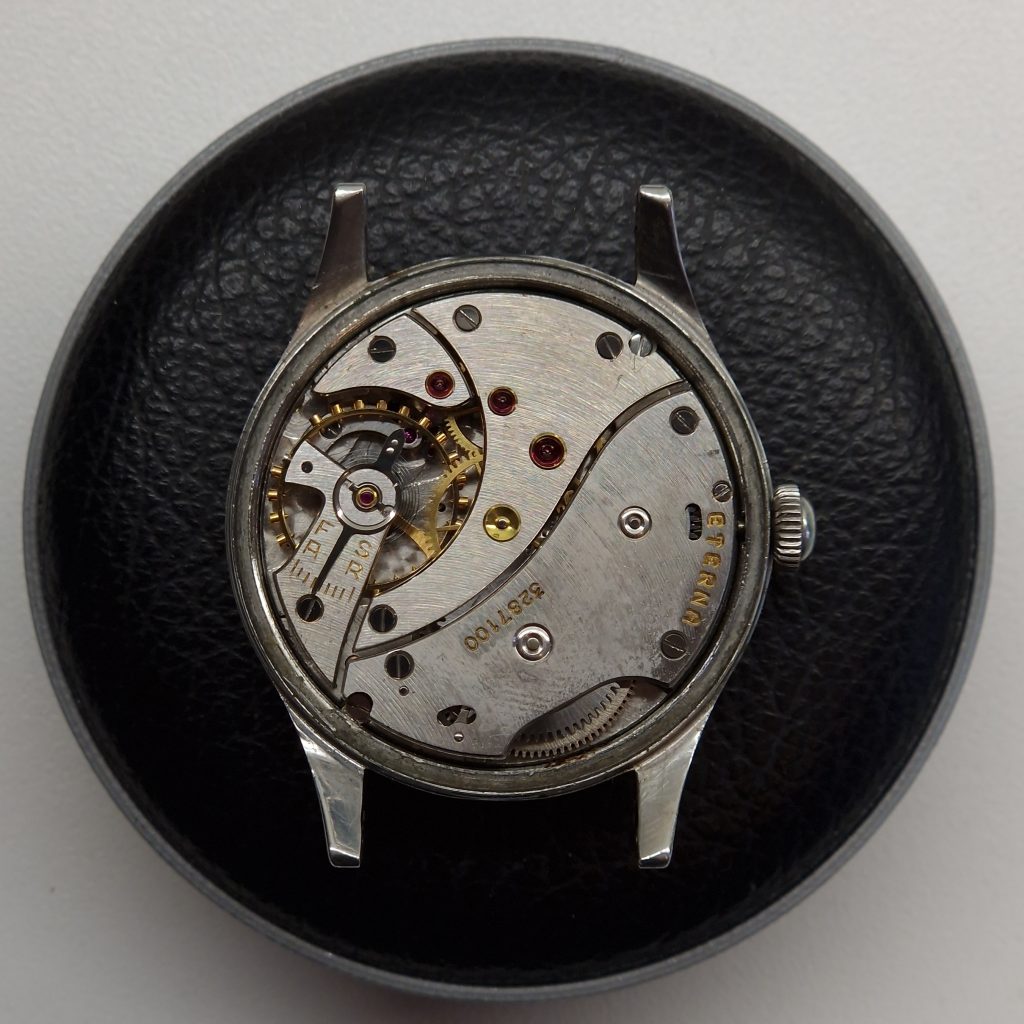
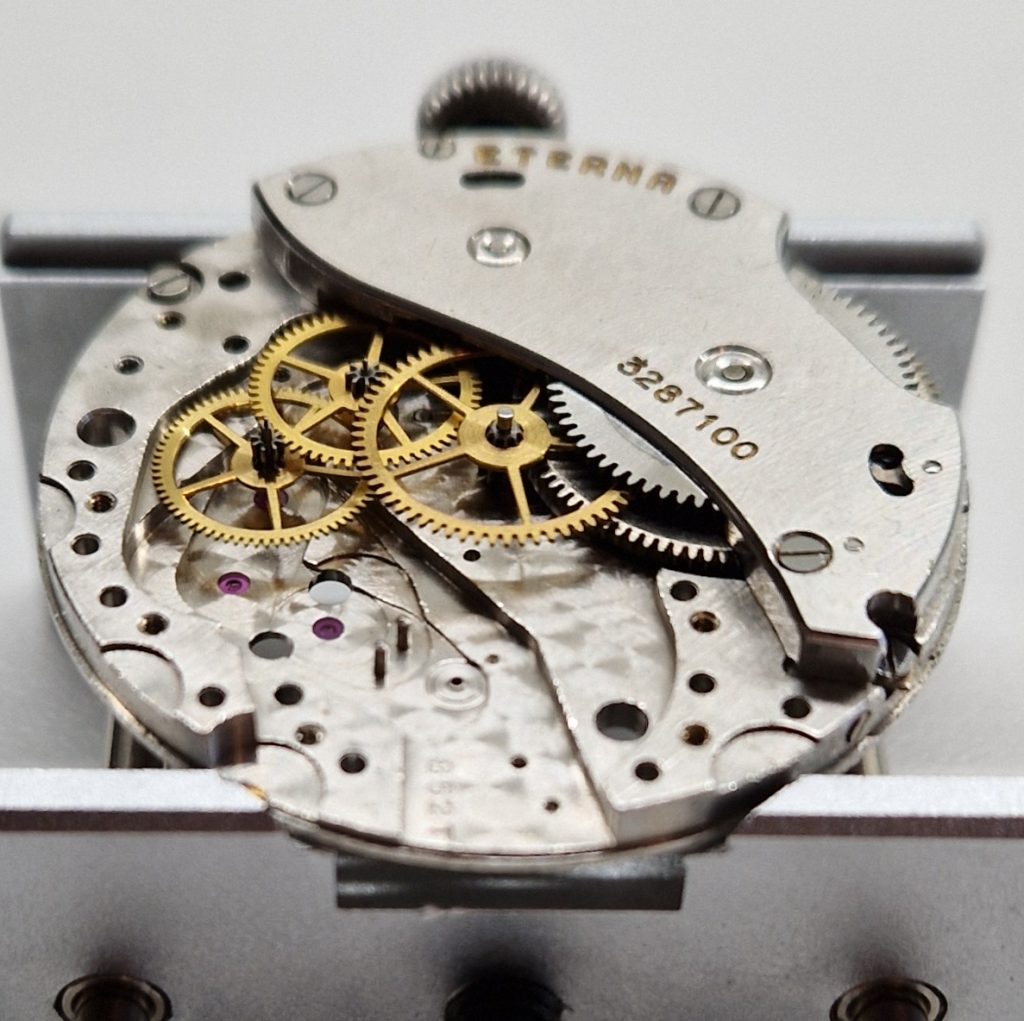
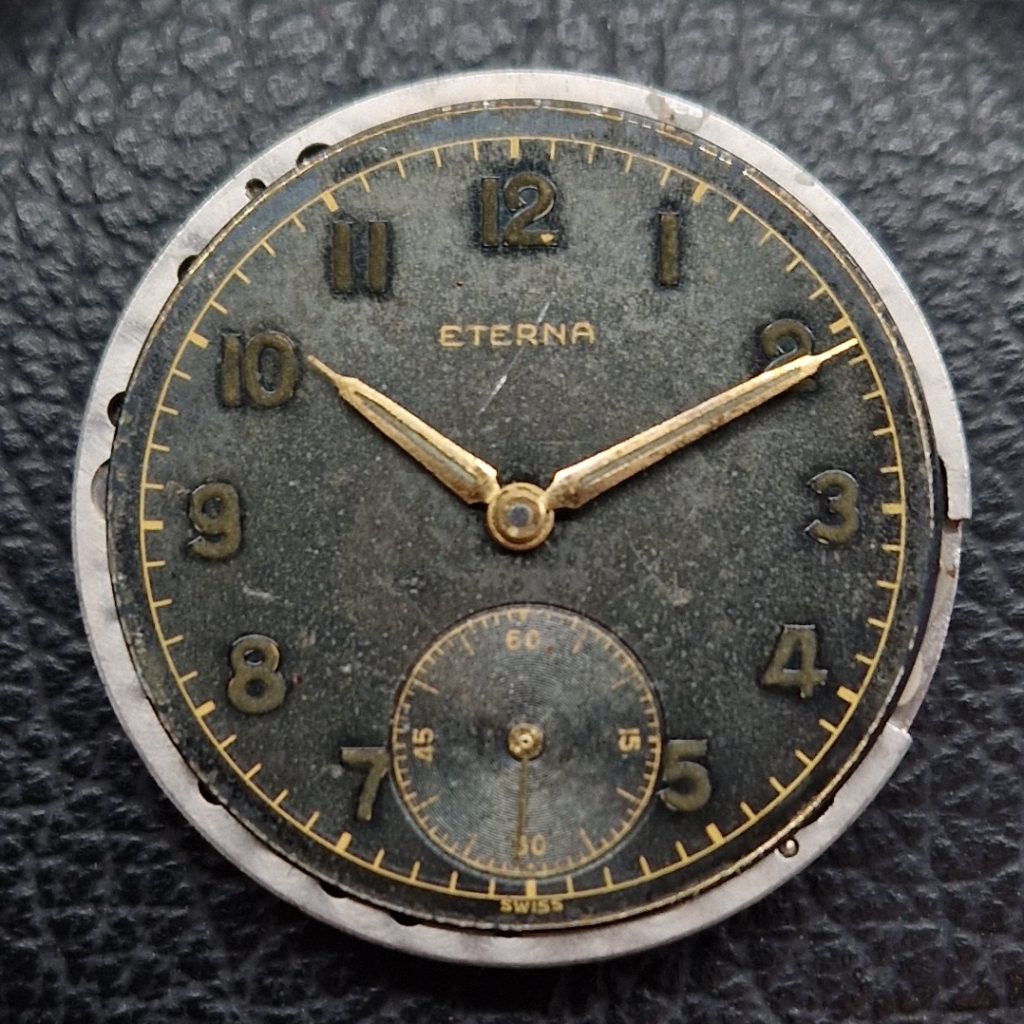
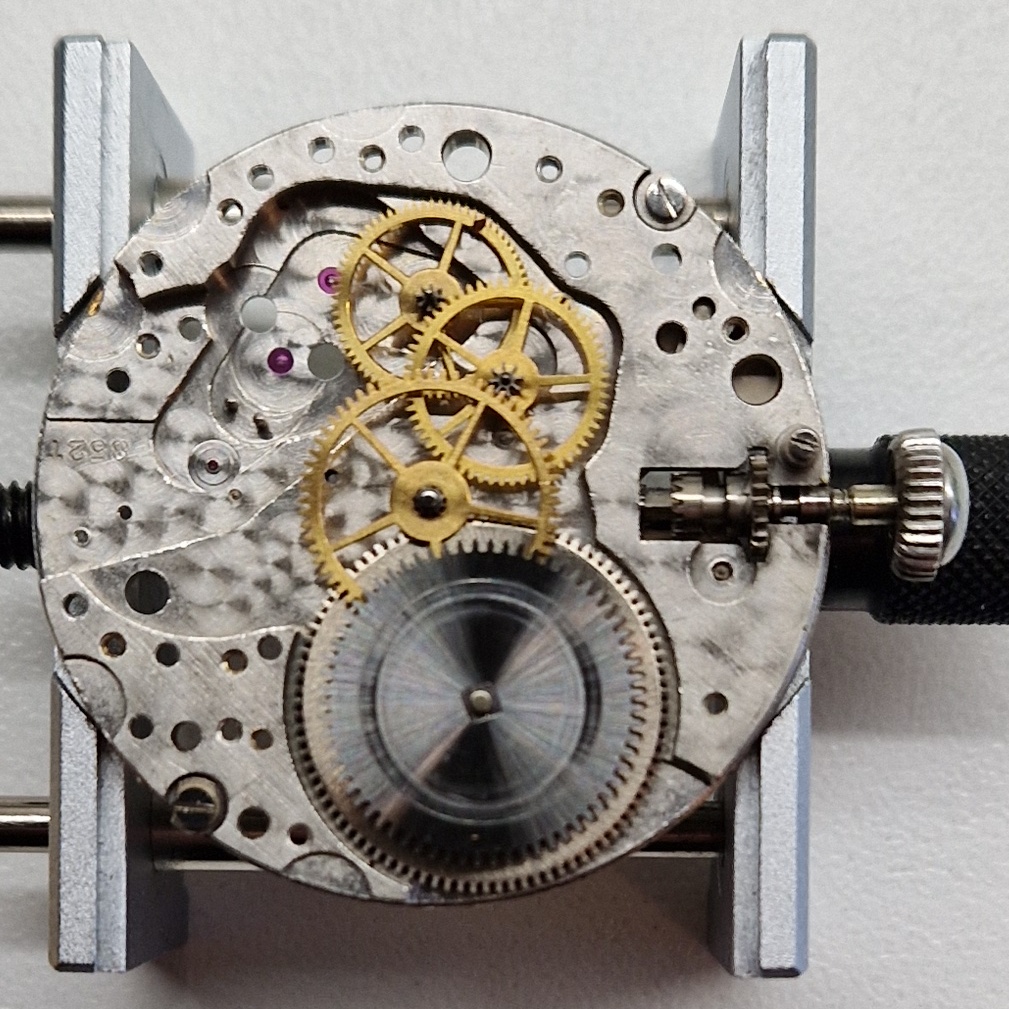
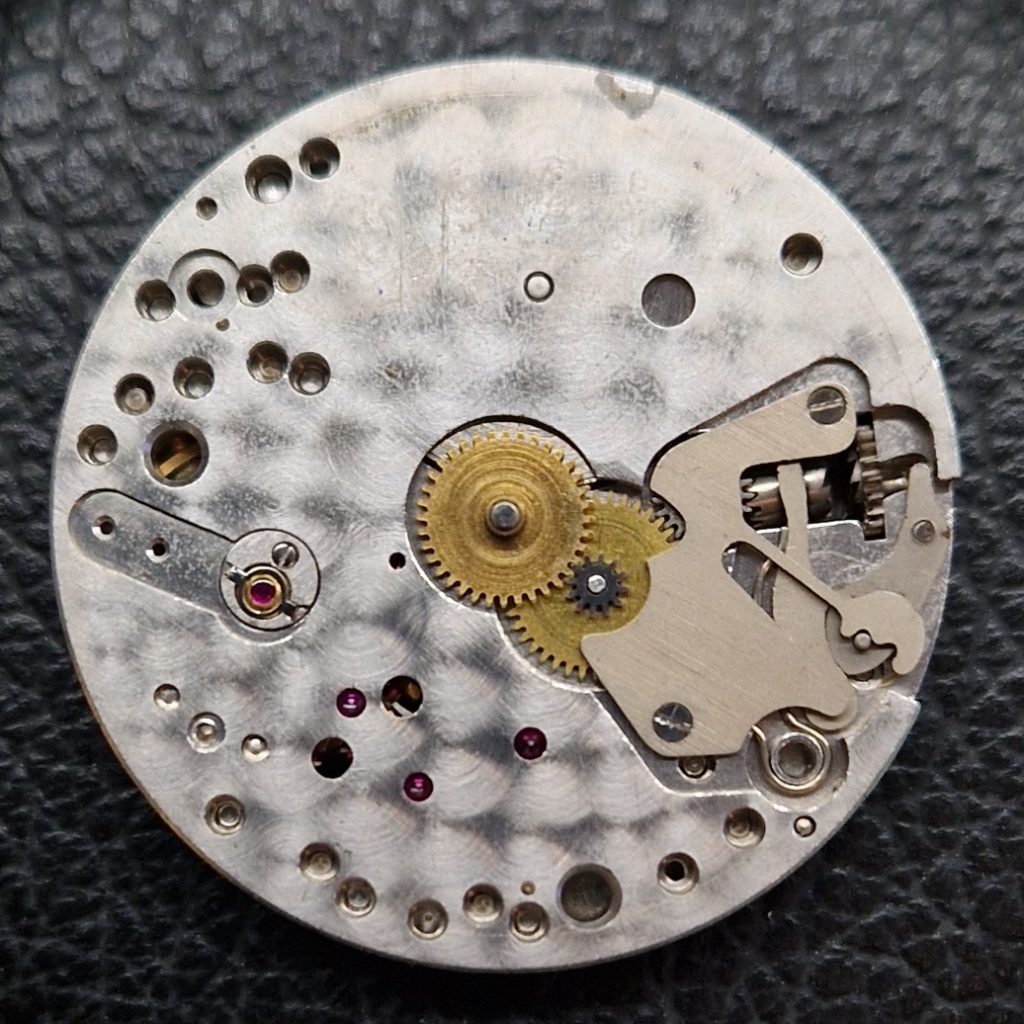
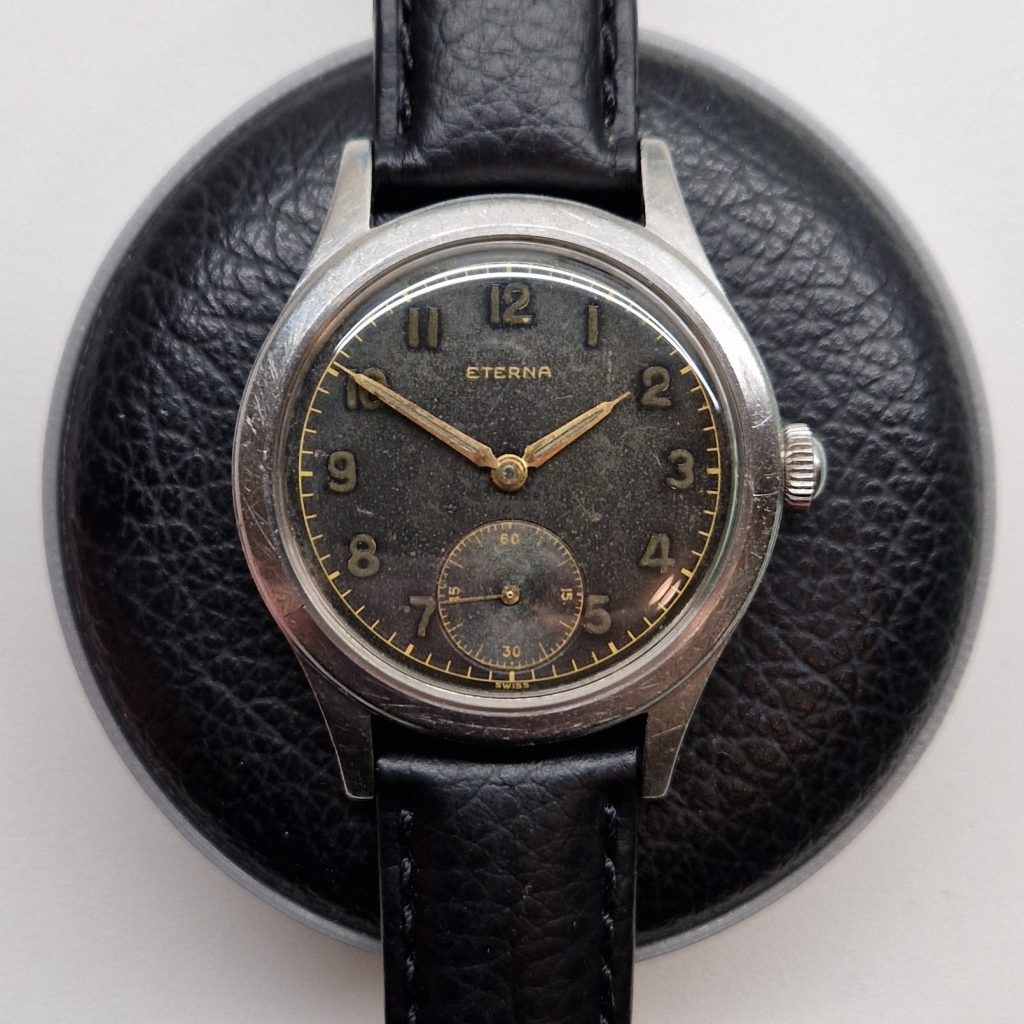

It’s true. This watch is actually a genuine “barn find”. The current owners stumbled upon it while tearing down an old garage on their property. And there it was, sitting right under the floorboards in the dirt. No one knows exactly how long it had been lying there, but definitely over 18 years, since that’s how long they’ve owned the place. The watch itself is from the late 1940s, most likely 1947, powered by an Eterna 852T movement.
You can’t help but wonder how on earth it ended up under a garage floor. The main house dates back to the 40s and has had two previous owners, both men, so the watch almost certainly belonged to one of them. Unfortunately, both have passed away, so asking them isn’t an option. The house started out as a small bakehouse before being converted into a residence in 1947. The garage itself was likely a small shed originally, with records mentioning it as far back as 1912. The owners guess it was turned into a garage around the same time the main house was converted. But 1947 is way too early for the watch to have ended up under the floor during that renovation. It would have been brand new! In fact, there are five service marks inside the case back. Let’s play around with the timeline: if the owner was a model citizen and took it in for a service every five years like clockwork, we end up around 1975. If we double the time between services, we’re looking at the turn of the millennium, about 25 years ago.
By now, I’m guessing you’re pretty curious about what the movement looked like when I opened it up. Trust me, so was I. After all, it had been sitting under that floor for anywhere between 20 to 50 years. I wasn’t holding out much hope. And when I got it out to either service it, or write it off completely, I hit a total brick wall. I couldn’t even get the case back open. Talk about a buzzkill. Eventually, I gave up and popped over to a local watchmaker to see if they could lend a hand, thinking they might have better tools than mine. Not that my tools are bad, but hey, you never know. That little adventure ended with them breaking their fancy tool they had bought directly from Breitling. Oops. Disappointment number two. So, back home I trudged with the still-unopened watch. As mentioned, it had been sitting in the dirt under a garage floor for up to half a century. Decades of moisture combined with winter freezes and summer heat can easily rust or corrode the case threads completely shut.
So, what to do? I really didn’t want to jump straight to my absolute last-resort option: a small chisel and a hammer. The idea is to place the chisel against one of the notches on the case back and tap it with the hammer. But I just wasn’t ready to go there yet. The risk of snapping or damaging one of the delicate pivots inside the movement is very real, since you’re hitting perpendicular to their axis. The worst possible angle. Instead, I decided to play the long game over a few days. I dabbed penetrating oil along the seam between the case and the lid with a Q-tip several times a day, hoping the oil would creep into the threads and work its magic. After three days, I felt it was time for another shot. A friend had lent me a case opener made by Bergeon. The tool I borrowed was a vintage piece itself. Setting it up for different case types can be a bit fiddly. You can easily spend 10 to 15 minutes adjusting it until it feels just right. But once it’s set, it’s rock solid and incredibly precise.
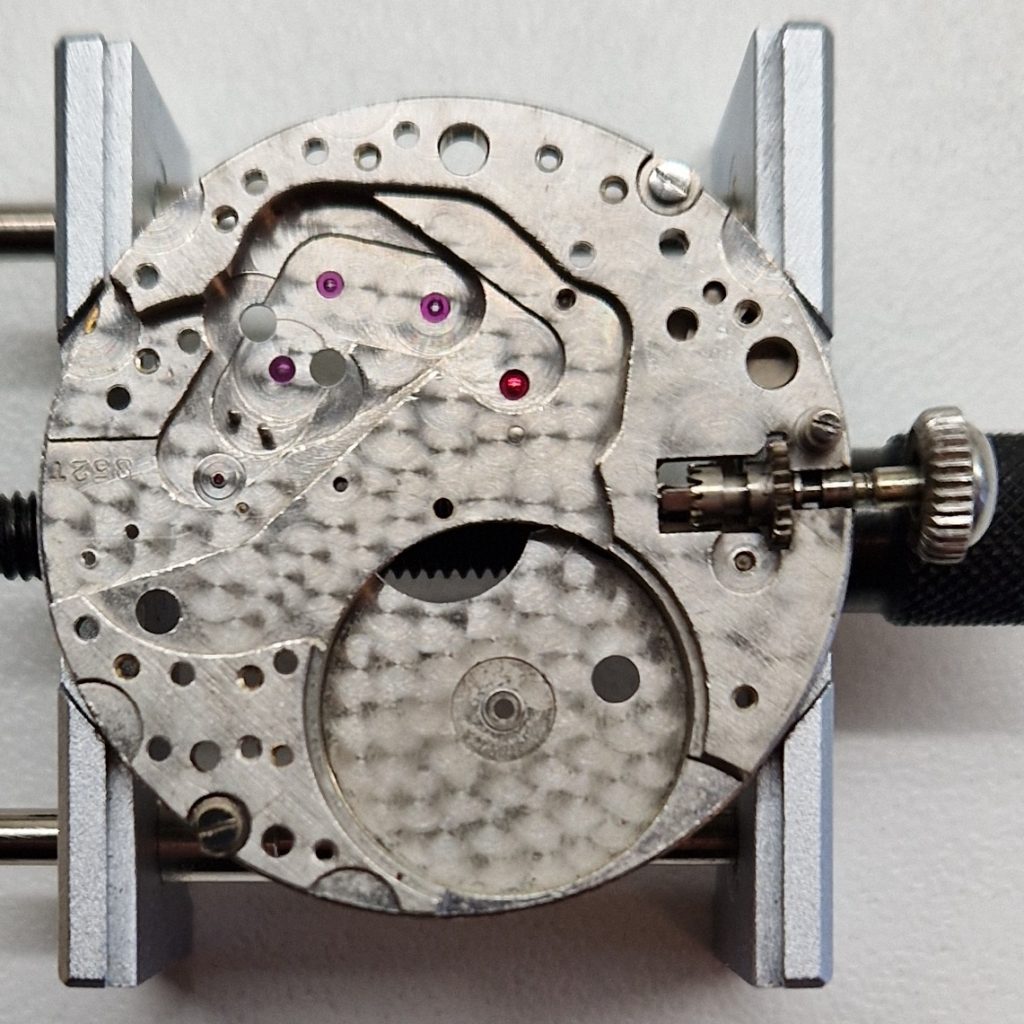
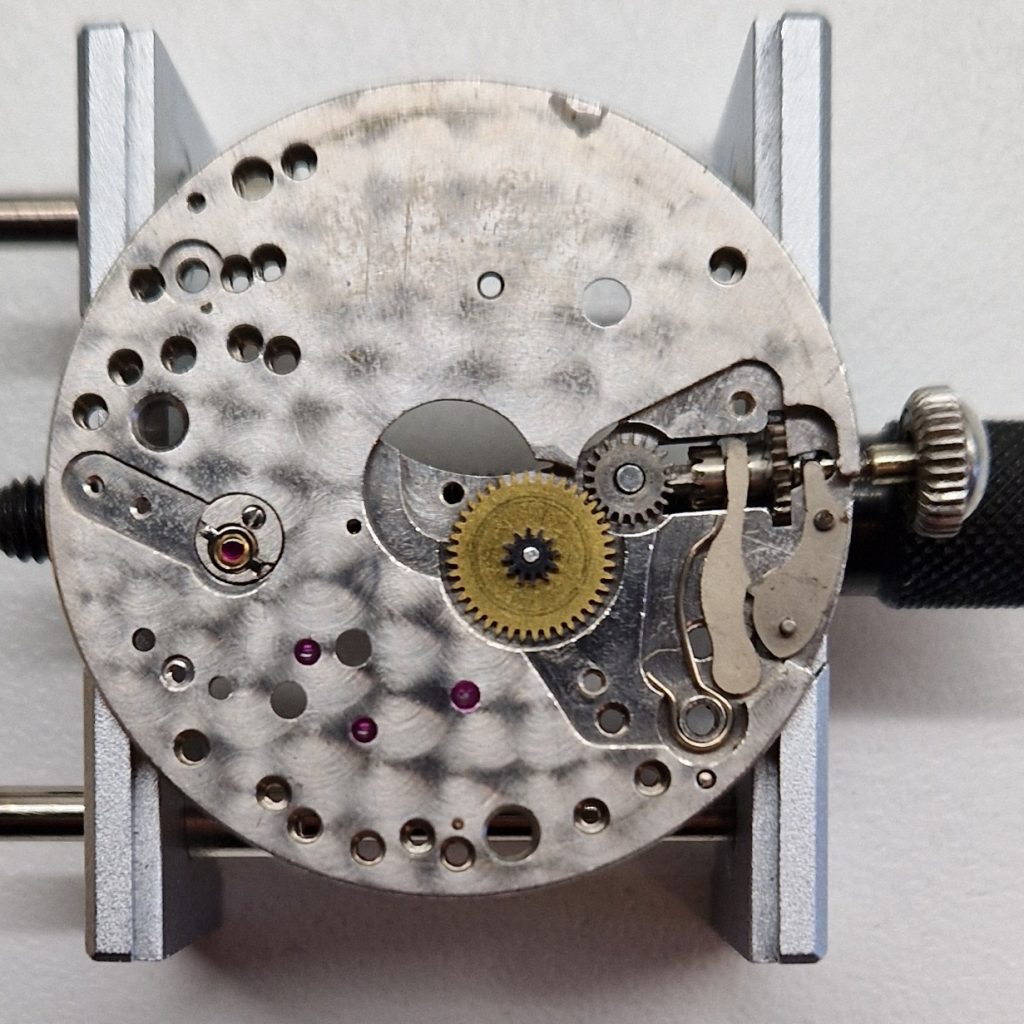
Moment of truth. I secured the watch in my heavy-duty holder, which was clamped tight in a vise. I placed the perfectly adjusted Bergeon opener on the back, applied a good amount of downward pressure, and took a deep breath. Then, I applied a series of short, sharp twisting motions. On the fourth or fifth attempt, I suddenly felt the lid give way. It might sound silly, but it was an incredible feeling. What’s that old saying? Persistence pays off. I sat back for a moment, musing on what I was about to reveal. Would it be a pile of rust, or was there still hope? When I finally lifted the lid, my jaw hit the workbench. Inside was a gleaming, pristine, near-flawlessly preserved movement. How is that even possible after decades in the dirt under a floor? The beautiful gold-colored balance wheel practically sparkled under my bench light. Almost like a little wink of gratitude for finally freeing it from its dark confinement. I have to say, it was easily one of the best moments I’ve ever had at my workbench. And it stayed that way throughout the entire disassembly. Not a single trace of rust anywhere. No abnormal wear, either. Sure, the old lubricant was bone dry, but there was hardly any dirt inside. Maybe it had been freshly serviced right before it met its unfortunate fate under the floorboards? That leads me to believe the original owner really took care of it, which in turn means it could very well have been buried down there for close to 50 years. Mind-blowing.
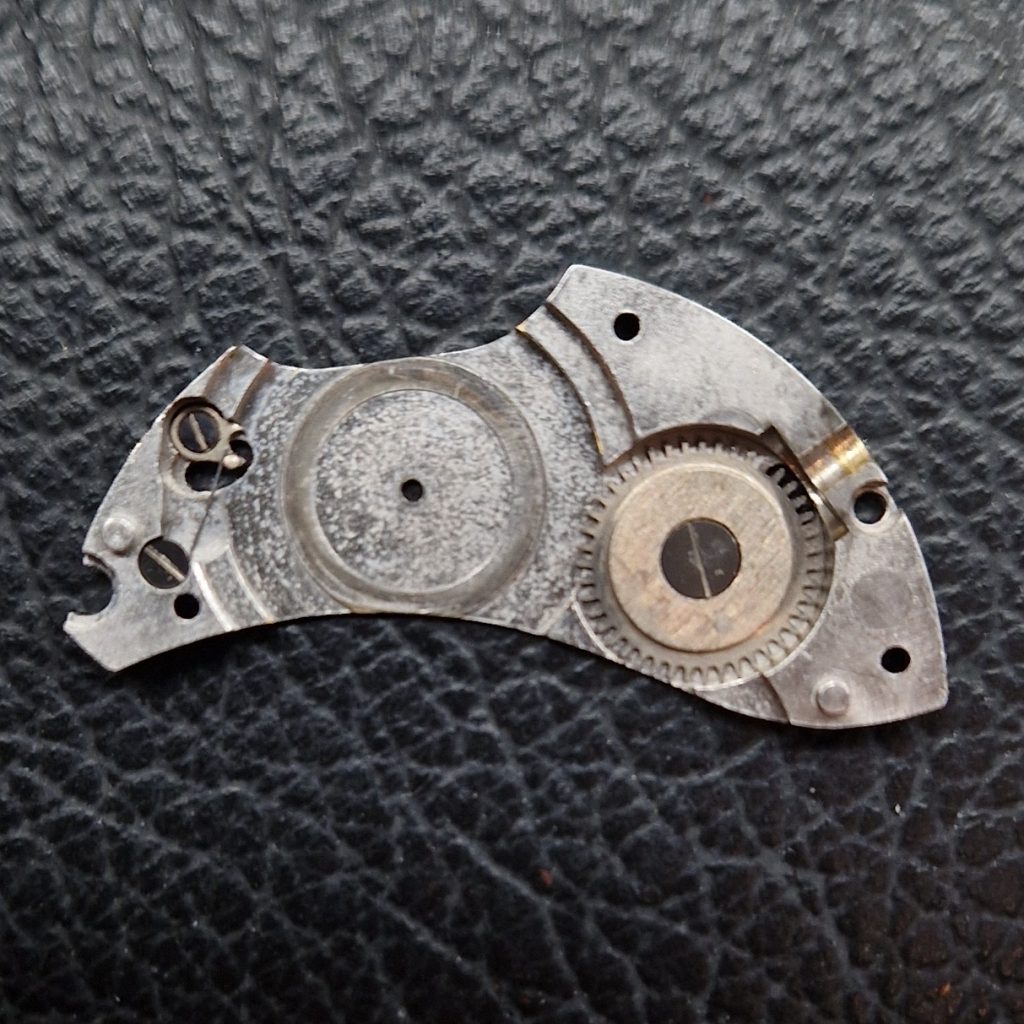
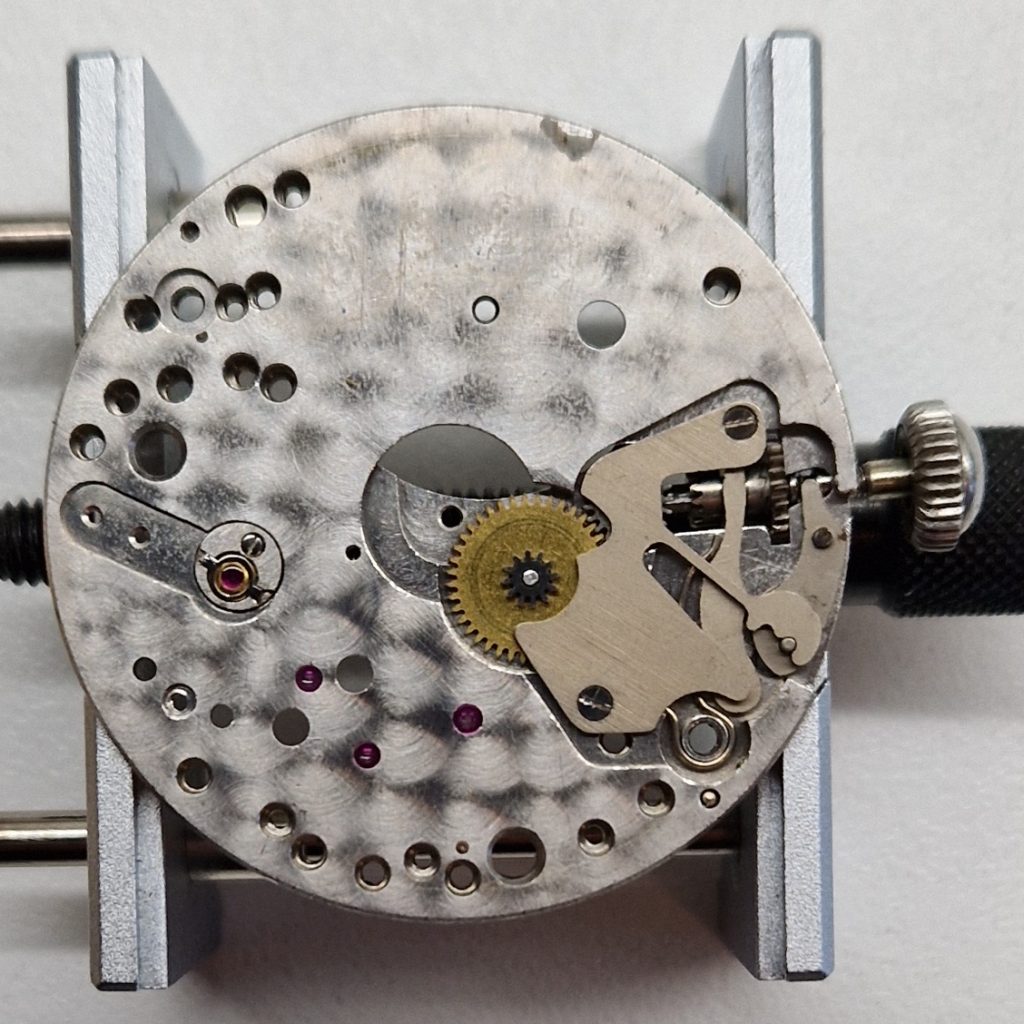
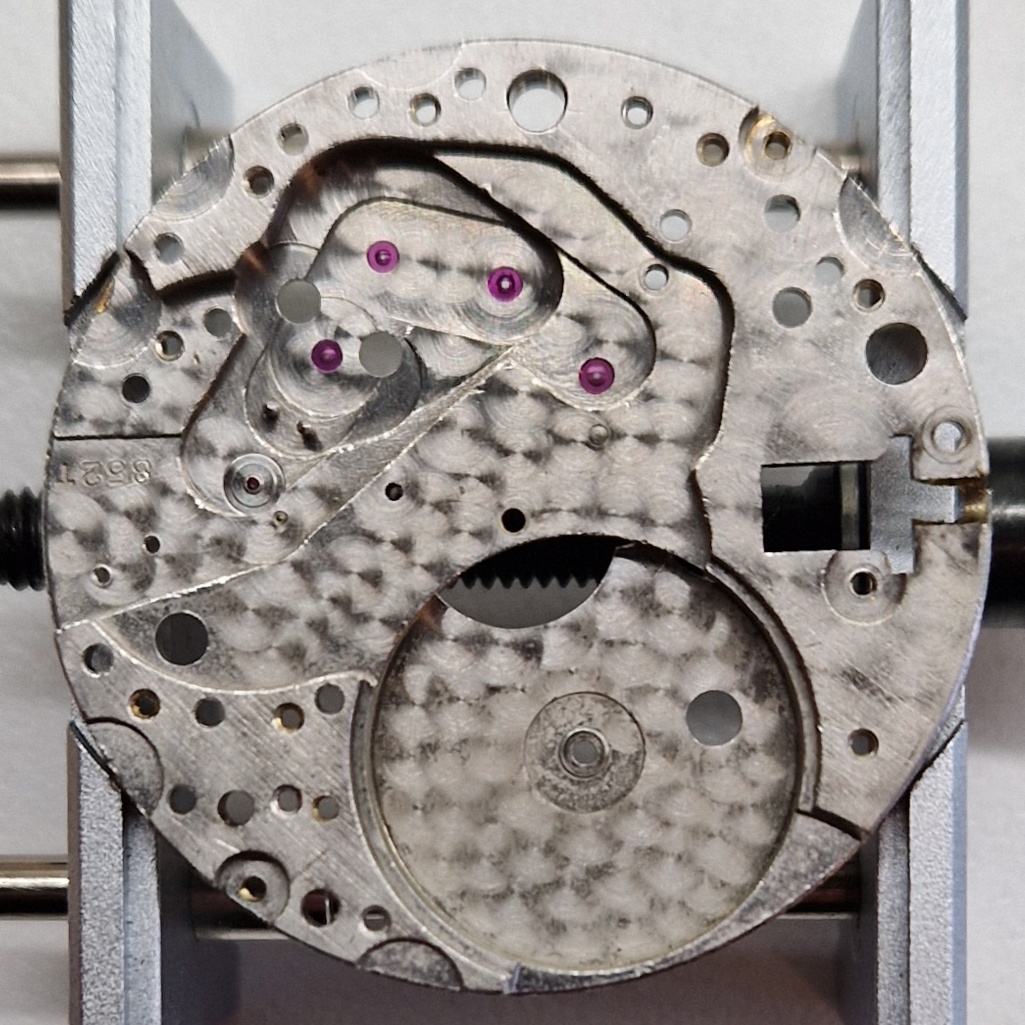
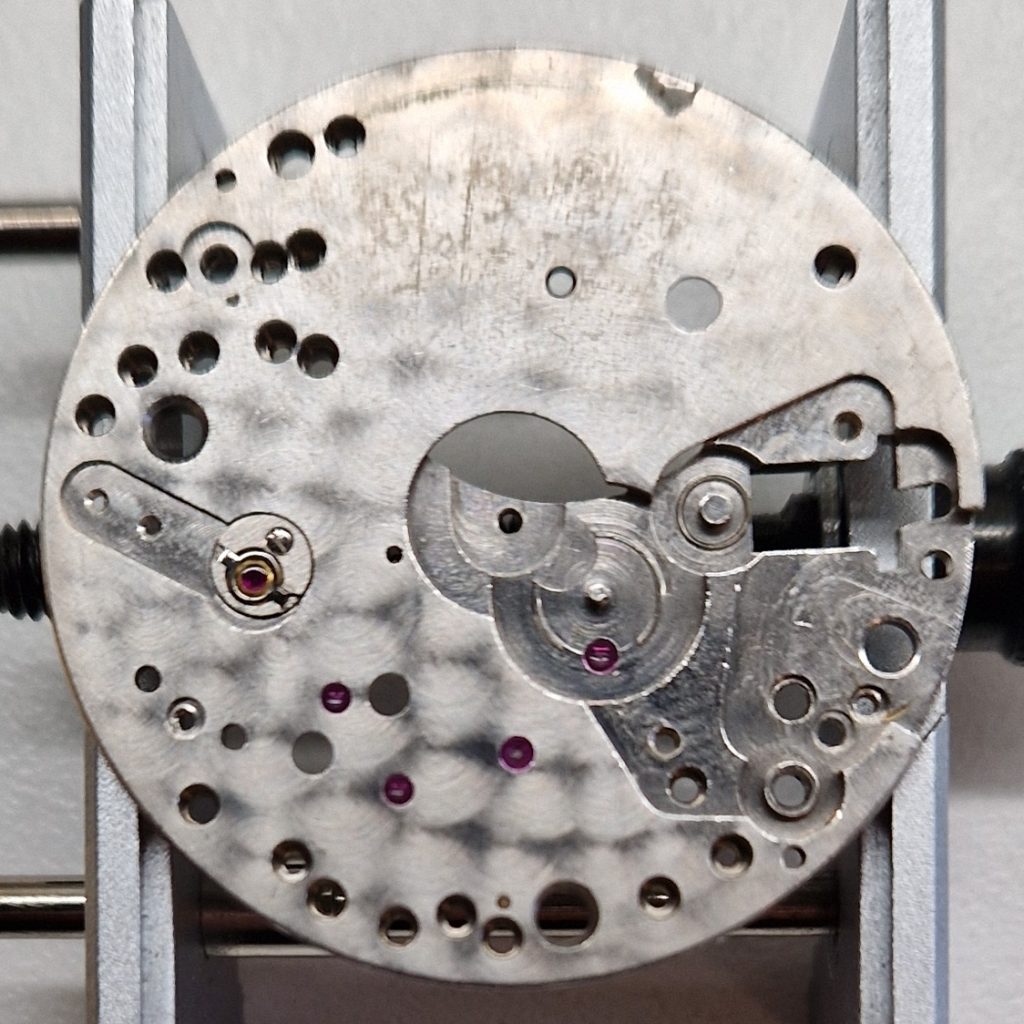
I gave all the parts a thorough cleaning and reassembled everything with fresh oil. I can’t deny I put a little extra heart into it. You know, giving it that extra 110%. It felt like a matter of pure respect for the watch’s history. When I finally installed the balance wheel and it kicked to life instantly, I’m pretty sure I smiled wider than a kid on Christmas morning. Such an incredible feeling. Now, this movement has a fairly simple architecture. It just tells the time, no fancy complications like automatic winding, date, or day displays. But man, does it tell time well. When I placed it on my timegrapher, things just kept getting better: crisp, straight lines and fantastic amplitude. Better than good, actually. The timegrapher read a whopping 310°. That is exceptional for a 75-year-old watch. On top of that, it barely cared what position it was in. Sure, the amplitude drops slightly when placed dial-vertical, but every watch does that regardless of age, brand, or quality. The timekeeping itself barely budged. And after letting it run for about 24 hours, the amplitude had only dropped by about 35 degrees. Absolutely incredible.
Even though this movement is quite straightforward in its design, this job stands out as one of the highlights of my time at the bench. The surprises just kept coming from start to finish. I really hope I get to see this watch again in five years when it’s due for its next service. It’ll feel just like catching up with an old friend.