
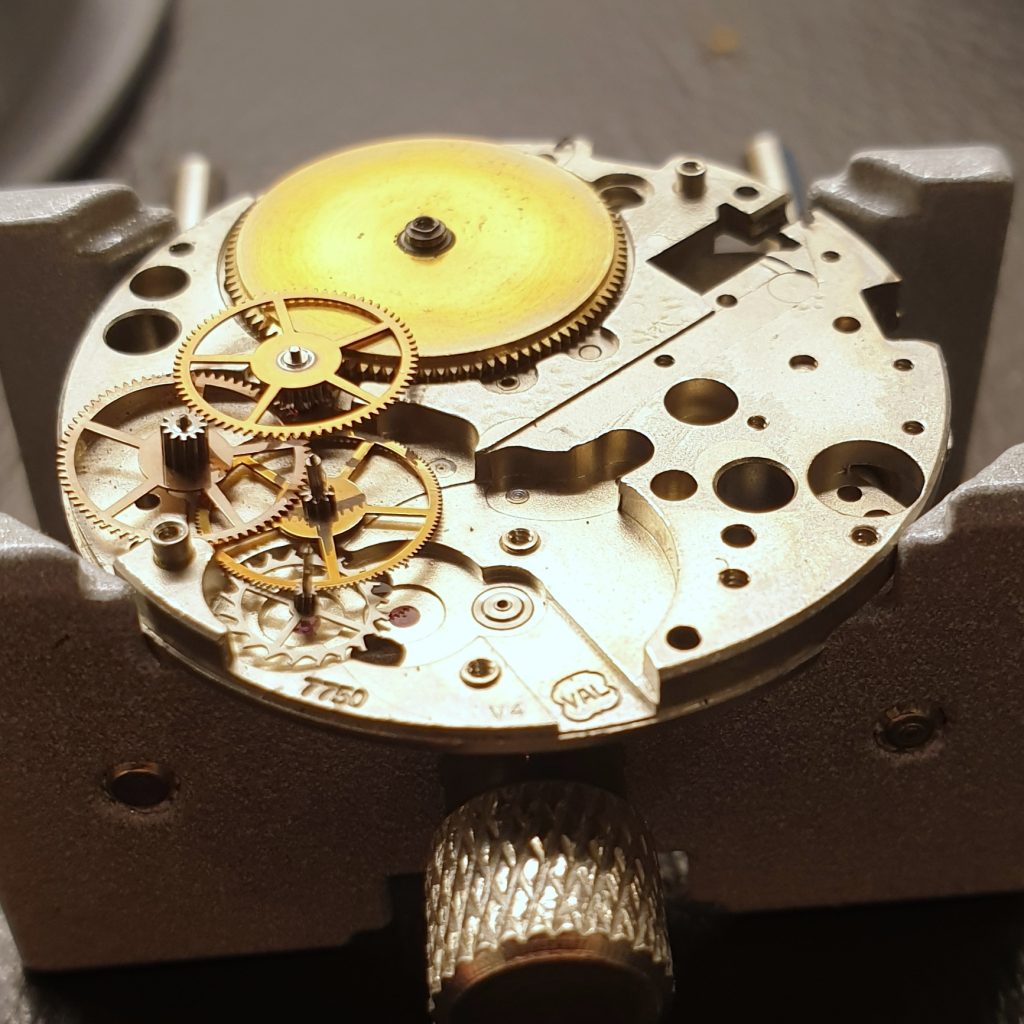
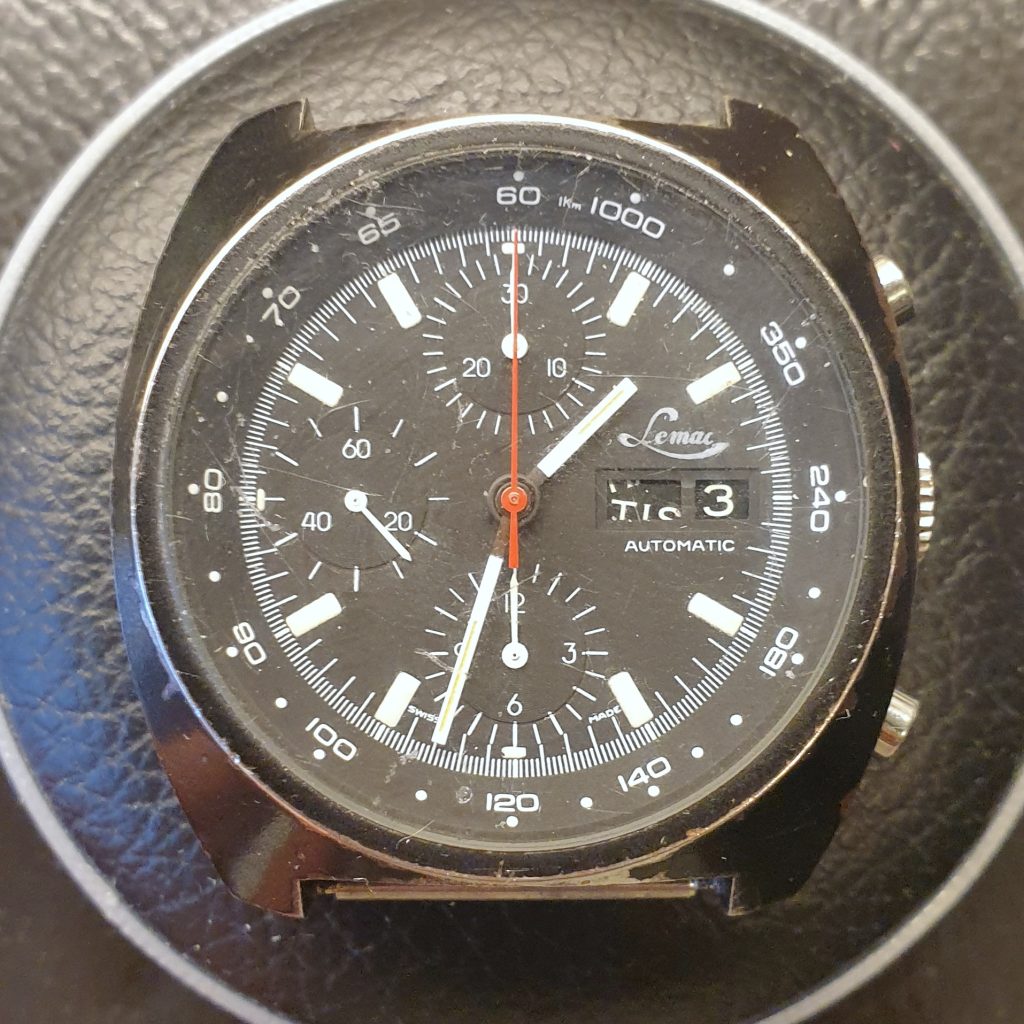
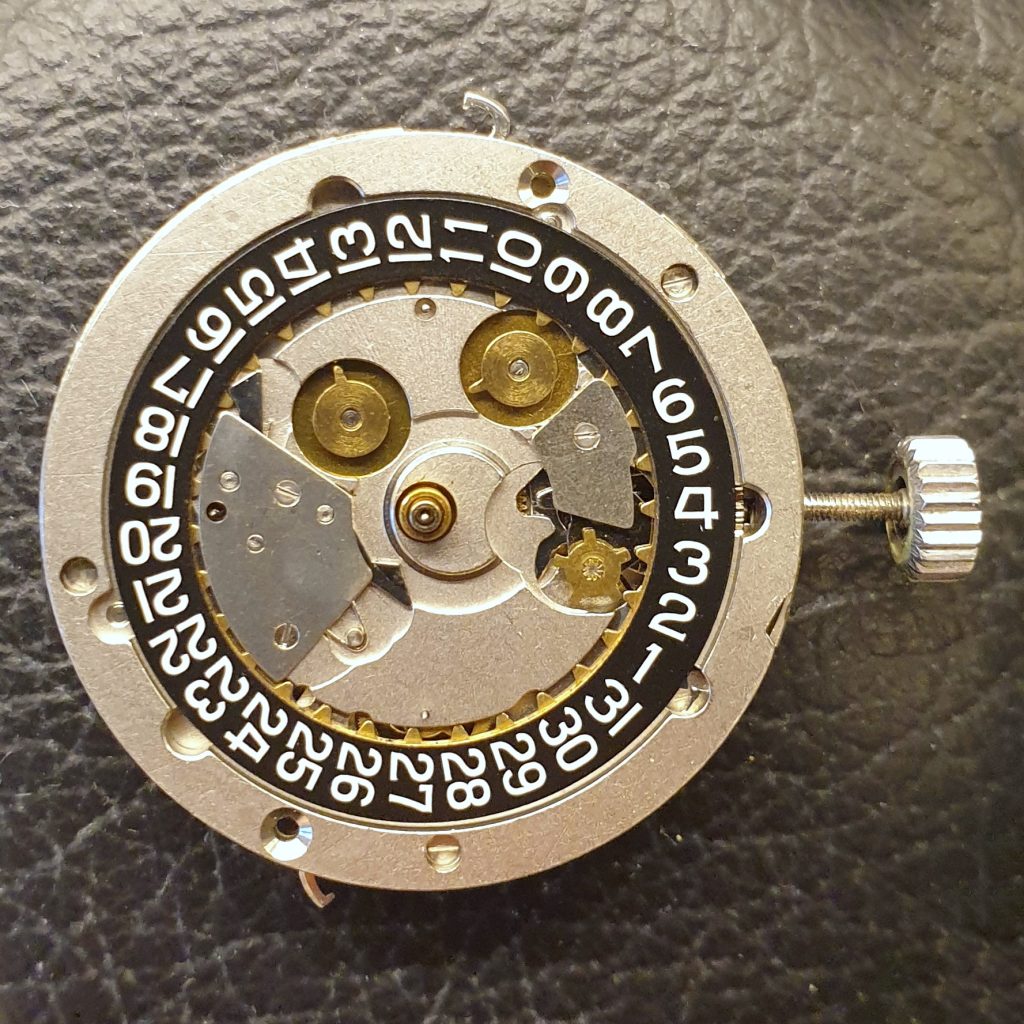
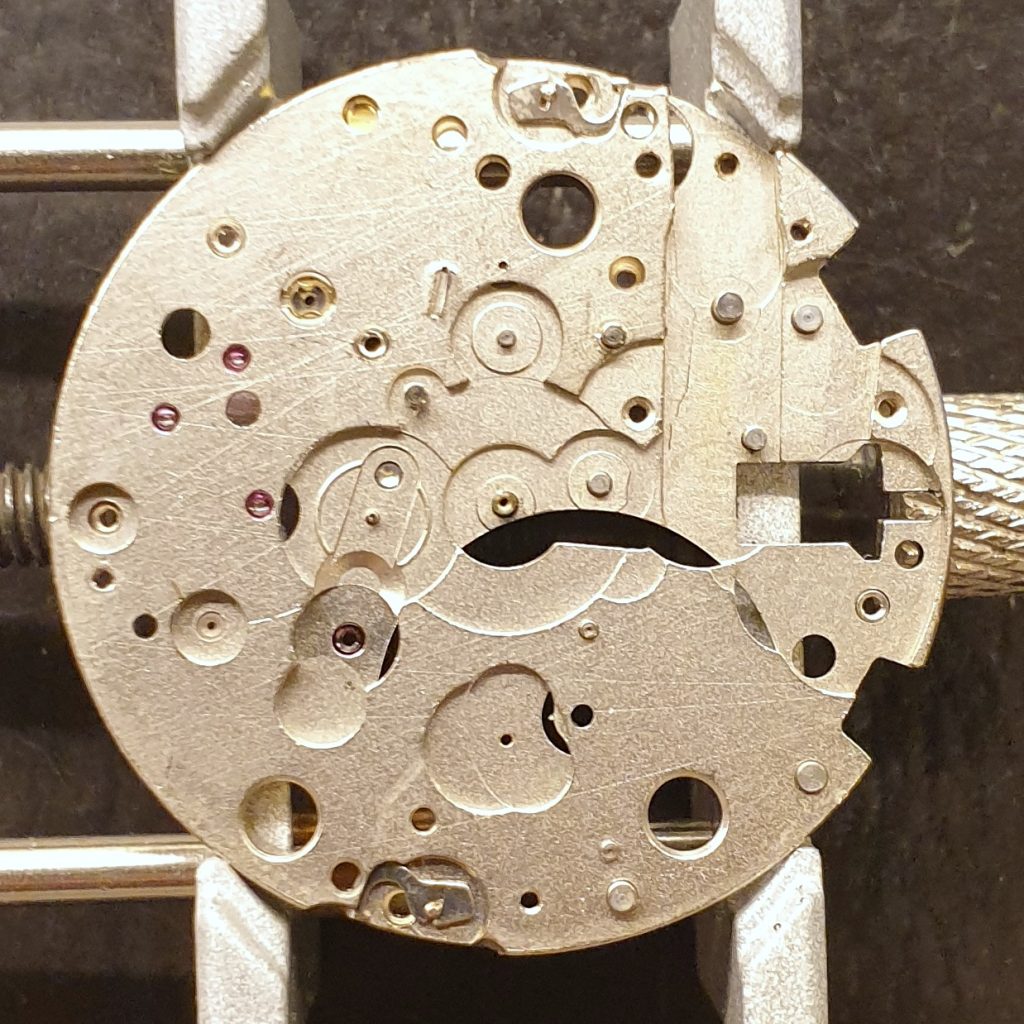
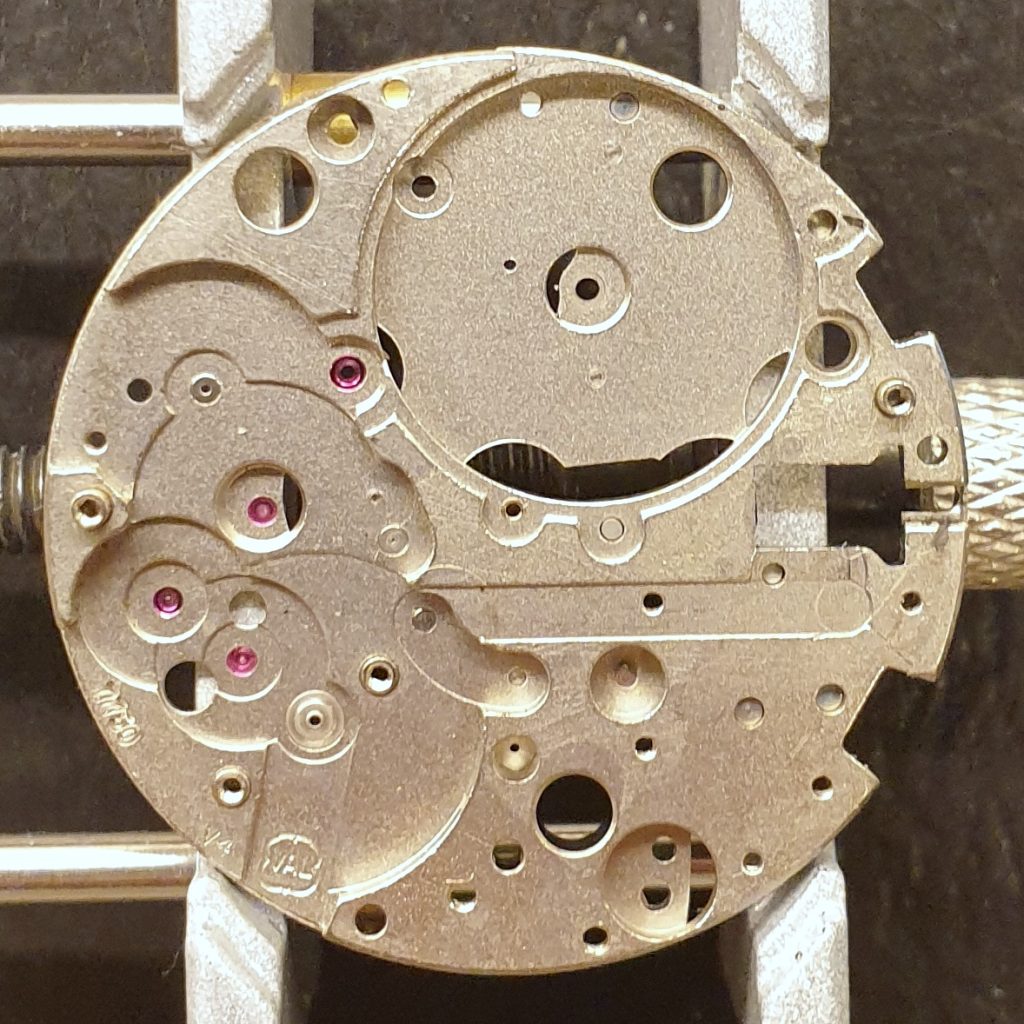
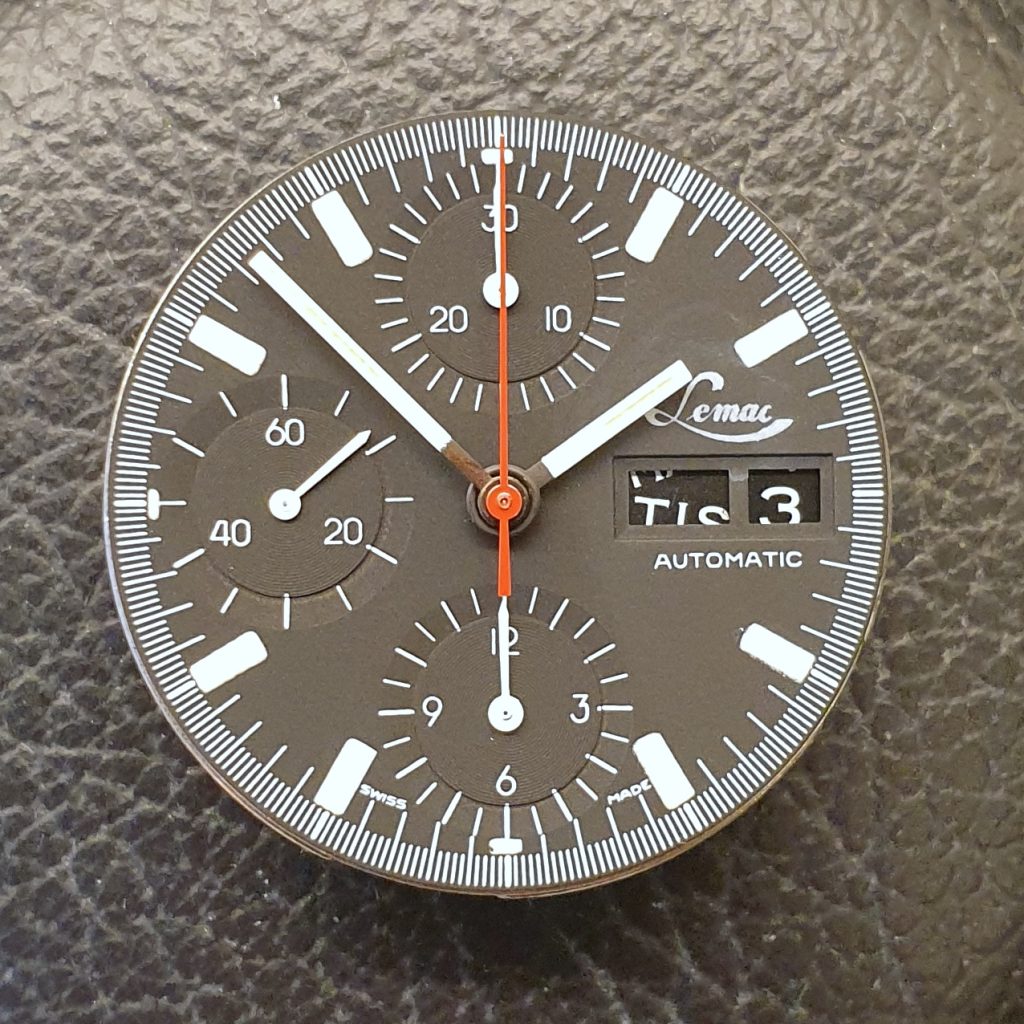
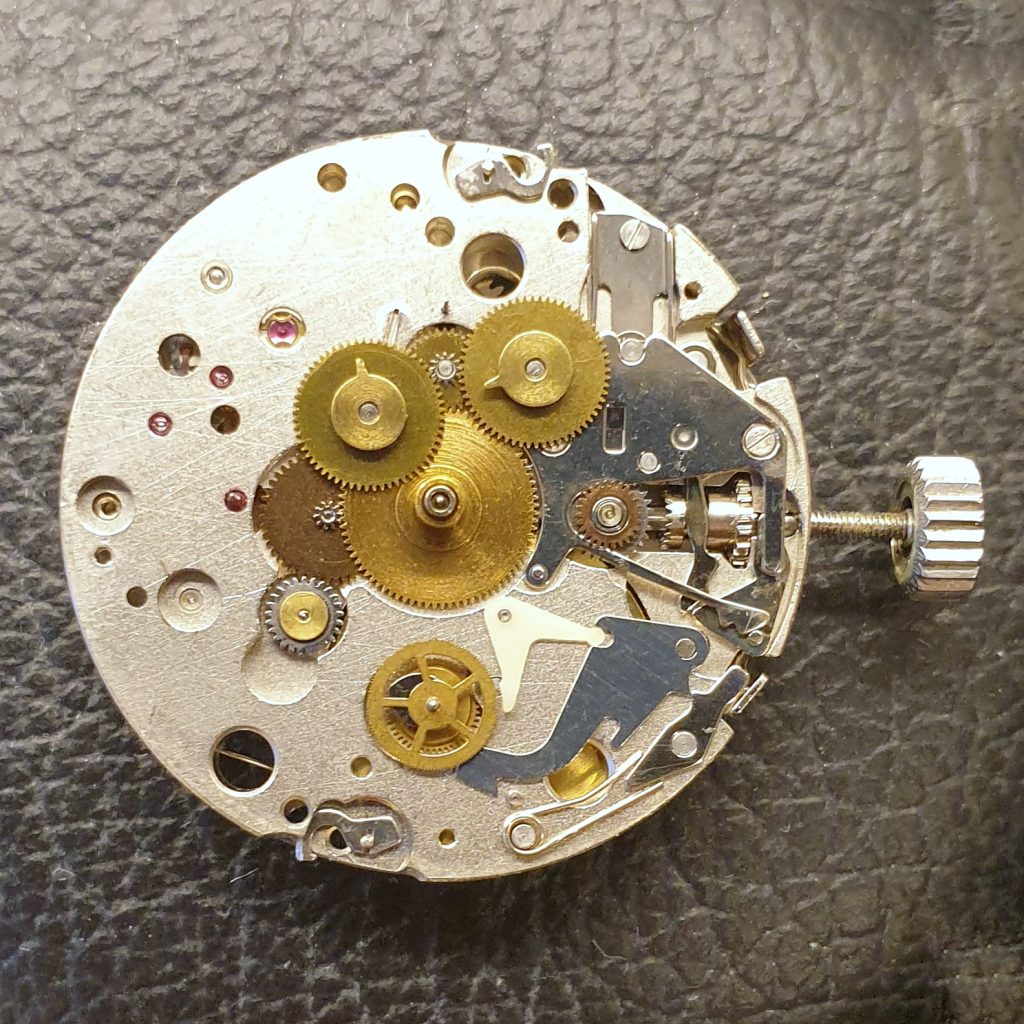
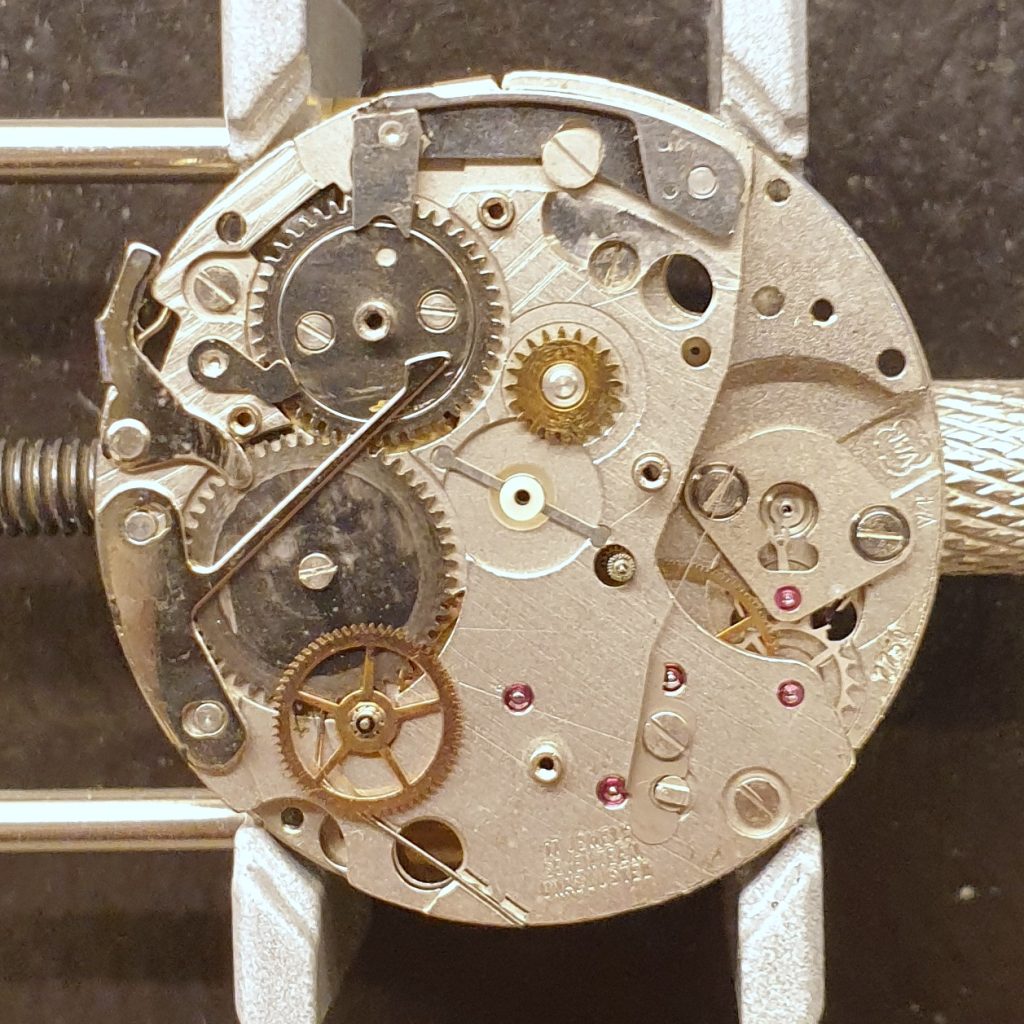
So, Christmas Eve 2021. The best thing I could think of was to service a watch. I got up before the sun had made its entrance. Coffee and a couple of ham sandwiches, and then I felt ready for a watch. And today it got to be a special one. The movement in this Lemac is a Valjoux 7750. One of the world’s most recognized chronograph movements. And also one of the most mass-produced chronographs in the world. Many big names have used this movement in their watches. A few examples are Breitling, Fortis, Hamilton, IWC, Longines, Omega, TAG Heuer, Tissot, Zodiac, and others. It’s said, tongue firmly in cheek, that once you’ve serviced a 7750, you can take on pretty much anything after that. And I’d have to partly agree.
The story of the Valjoux 7750 began when Valjoux started feeling squeezed — partly by Zenith’s El Primero movement, and partly by the early Japanese quartz movements. They brought in a young man named Edmond Capt. He also enlisted the help of a well-known watchmaker named Donald Rochat. And on top of that, they used CAD — which was remarkably early for computer-aided design in watchmaking. But they were in a hurry, so they based the 7750 on an earlier movement called the 7733. The new movement was ready in 1973, and in its very first year they hit a remarkable 100,000 units sold. But by 1975, sales had already dropped sharply. They ended up squeezed between luxury watch manufacturers and cheap Japanese quartz movements — there simply wasn’t room for a market in between. So when Zenith decided to stop making the El Primero in 1975, Valjoux decided to do the same with the 7750. They even demanded that everything used to manufacture the movement to be destroyed. Edmond Capt, however, ignored that final order and made sure the blueprints, tools, and much more ended up safely stashed away, hoping the 7750 would get a new lease on life someday. But at first it looked like Valjoux’s management had been right. Demand fell so sharply that it took until the early ’80s before they’d sold off their stock of 7750s. But around that same time, interest in mechanical movements started picking up again.
In the late ’70s, many movement manufacturers did what other industries do when times get tough — they merged with like-minded companies. AUSAG and SSIH merged and created what would later be The Swatch Group. That gave them three major movement manufacturers under one roof: Valjoux, ETA, and Lemania. They felt Lemania was a bit surplus to requirements in this setup, though, so it went on its own way under the name Nouvelle Lemania.
In 1984, Breitling was on the hunt for a new movement for their new version of the Chronomat. They set their sights on the 7750. It was a fairly large and robust movement, and it was going to help Breitling reclaim its status as a top-tier watchmaker. And suddenly Valjoux had to resume production of the 7750 — otherwise they’d lose their contract with Breitling. Edmond Capt basically became a hero for having saved everything needed to quickly restart production. This new generation of the movement was named the ETA/Valjoux 7750. IWC also admired the new 7750 and developed a watch that could make the most of its functions — named the Da Vinci Perpetual Calendar Chronograph. An iconic watch. Breitling’s technical director at the time, Kurt Klaus, chose to work without CAD, though. Following in the footsteps of his mentor, former technical director Albert Pellaton, he calculated everything by hand. This earned him a lot of respect, and the brand quickly gained ground as a market leader.
The new production run of the Valjoux/ETA 7750 also became popular among other watchmakers. Among others, Fortis used this movement and signed a contract with the Russian Roscosmos space program in 1994. Their cosmonauts were a bit picky, though, and also demanded an alarm function on the movement. Fortis then brought in independent watchmaker Paul Gerber, which resulted in the first automatic movement that also had an alarm function. There’s endless more to say about the 7750, so I’ll wrap up with the classic line: “and the rest is history.”
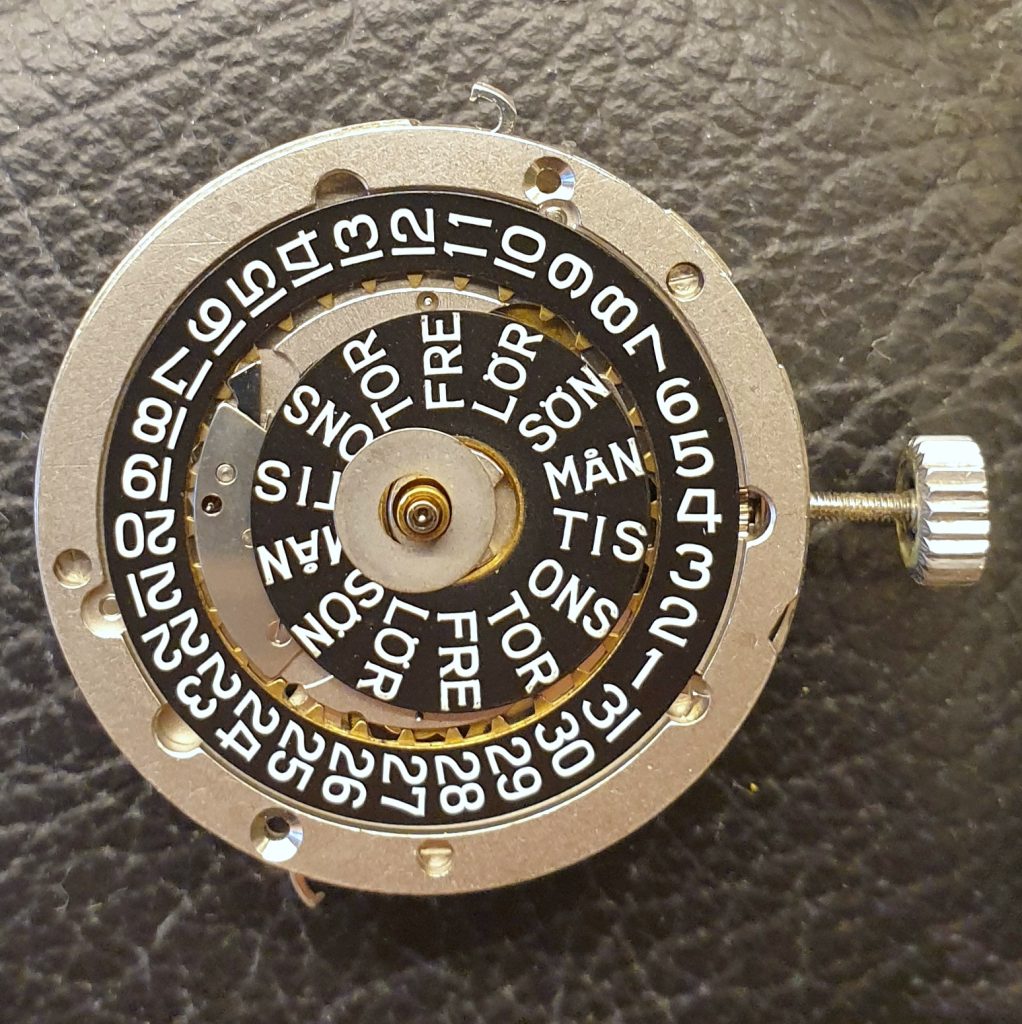
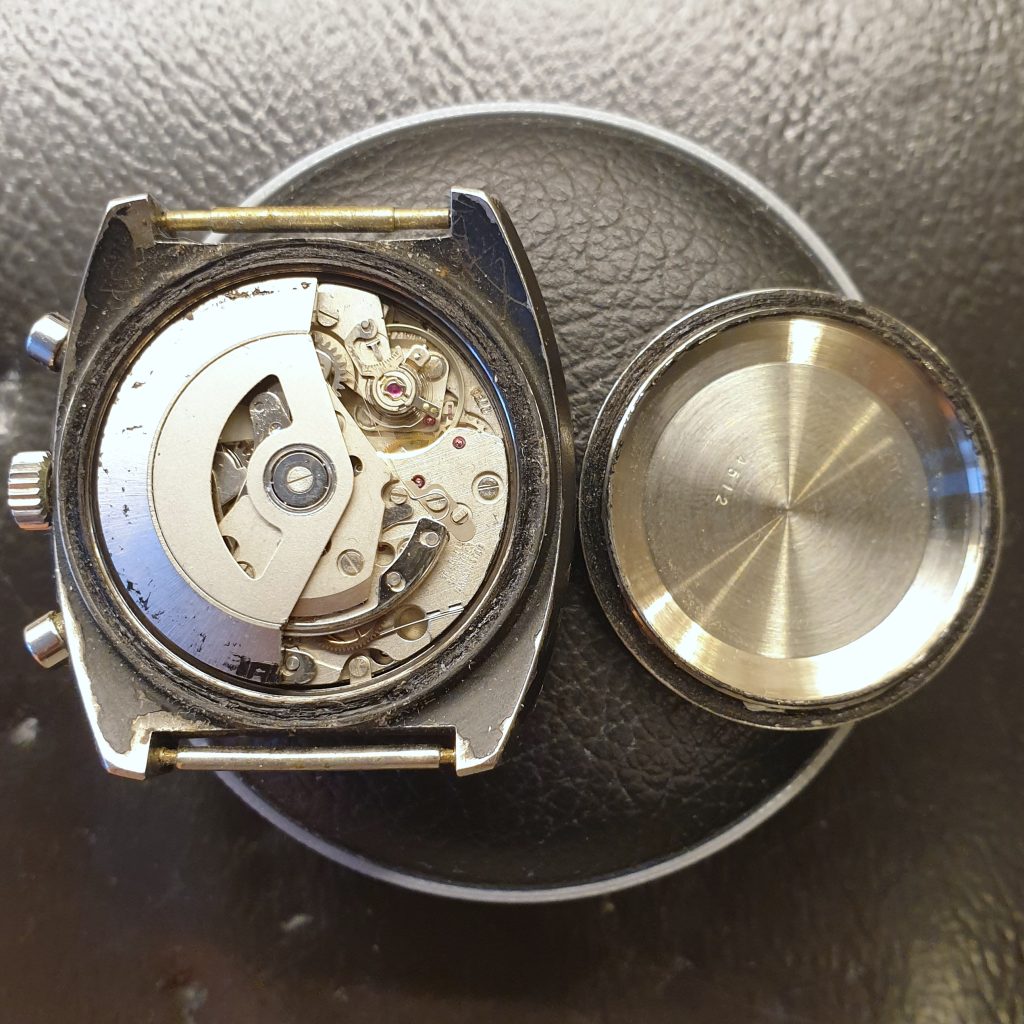
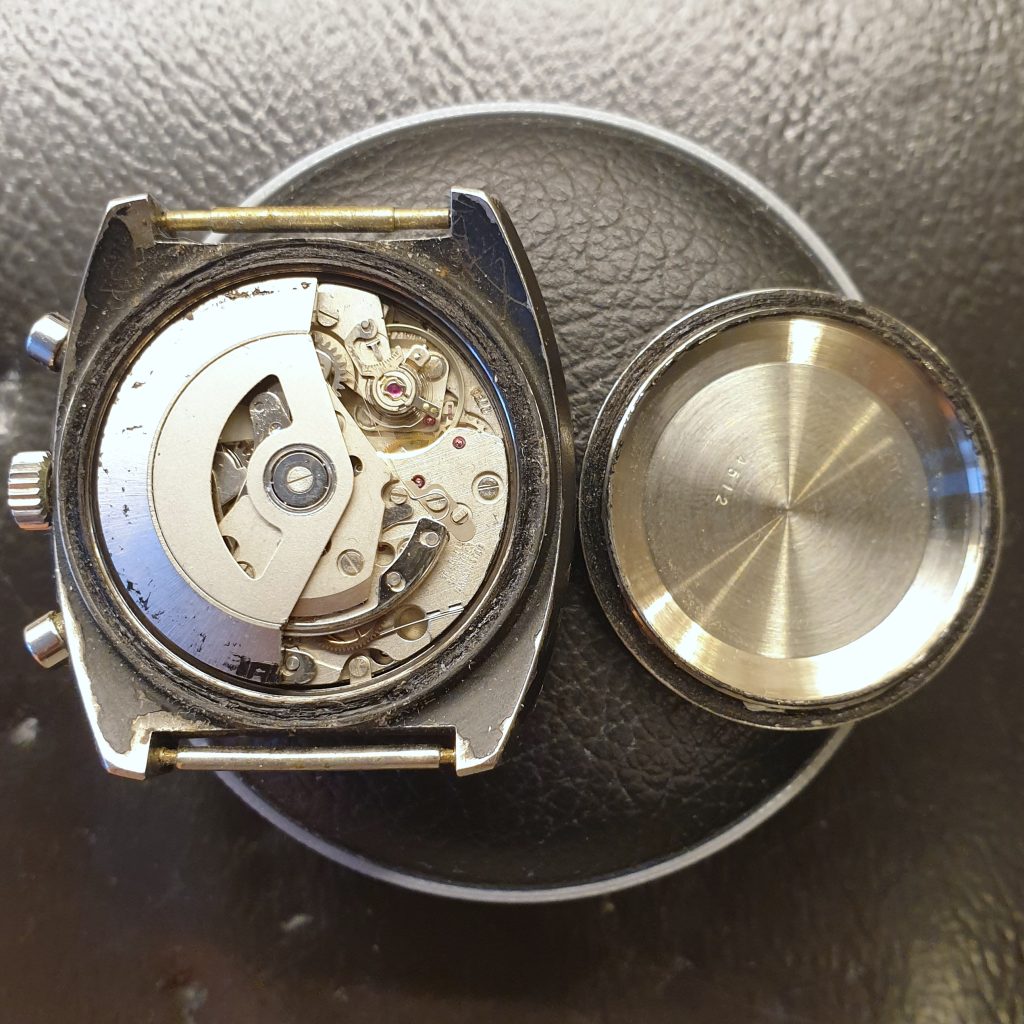
One of the problems with this Lemac was that it wasn’t advancing the date and day properly. And once it had run for a while, it would start drifting quite a bit. When I opened the case, I was greeted straight away by a sad sight. The gasket was one of those that had completely lost its shape and turned into a thick black goo. Not exactly a technical challenge, maybe, but it was going to take a fair bit of time to clean the case properly. It had also spread a bit onto the edges of the movement and the rotor. Sigh! Now, I don’t have kids of my own, but I imagine it’s a bit like waking up in the morning to a fresh, smeared mess in your three-month-old’s diaper. But oh well, no choice really — you just have to dig in and deal with the mess.
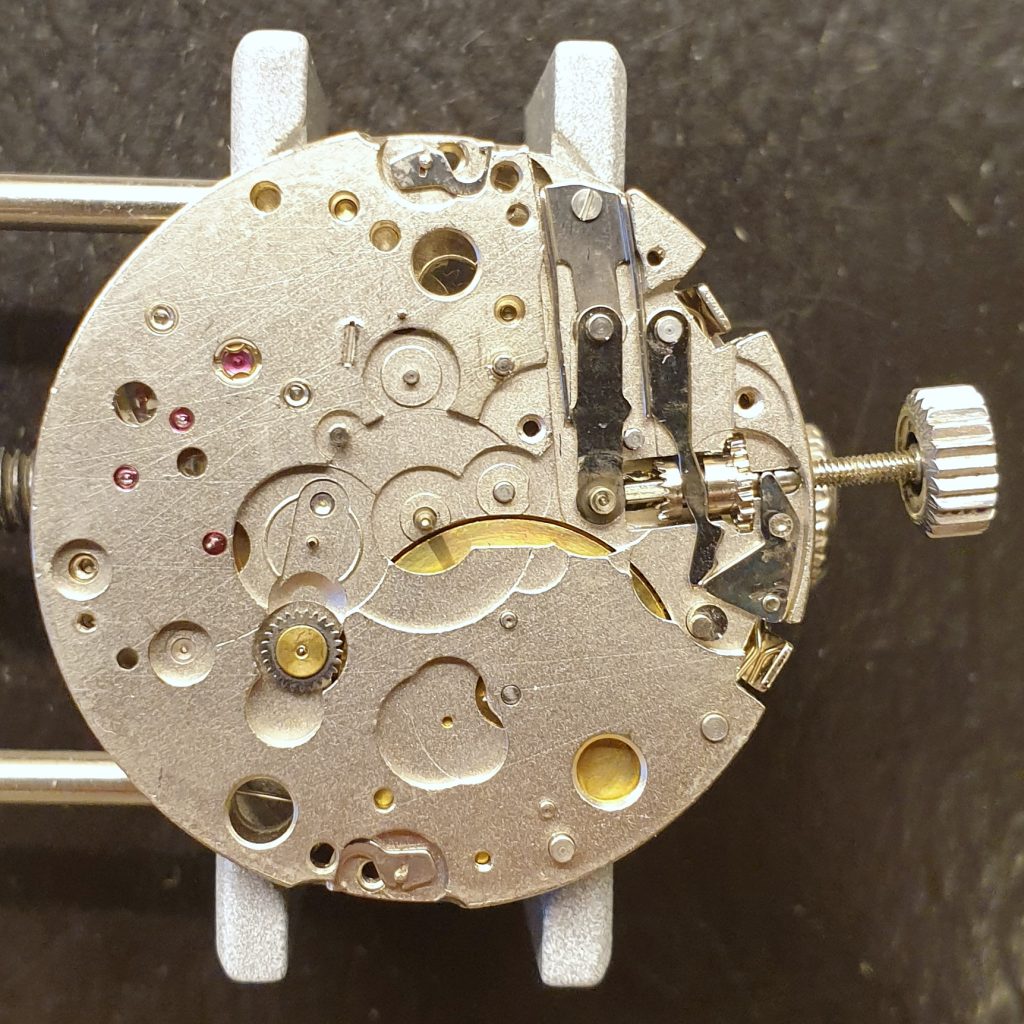
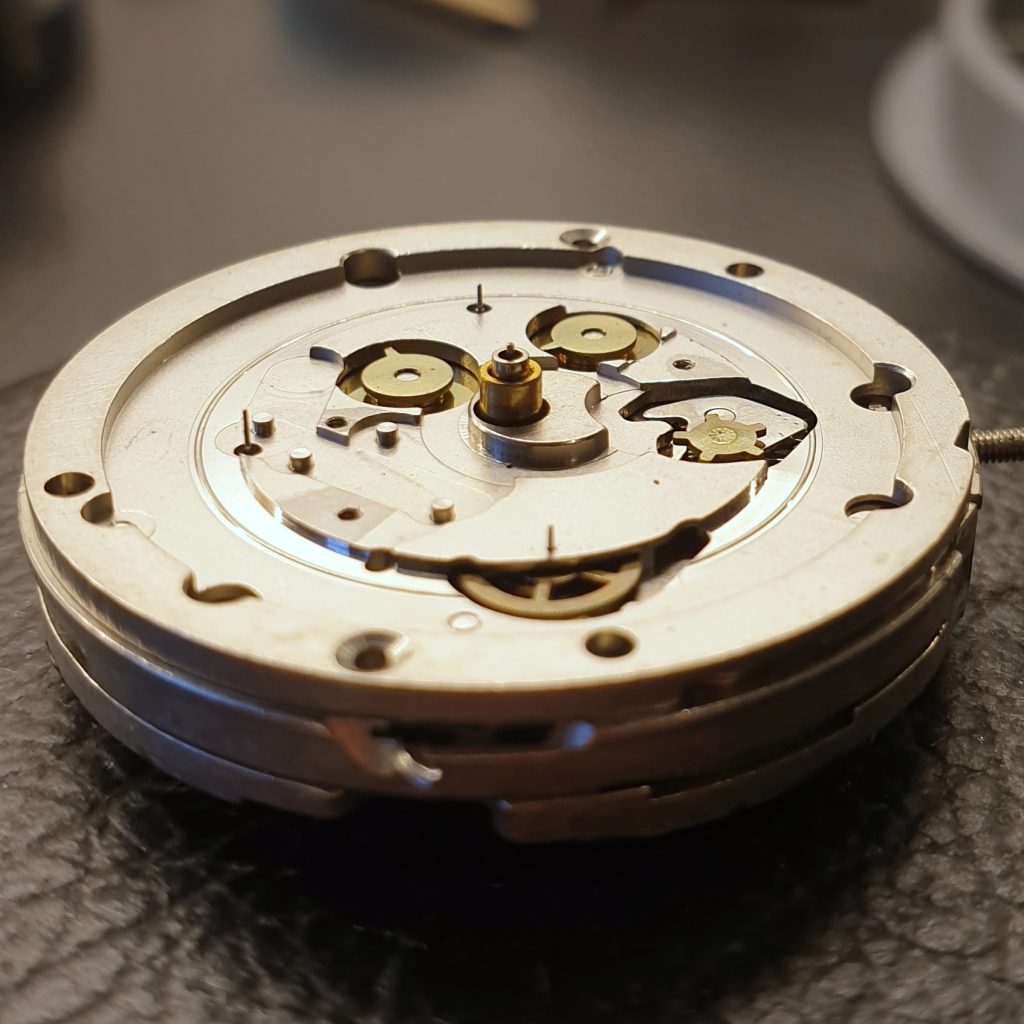
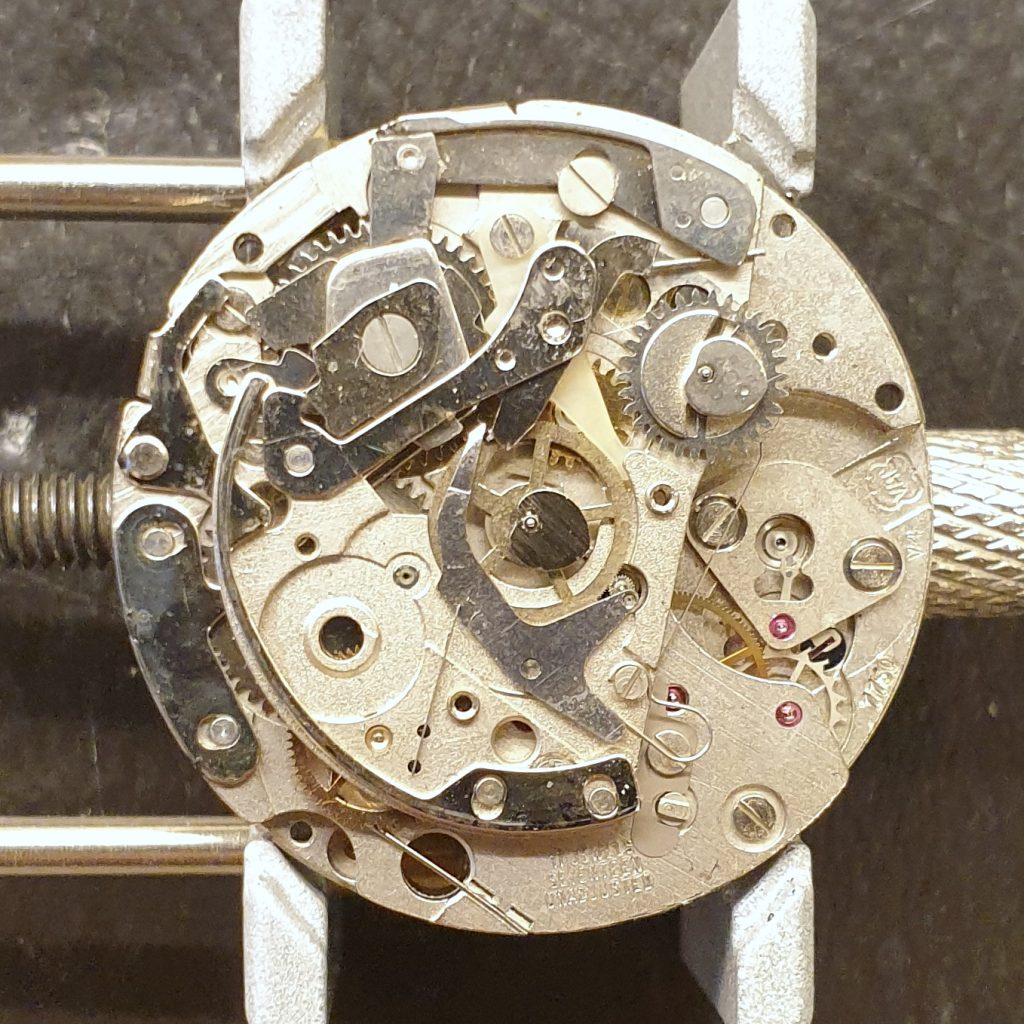
The watch belongs to a good friend of mine, an analog camera repairman I’ve helped out with parts for Hasselblad cameras. This is an early version of the Valjoux 7750 movement — it “only” has 17 jewels, later versions have 25. The crystal is a genuine mineral glass, but it’s quite scratched up. I’ll see if I want to try doing something about that — mineral glass is always trickier to fix. Now it was time to get the movement out of the case without smearing it any further, and without smearing myself and everything around me in the process. When you lift off the automatic module on a 7750, you’re met with a bit of a chaotic sight. There are arms and wheels scattered around with no visible symmetry. It also looks like someone went overboard with different types of spring mechanisms. You could say the movement has three layers — you lift off a larger plate and find even more mechanics underneath. Delicious stuff for tech nerds like me. It’s not just about unscrewing everything to put it back together again — you want to actually understand how the designer thought, and how all the parts work together.
Now the movement is completely disassembled. That’s a lot of bits and pieces. I couldn’t find any specific reason why the day/date advance was acting up, so I’m hoping a cleaning and fresh oil will do the trick. Since I started taking this watch apart and cleaning all the parts on Christmas Eve, it felt fitting to finish putting it back together on New Year’s Eve.
There are a lot of parts in this movement. The chronograph section in particular has many parts where you need to think carefully and know exactly how they should be oiled. In this case, I actually had a service manual with an oiling diagram, which is unusual. Often with old movements you have to rely on experience and oil accordingly. For this watch I used two types of oil and five types of grease, one of which was silicone grease, plus a surface treatment called epilame. Epilame is used in places where it’s especially important that the oil stays exactly where it should. Examples of this are the pallet jewels and the wheel they touch to produce that classic ticking sound, as well as the cap jewels that sit on top of a pivot end. You can clearly see the effect when you oil a part that’s been treated with epilame — the oil sort of pulls itself together. It’s a bit like surface tension on water. The two oils are mainly used on the pivots’ bearing surfaces. These bearings can be jewels or holes in metal. A thinner oil for wheels that spin a bit faster, and a slightly thicker one for larger, slower movements. Greases are used where metal genuinely rubs against metal. The mainspring, which is the watch’s motor, needs two different types of grease — one for the spring itself, and one for the wall of the barrel it sits in. The grease for the wall is called braking grease. A movement with automatic winding, driven by the wearer’s arm movements, needs a spring that isn’t fixed at its outer end — it has to be able to slip a little, but not too much. Otherwise a lot of the spring’s power would be lost, since it’s never wound up very far. So you use a grease that provides a bit of braking resistance while still lubricating. Another type of grease is used on the pallet jewels, to help them stay put on high-frequency movements. The silicone grease is used for gaskets.
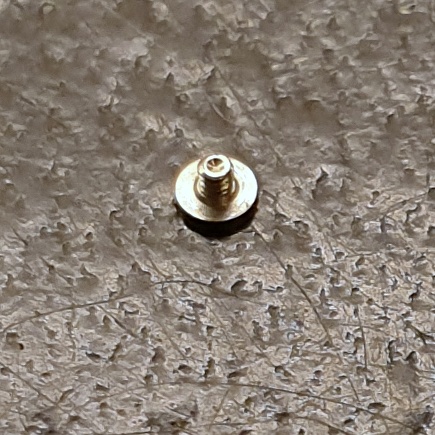
I have to say again — this really is a fantastic movement. But it did give me some trouble. Most of it was actually my own fault, though. One issue was that I accidentally swapped the position of two screws. Shame on me! I couldn’t figure out at first why it suddenly got so stiff to wind the watch manually after I’d put one of the bridges back on. Eventually I realized my mistake — the screw I’d put on the wheel sitting over the mainspring housing had a head with a larger diameter. That meant it was too big for the recess machined into the bridge that goes over it, which of course caused it to bind up a little. And speaking of screws that absolutely have to sit in the right spot — I’ve attached a close-up of the screw that holds the rotor in place on the automatic winding module. Notice the small notch machined into the end. That’s so it doesn’t catch on the underside of the chronograph’s seconds hand pivot. This way, they gained an extra thread turn without the screw ending up unnecessarily short. This particular one I’ve got completely dialed in now, and I know exactly where it belongs.
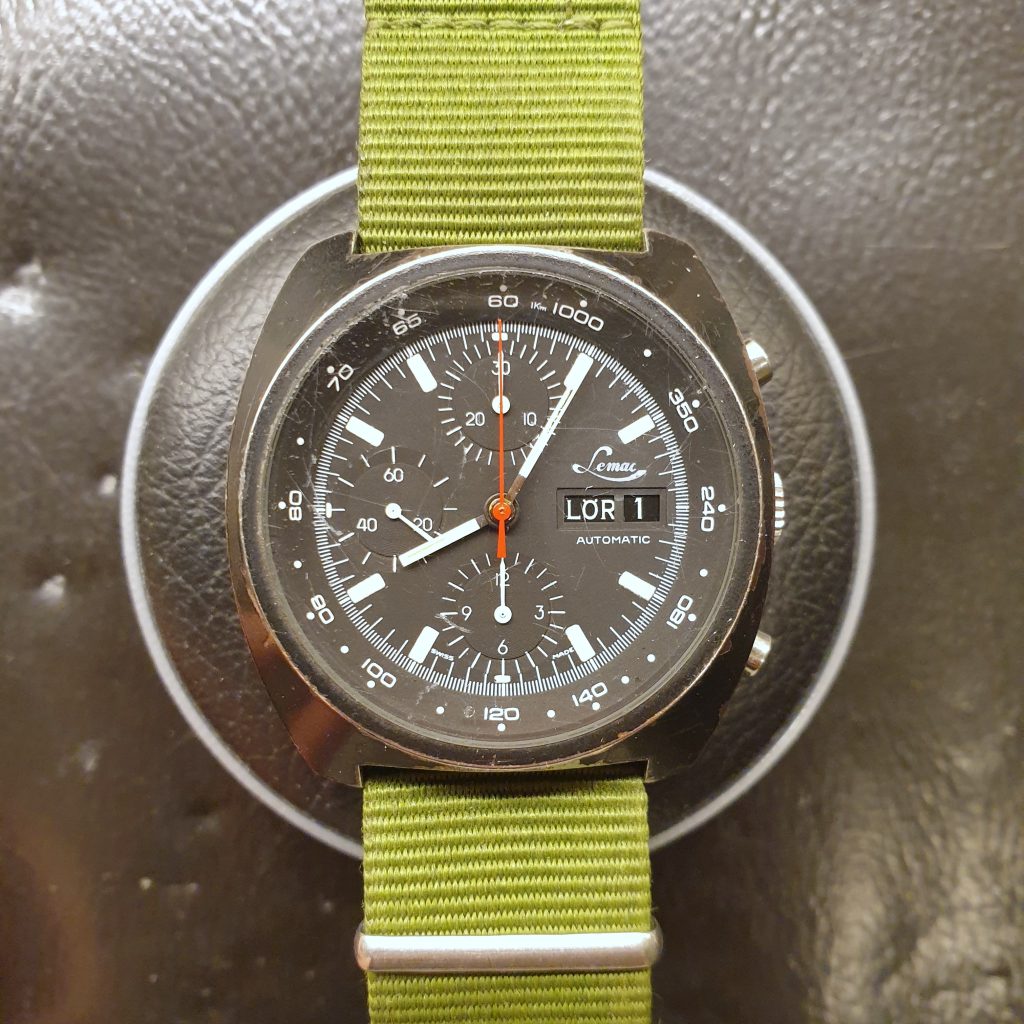
Take a look at how nicely the chronograph hands reset to zero — the minute marker at 12 o’clock, hours at 6, and of course that gorgeous centered red seconds hand. It’s not exactly simple, let me tell you — you can go a bit mad over less, especially if you’ve got even a hint of OCD in certain situations.
This is a pretty large watch, which normally isn’t really my style — but this one is genuinely good-looking. And the green fabric strap the owner put on suits it perfectly. And really, who wouldn’t want a watch with the early version of the 7750 movement in it? Especially one that runs pretty much perfectly now that it’s been serviced.