
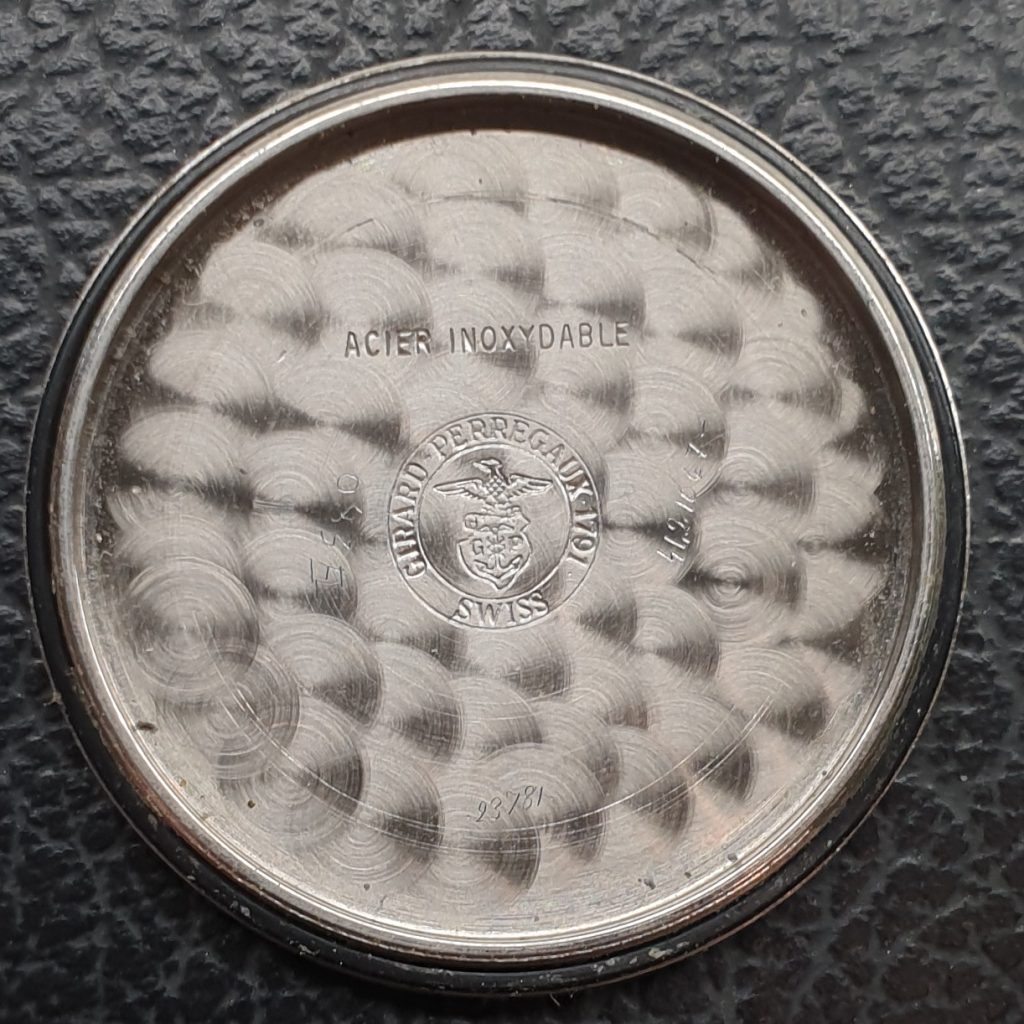
Girard-Perregaux can trace its roots all the way back to 1791. But it was a marriage in 1854 that became the real starting point. That was when Constant Girard married Marie Perregaux, both from watchmaking families. Constant came from La Chaux-de-Fonds and Marie from Le Locle—two incredibly important Swiss watchmaking towns. In 1856, they founded Girard-Perregaux. Then, in 1906, Constant’s son—also named Constant, just to keep things confusing, took over the Bautte House and merged the companies. And that is where 1791 enters the story, because that was the year watchmaker and goldsmith Jean-François Bautte started his first business. You can make of that what you will, but for me the Girard-Perregaux era began in 1856, not 1791. Anyway, let’s move on. If you look through the available databases of movements used in Girard-Perregaux watches from, say, the 1940s, ’50s, and ’60s, you will find plenty supplied by other manufacturers. Just to name a few: AS, Peseux, ETA, Felsa, and FEF. So clearly, something had changed within the company by then. Today, Girard-Perregaux is part of the Sowind Group alongside Ulysse Nardin. Another fine watch brand.
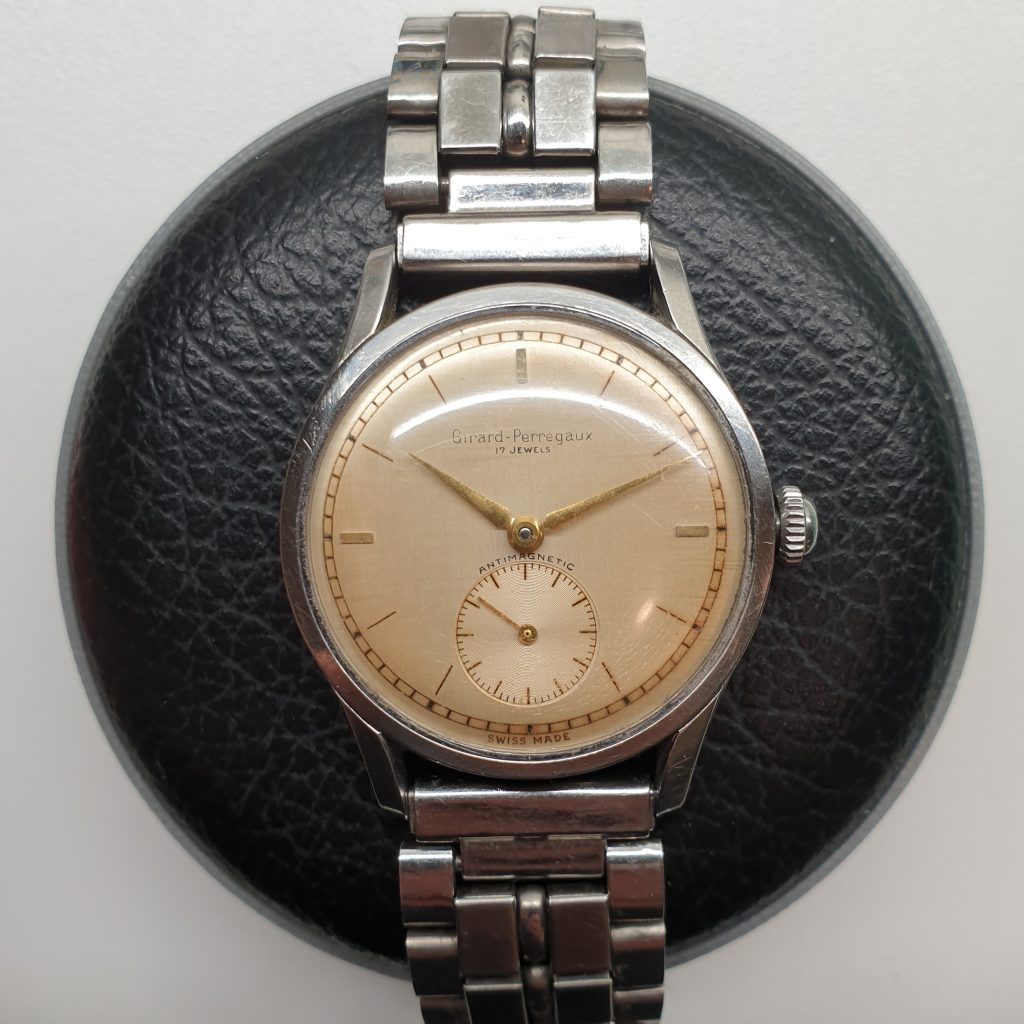
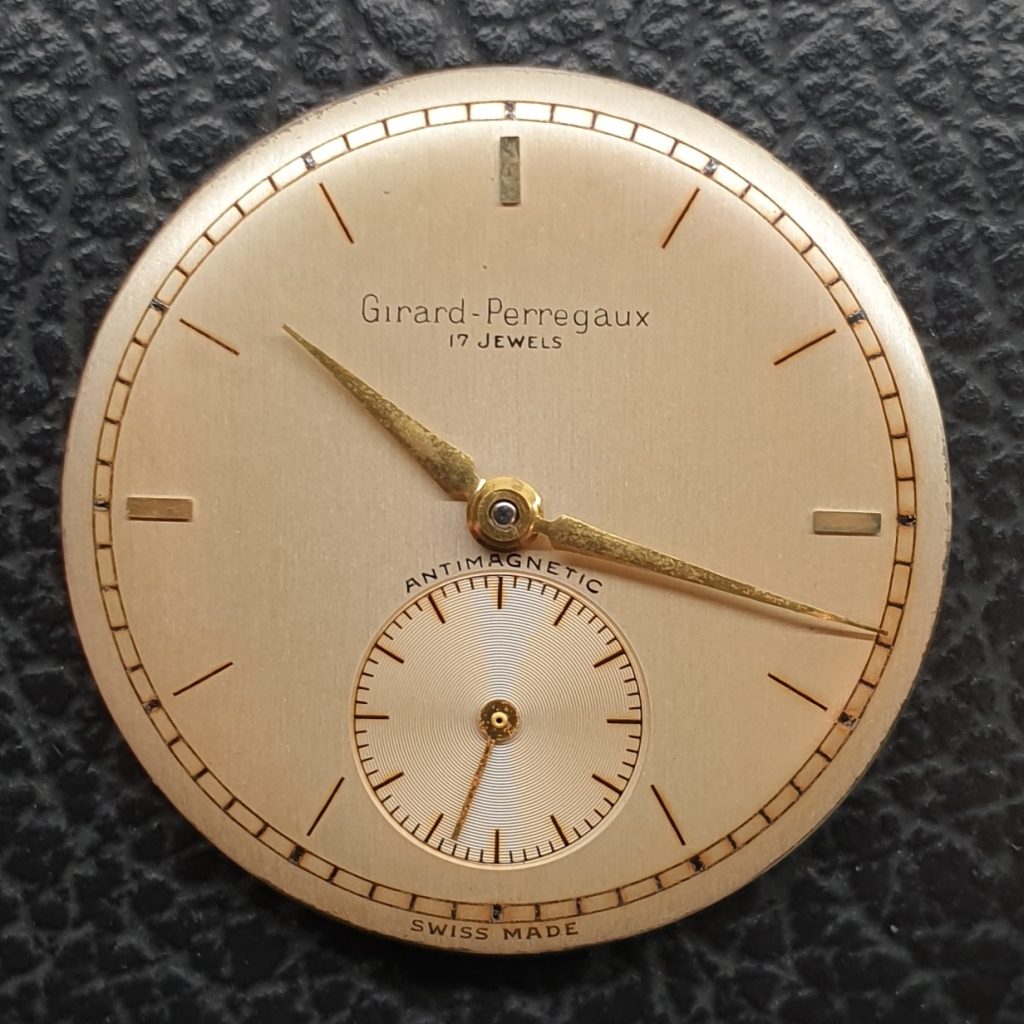
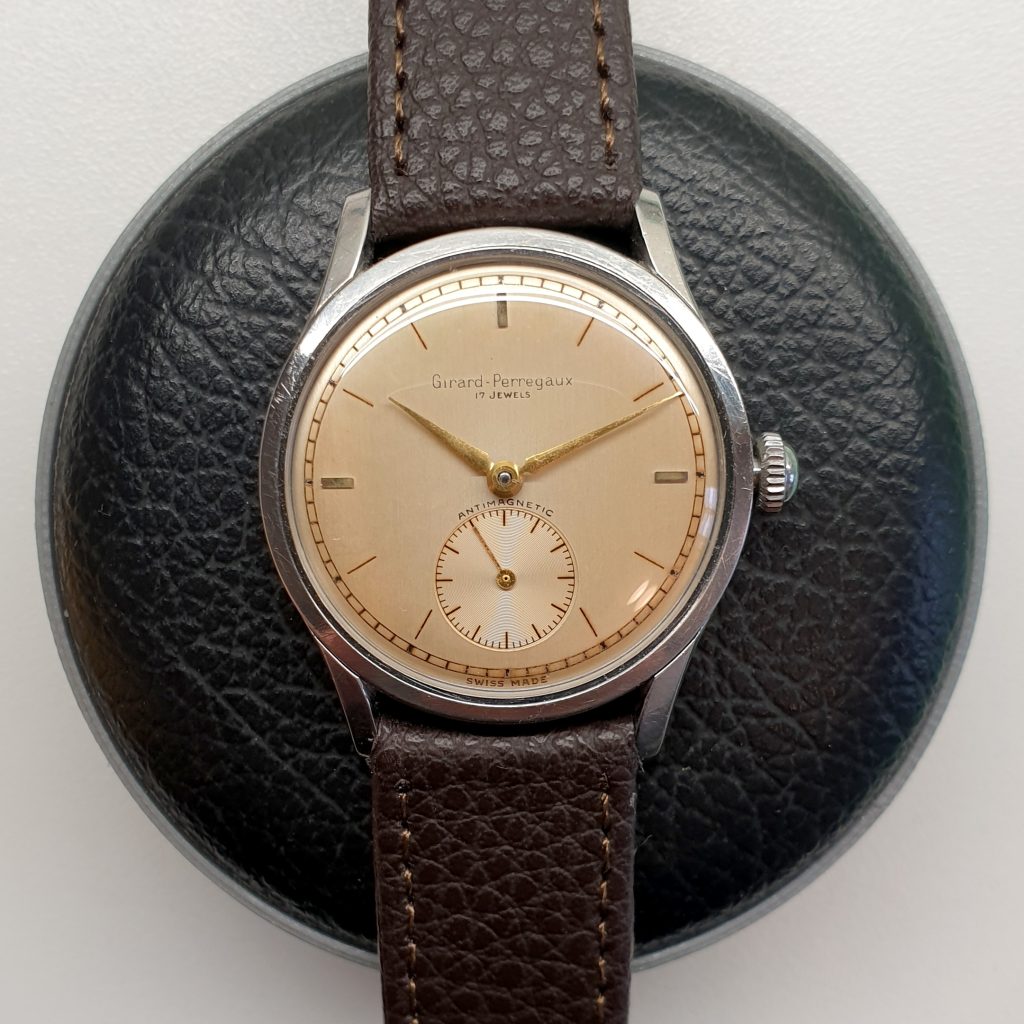
But now, finally, it is time for this watch—and what a gorgeous watch it is. The shape of the case is exactly how I want a watch to look. The dial is in remarkably good condition. The hour markers are simple yet delicate, with the ones at 12, 3, and 9 made slightly wider. But it is the others that really catch my eye: just a thin line, yet so elegant in context. To frame everything, the minute track has been placed between two rings around the outer edge of the dial. The text is restrained, although it could have been even more restrained. I might get used to seeing “17 jewels” beneath the name. Maybe. For me, “antimagnetic” is where it goes a step too far. Sure, I understand the marketing angle—they wanted to show off the movement’s 17 jewels and some form of protection against outside magnetic influence. But imagine if the dial had simply said Girard-Perregaux and nothing else. Unbeatable. Still, it is what it is, and the dial is exceptionally beautiful either way. It is also in outstanding condition.
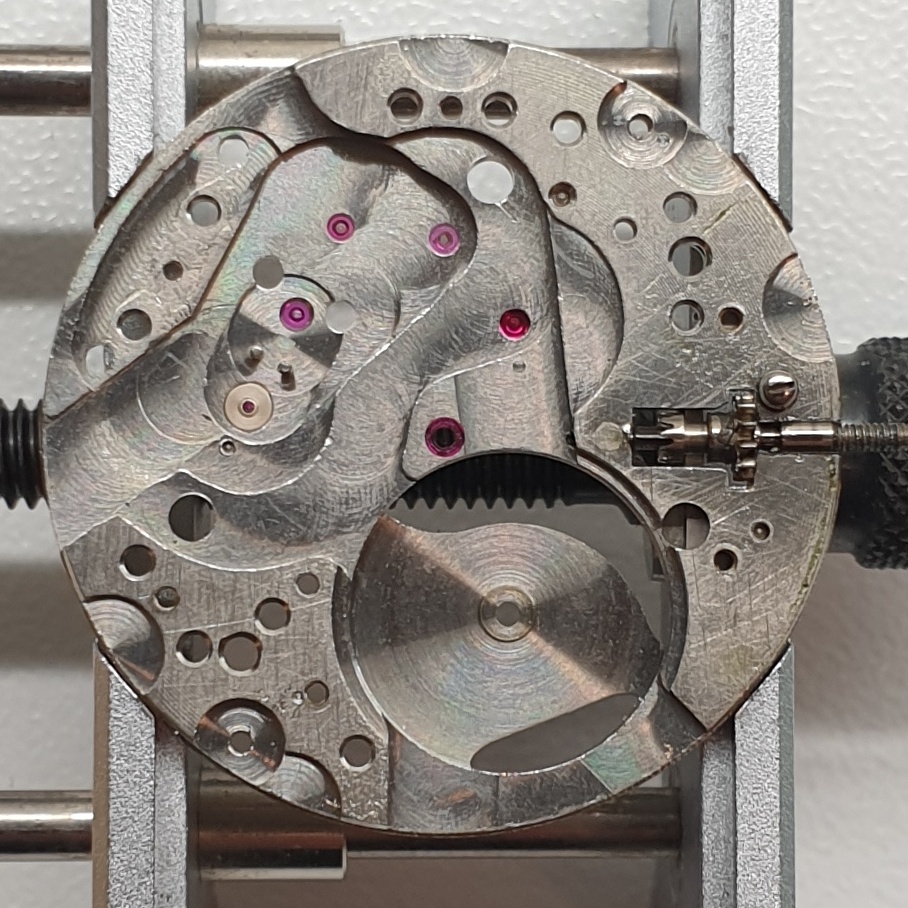
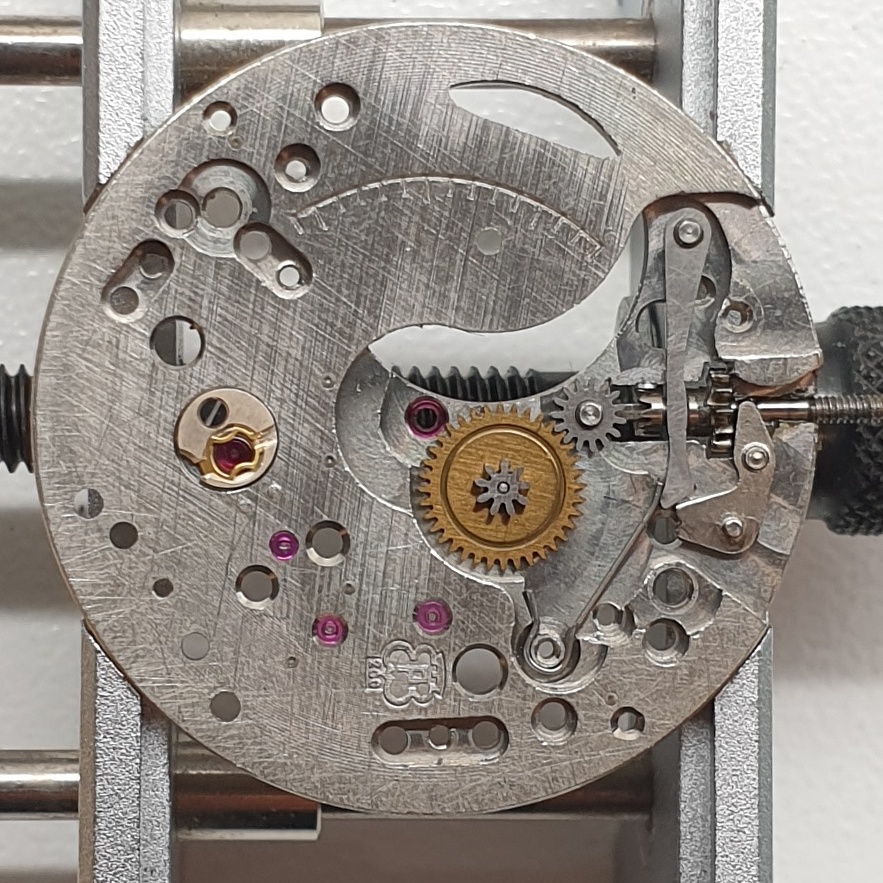
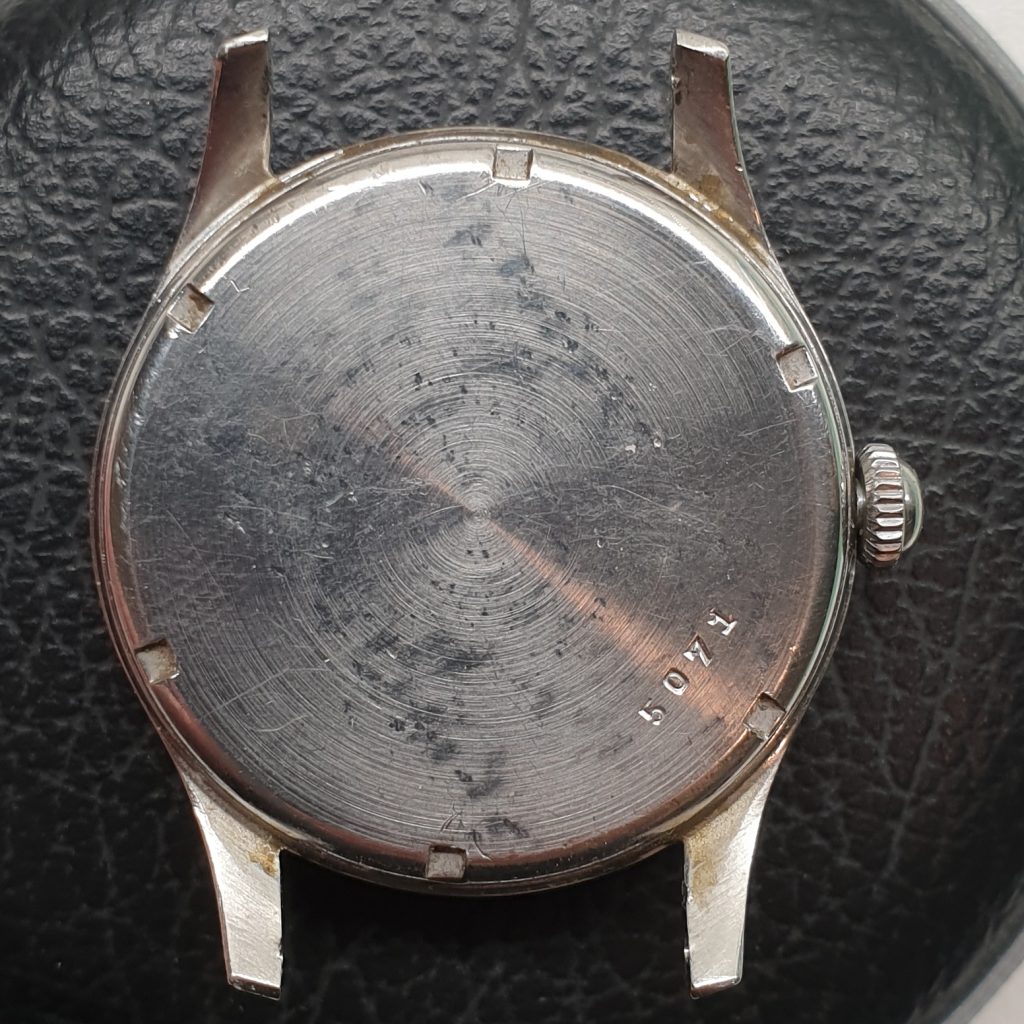
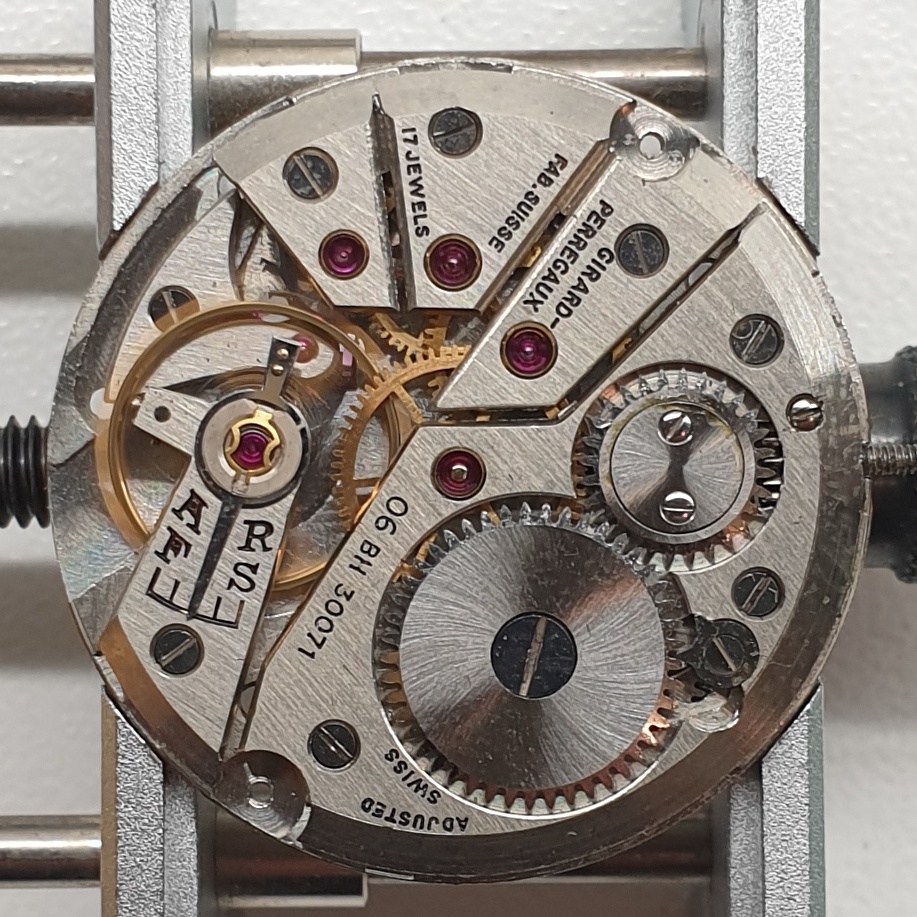
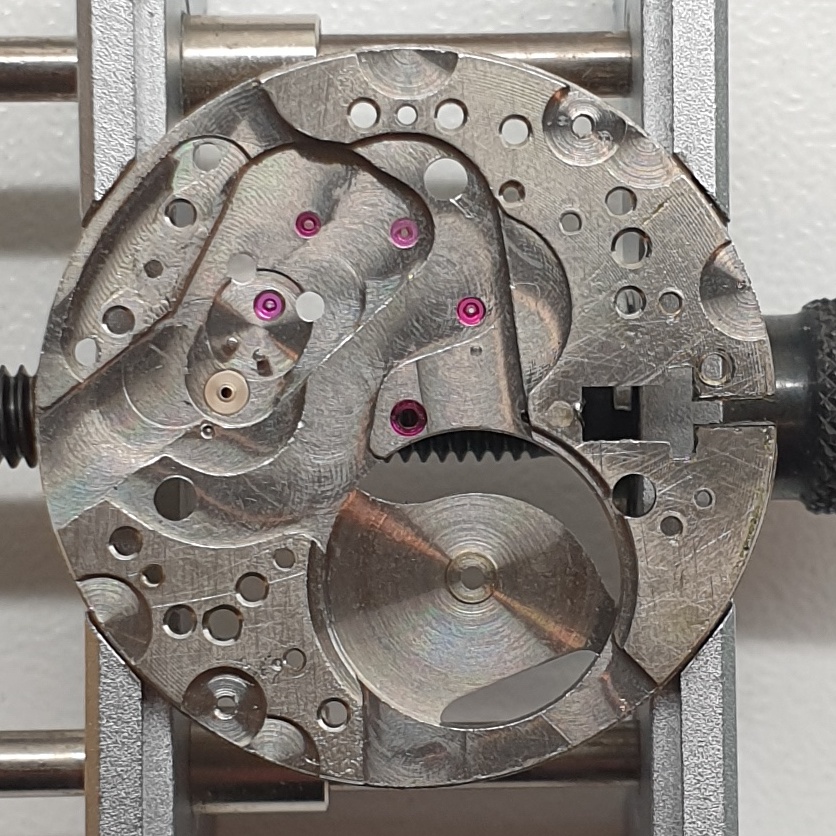
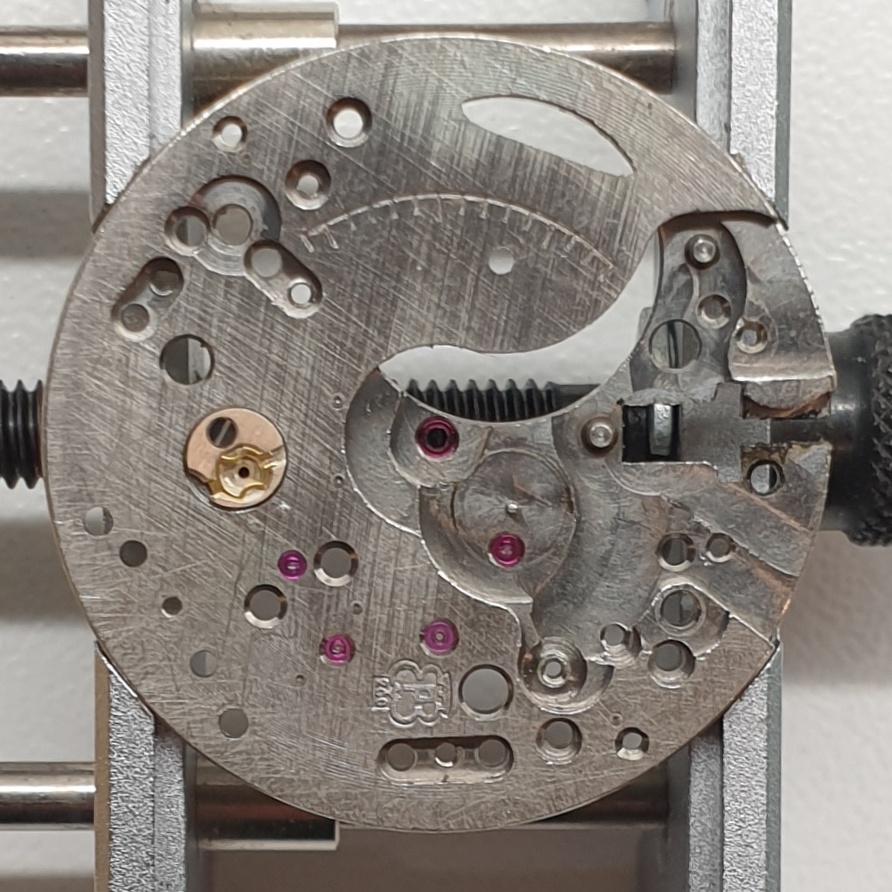
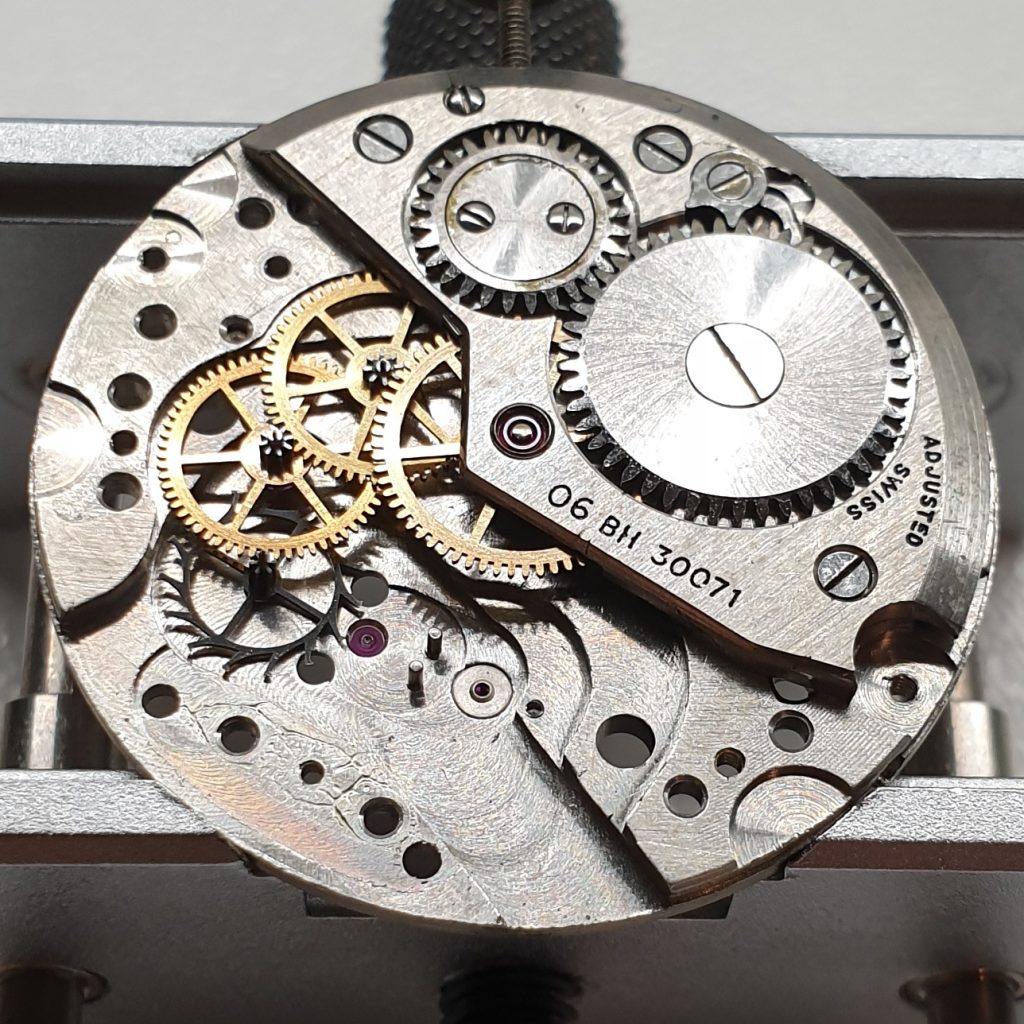
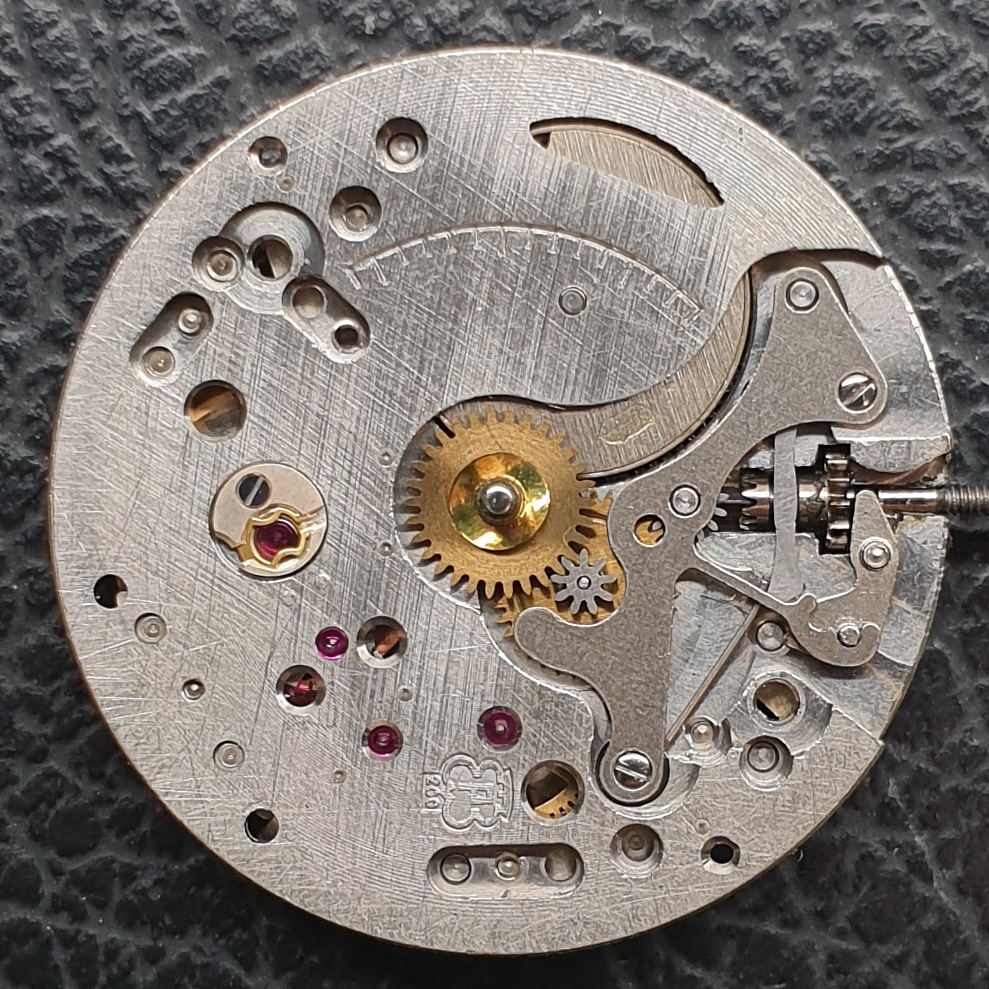
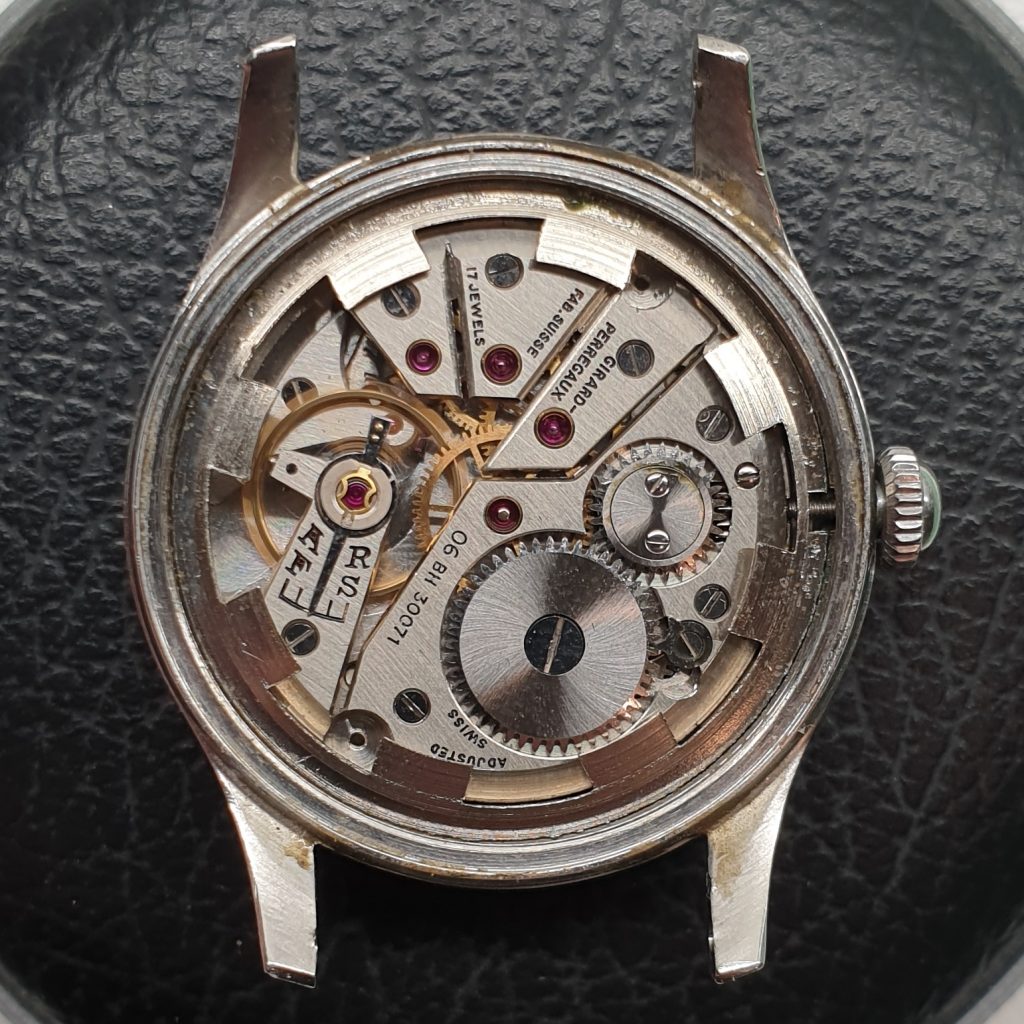
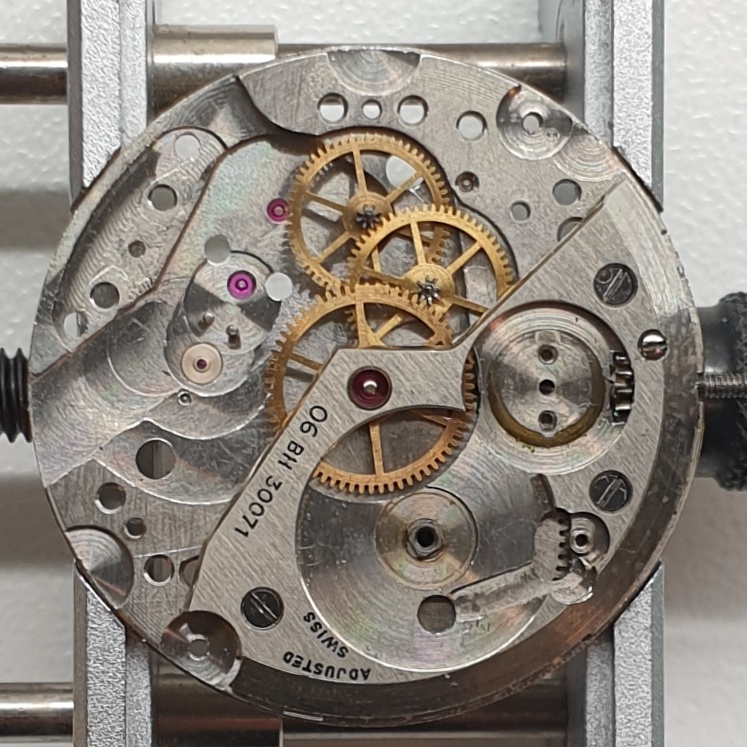
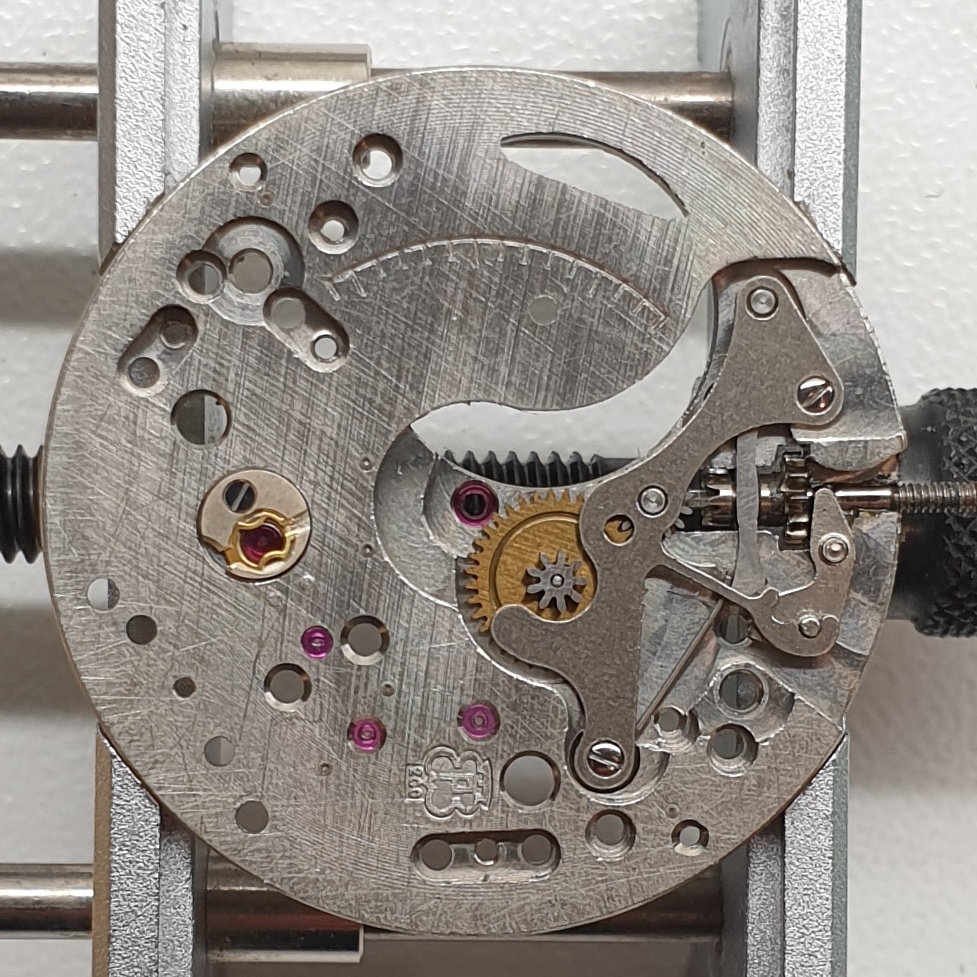
The watch belonged to the current owner’s grandfather, so here is another timepiece that has been passed down through the family—which is always great to see. It was running when it arrived, although a little unevenly. The owner suspected it might never have been serviced in its lifetime, but I did find three service marks inside the case, so that is something at least. The movement is a slightly modified Peseux 200. Girard-Perregaux simply calls its version the 06. The modifications are most likely cosmetic, as I cannot spot any other differences. One of those cosmetic touches can be seen on the train-wheel bridge. The idea was to make it look as though it were actually several smaller bridges, much like the construction often found in old pocket watches, where each wheel had its own little bridge. Here, though, it is all one bridge. One of its screws does not even serve any purpose beyond making it look as if there are three separate bridges.
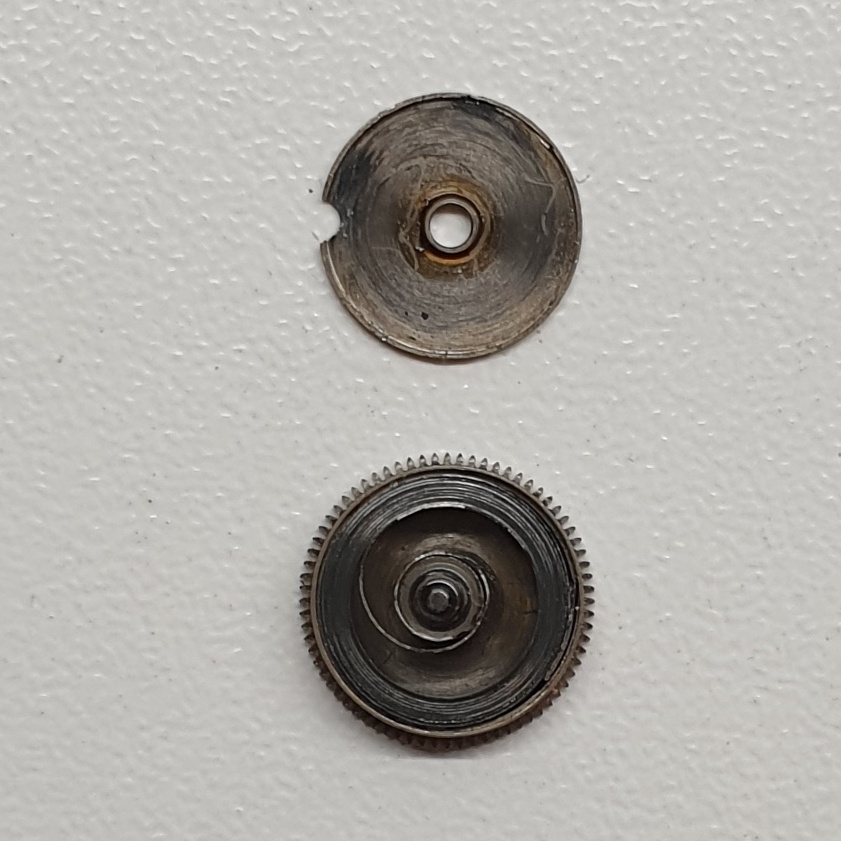
The service went smoothly, with no major problems. I replaced the mainspring because it had reached the end of the road. It was very old, for one thing, and the outer hook that catches on the edge of the barrel had also broken off. I also had to make a small adjustment to the hairspring’s position between the regulator pins. The movement showed slightly too much variation between different positions.
The crystal gave me a bit of a dilemma. It was a very old type, with a slightly different dome from what you usually see today. At the same time, it had several tiny cracks, so in the end I fitted a new one. The scratches could have been polished out, but the cracks would always remain—and only multiply over time. As for the bracelet the watch arrived on, I will try to put this gently: to my eye, they are not exactly a match made in heaven. It may simply have been the only bracelet the owner had that would fit. The watch has the slightly unusual lug width of 17 mm, after all. And yes, it really should be on a leather strap. Black or brown is a matter of taste, but I would go for something smooth or only lightly patterned so it does not steal attention from that wonderful dial. I would also guess the watch dates from the early 1950s, perhaps even the 1940s. And I will happily admit that this watch has left me feeling more than a little envious.