
One of Omega’s bit of a sales flops. But that’s actually the whole point. There simply aren’t that many of them around. But if we’re going to mention their real sales flop, then the Ranchero is definitely at the top of the list. But that will be a story for another post.
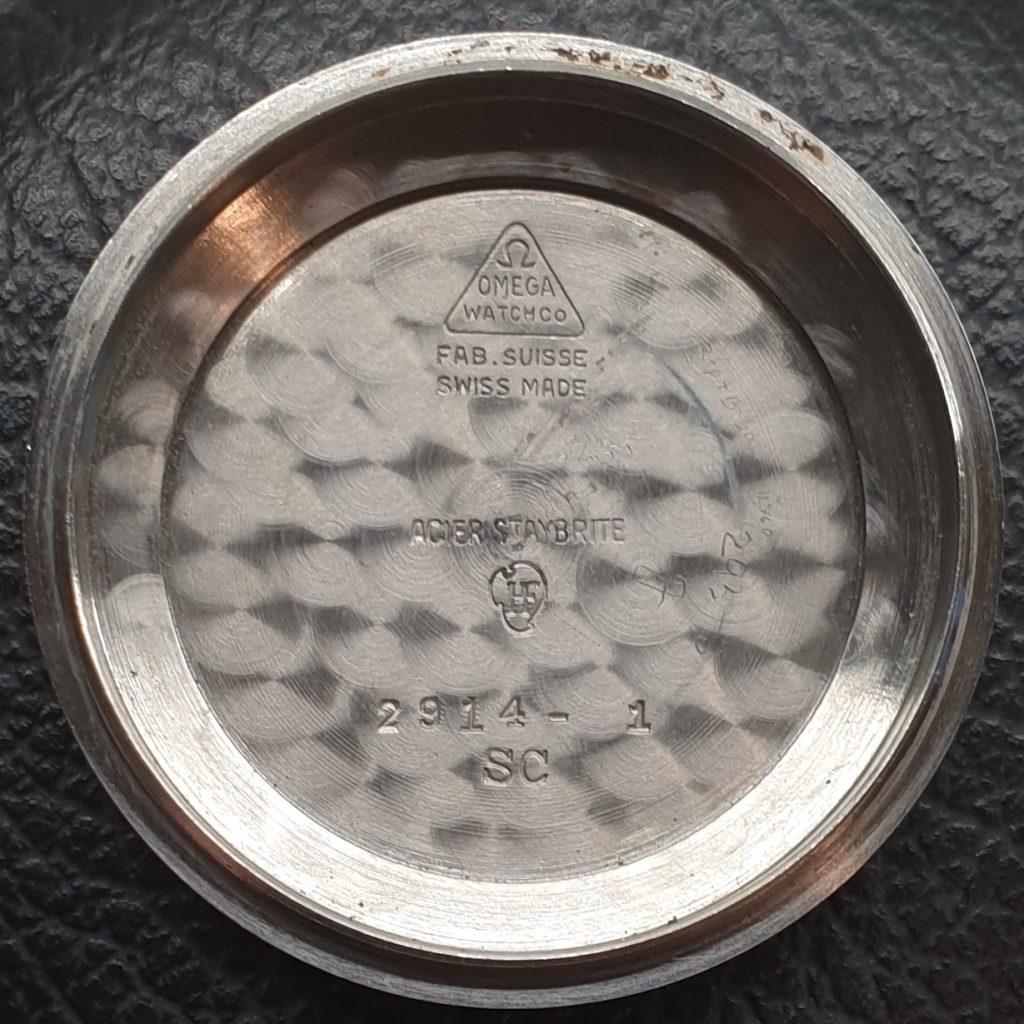
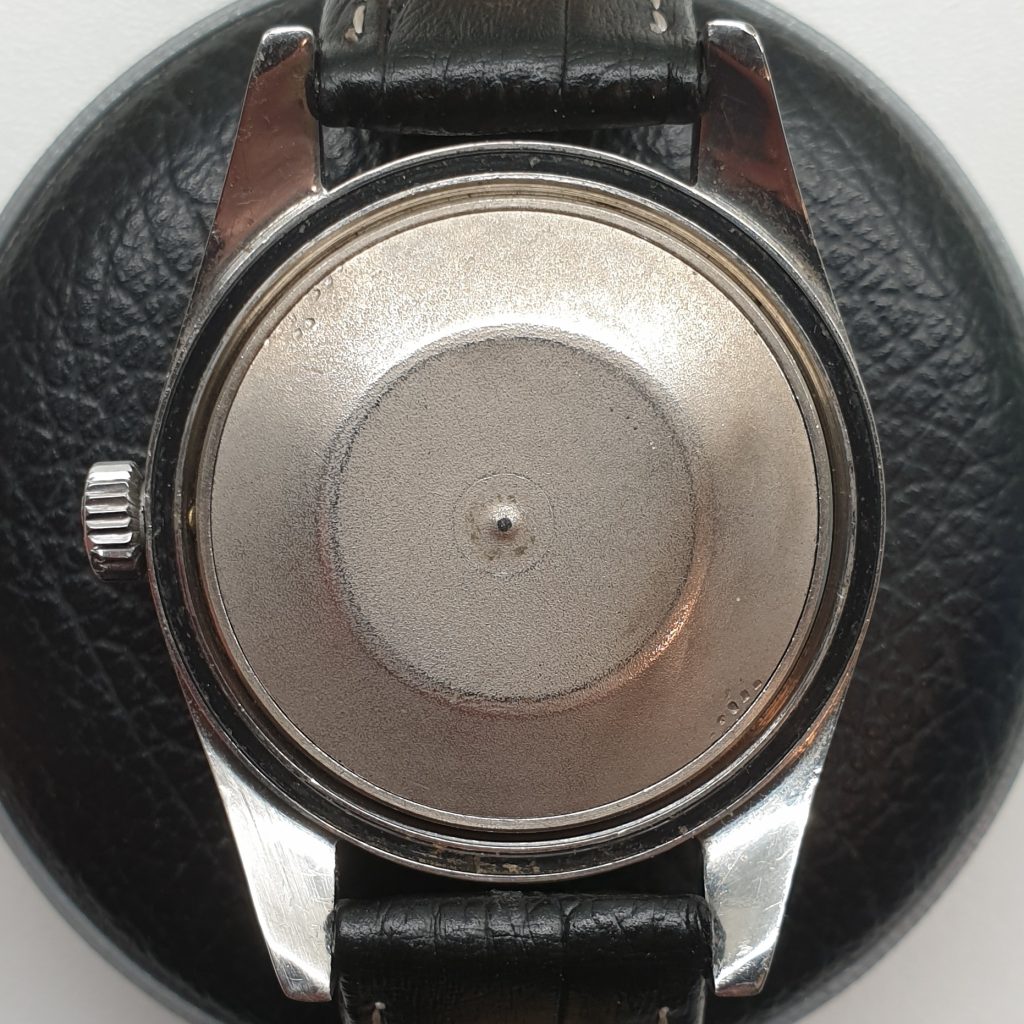
The year was 1957, and Omega released three important watches in their history that year. The Speedmaster, Seamaster 300 and Railmaster. But I’m only going to talk about the Railmaster in this post. I’ll save the other two for another post. The Railmaster was intended for technicians, researchers, scientists and so on. The reason for this was that the case had been better protected against magnetic fields affecting the movement. It was designed to withstand 1,000 gauss. This was achieved with a heavier ring around the movement, an extra cover underneath the regular caseback and a thicker dial. The dial is probably three times as thick as “normal” dials. Because magnetism is not good for a movement. Every time I service a movement, I demagnetize it. There are a lot of things inside a movement that can be affected by magnetism. It has happened several times that I’ve put a movement on my timegrapher after servicing it and thought it was behaving strangely. Then I realize I forgot to demagnetize it. And after that, the problems are gone.
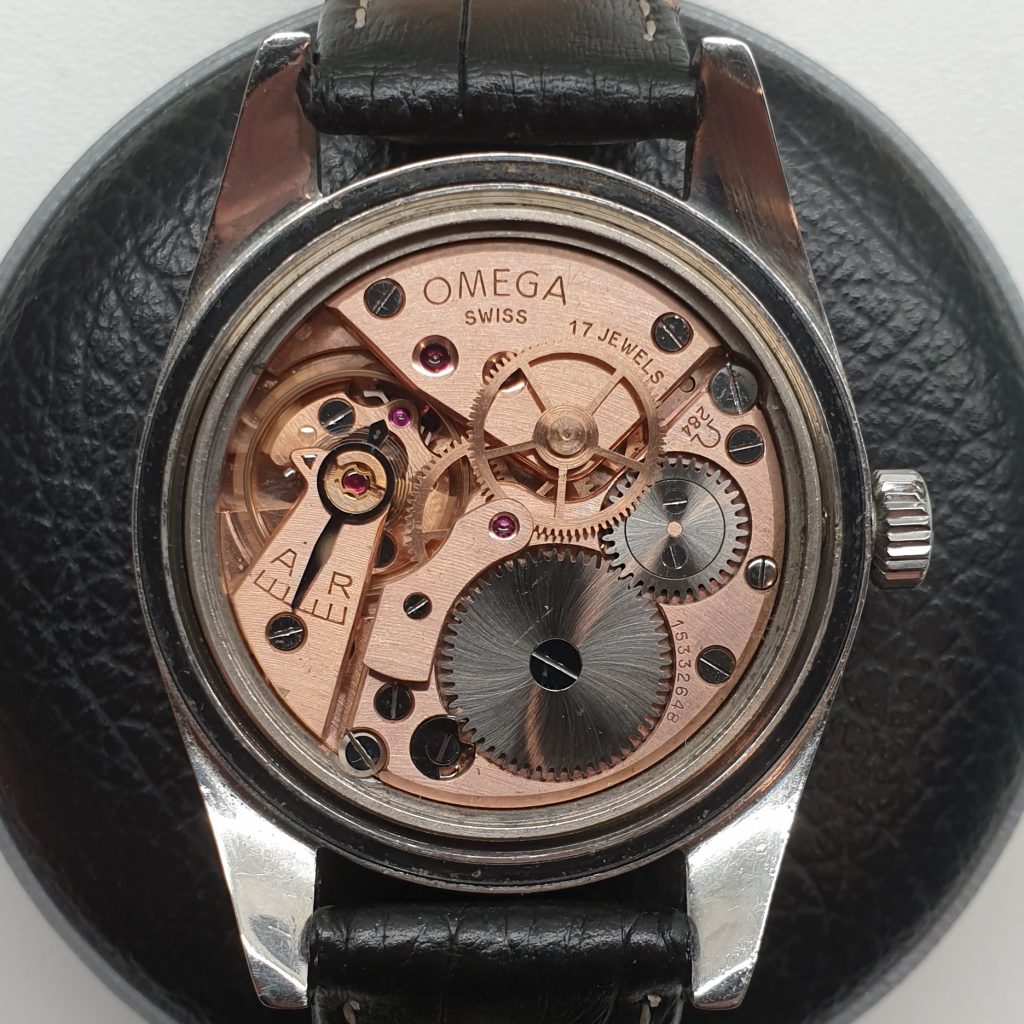
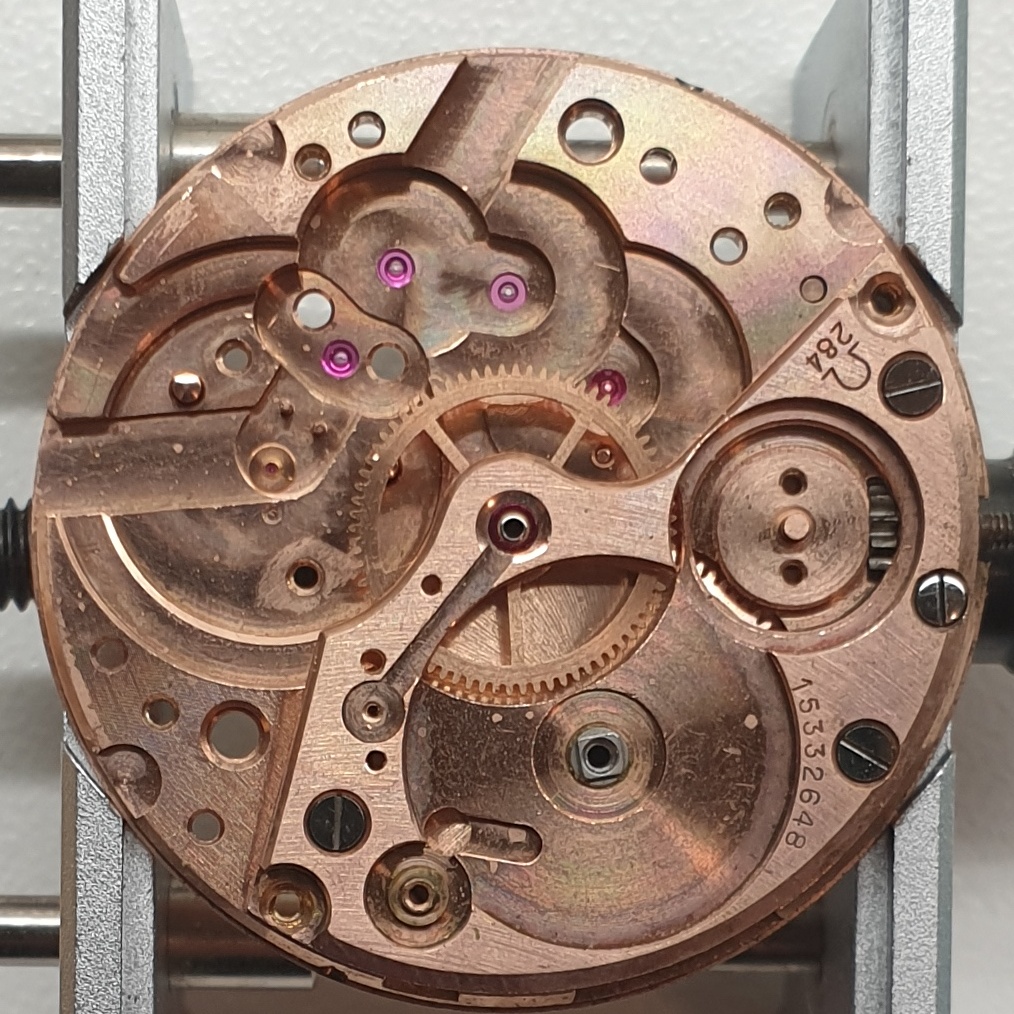
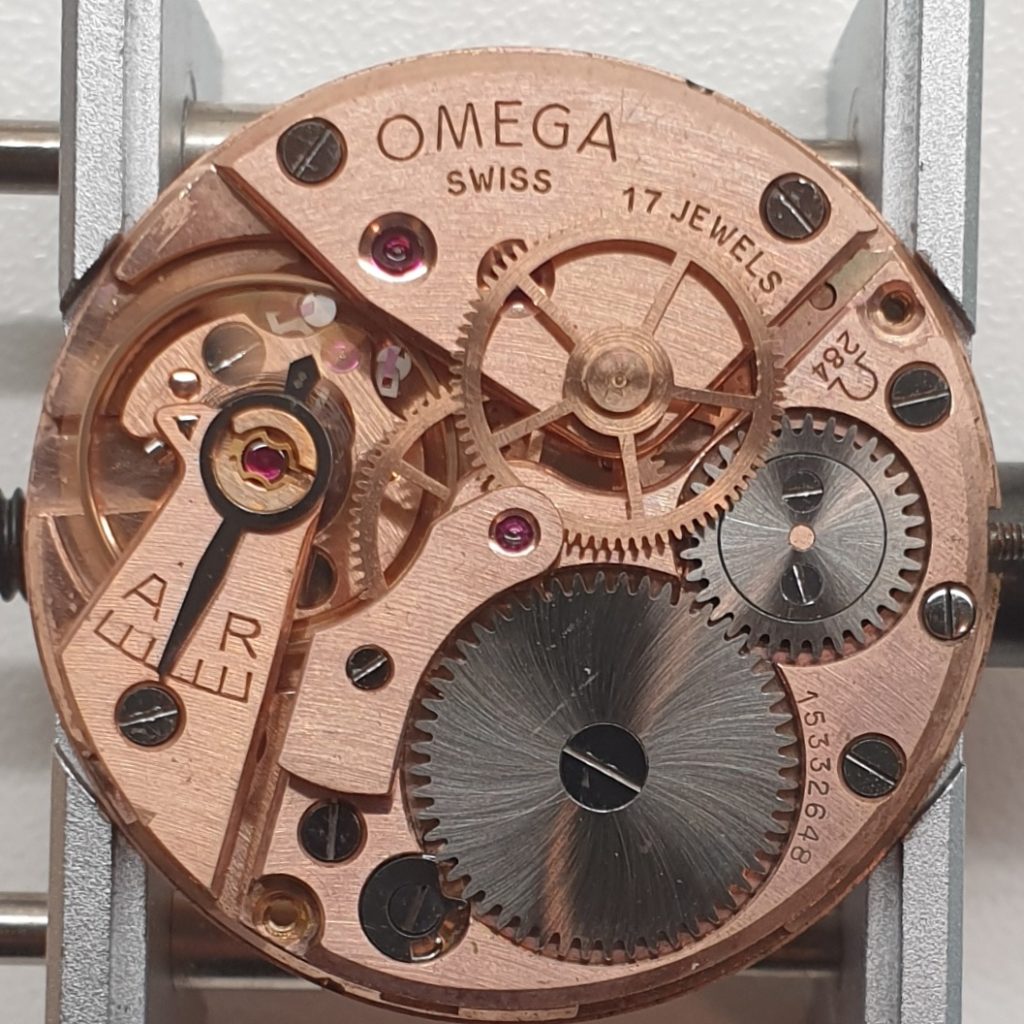
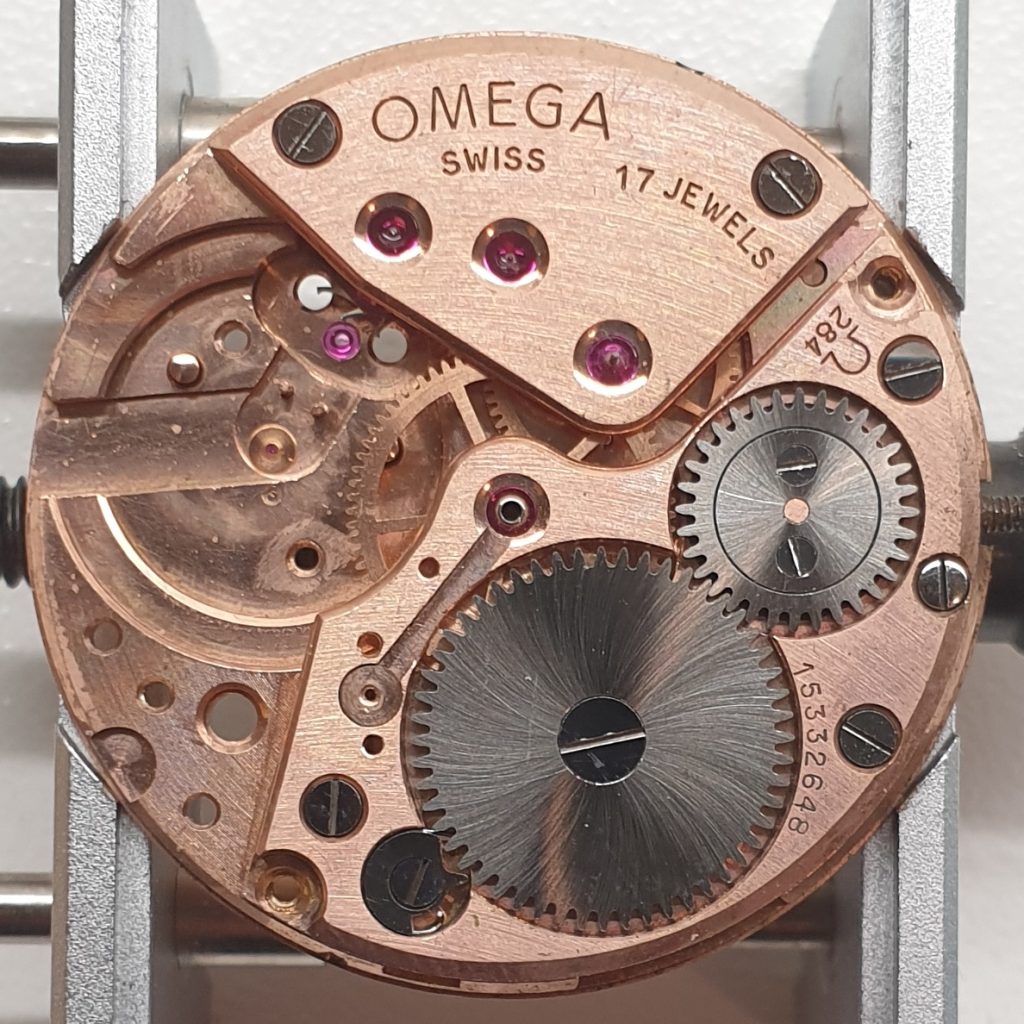
But back to the story of the Railmaster. It was six years after the watch was released before Omega discontinued it again because of poor market interest. And to some extent, I can understand that. Because the movements themselves were nothing special. Apart from the fact that it’s an Omega. That is always special. But they were also used in many of their other watches. The movement in this one is an Omega 284. A movement without any other features than telling the time. This makes servicing it very “simple”. Every feature, or complication as we call it, creates more work because of the additional parts. A chronograph is often the complication that creates the most extra work. A mechanical alarm is another one because of the number of parts involved. Automatic winding is yet one. But perhaps not because of the number of parts, but more because of the additional wear and how it affects the movement.
Continuing the story of the Railmaster, Omega decided in 2003, 40 years after discontinuing it, to revive it. This time it was produced for nine years before being discontinued again in 2012. But only five years later, it was back once again. This time as a 60th anniversary edition together with the other two watches that were released in 1957. But this time it was a numbered edition limited to 3,557 pieces. So it wasn’t really an attempt to bring it back once again for a longer time period. But time will tell. Pun intended.
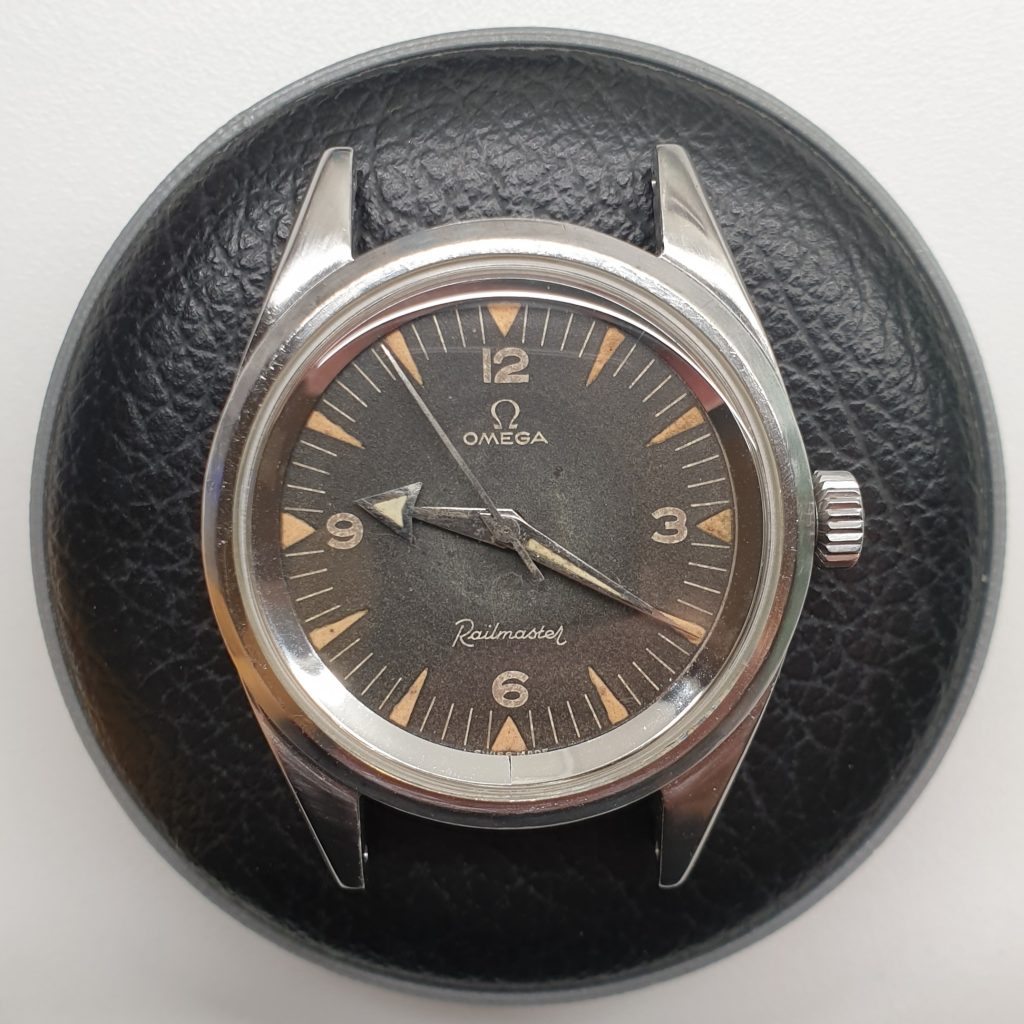
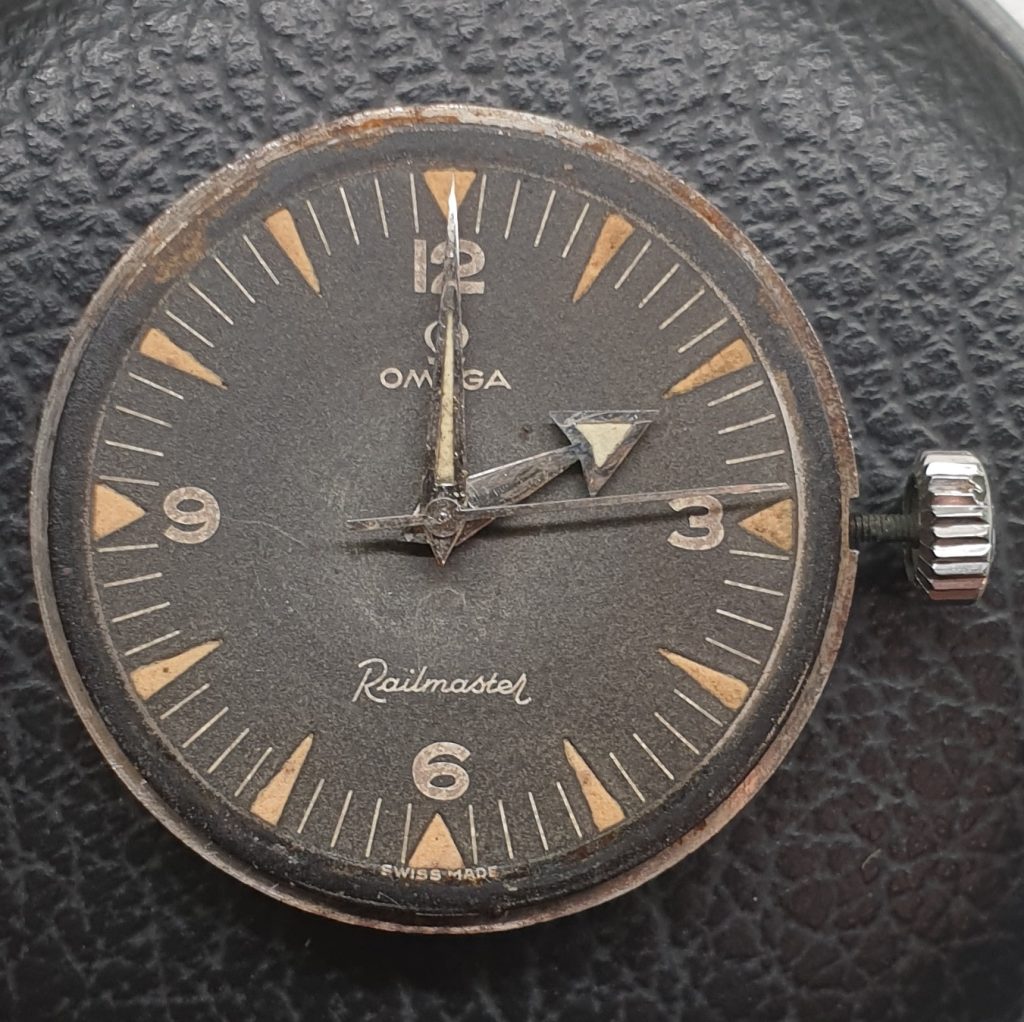
This watch is definitely from the first series from 1957, which is really cool. Both the reference on the watch, 2914-1, and the serial number on the movement verify this. But the serial number on the movement actually dates to 1956. So they probably already had finished movements sitting on the shelf when they started production. The reason it ended up with me was simply because the owner, who is an acquaintance of mine, wanted to find out how the movement was doing. He wanted to see the results from a timegrapher. And sure, I could do that. But the first thing I do when I get a watch in my hands is test all the functions. Now, this watch only has one function, and that is telling the time, but still. So I wound it up and tested the time-setting. When I set the time, I noticed first of all that it felt a little stiff and uneven. Then I also noticed that the movement could move slightly inside the case. Two red flags right away. Then I put it on the timegrapher. And let’s just say it wasn’t running particularly well. Barely 180 degrees of amplitude, which shows how much power is left when it reaches the balance. On top of that, there was more than a two-minute difference between the different positions. Red flag number three.
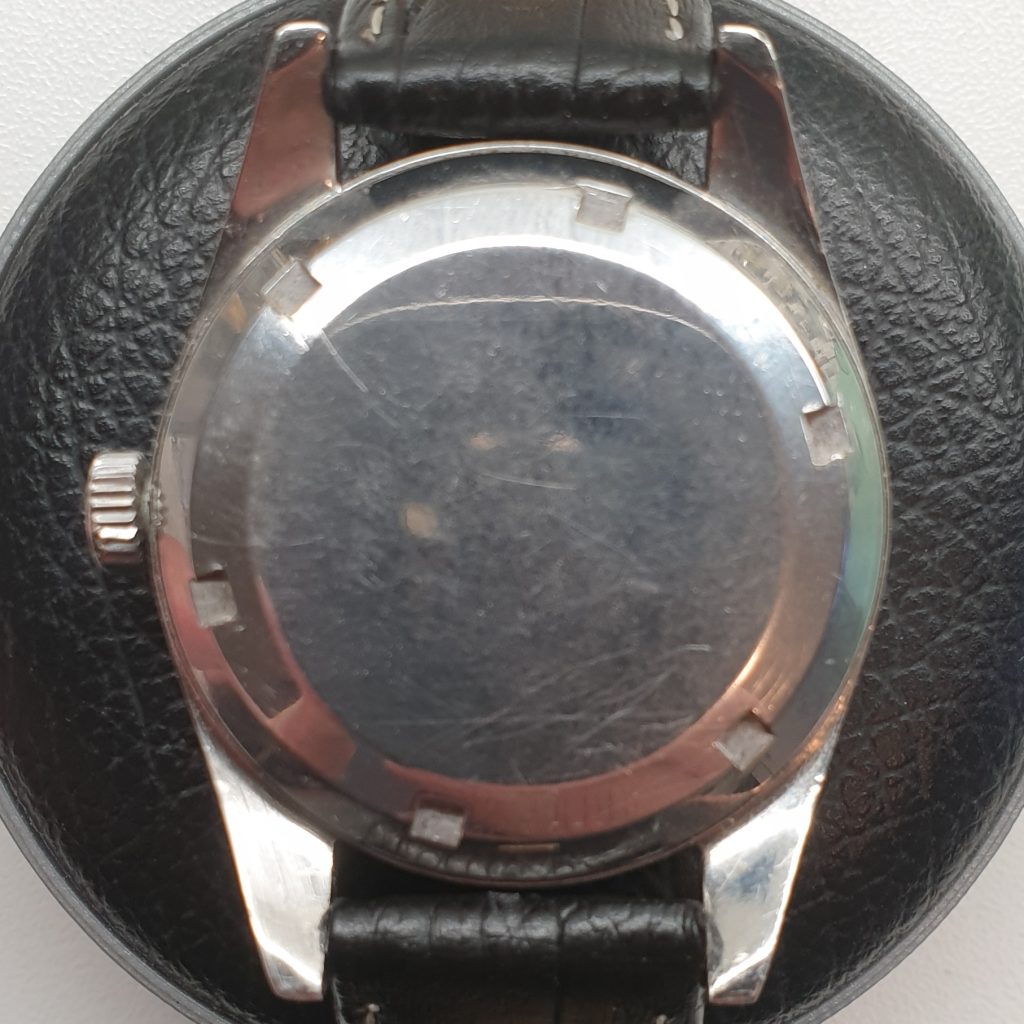
So I opened the case of the watch. Loupe on, and time to inspect the jewels and their bearing surfaces. Here I unexpectedly found relatively fresh oil. But not in all of the bearing surfaces. Okay, now the light bulb started to come on. Clearly, someone had tried to top it up with fresh oil without taking the movement apart and properly cleaning it. Because there was quite a bit of dirt in the movement otherwise. Red flag number four. Simply adding new oil is basically abuse of the movement. Old oil and dirt mixed with fresh oil create an excellent grinding paste. Someone had clearly wanted to make the watch run “reasonably well” before selling it. This happens more often than you might think, and it is really depressing. It’s not just a sign of a lack of knowledge, but also a huge lack of respect for a classic watch. The reason the movement was sitting loose inside the case was not because screws or clamps were missing. It was simply because, among other things, the wrong type of crystal had been fitted. This case is supposed to have a crystal with a steel ring on the inside. Apart from creating a tighter fit against the case, it can also provide support for the movement on the dial side. There was also a ring missing that should sit on the inside of the caseback. It is supposed to press against the additional cover underneath the caseback. And since the correct type of crystal wasn’t fitted here and this ring was missing, the movement was sitting a little loose. It turned out, however, that this ring was very difficult to find. So for the time being, I designed a ring using CAD and 3D-printed a replacement. Definitely better than allowing the movement to move around inside the case. I contacted the owner and told him how things stood. That conversation ended with him wanting to have it serviced. He realized that a watch like this needs to live up to its status and value.
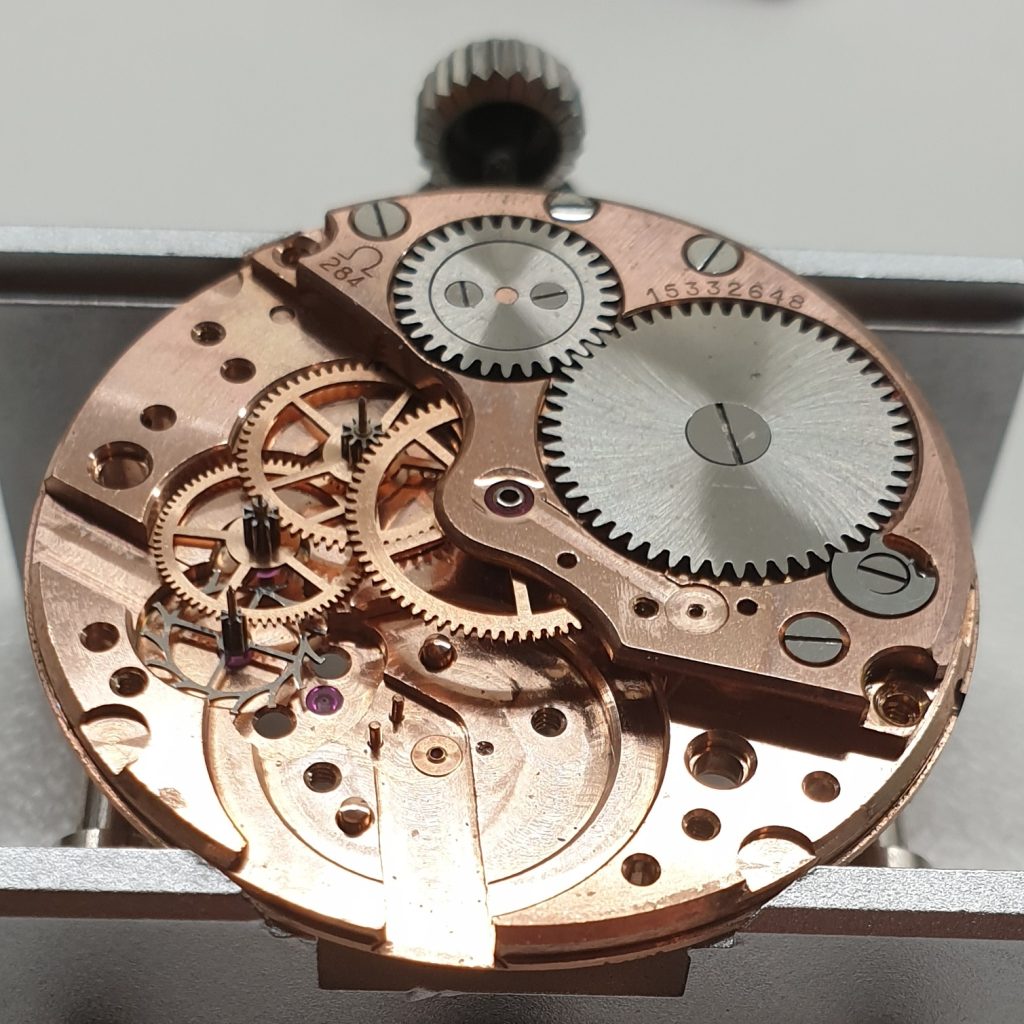
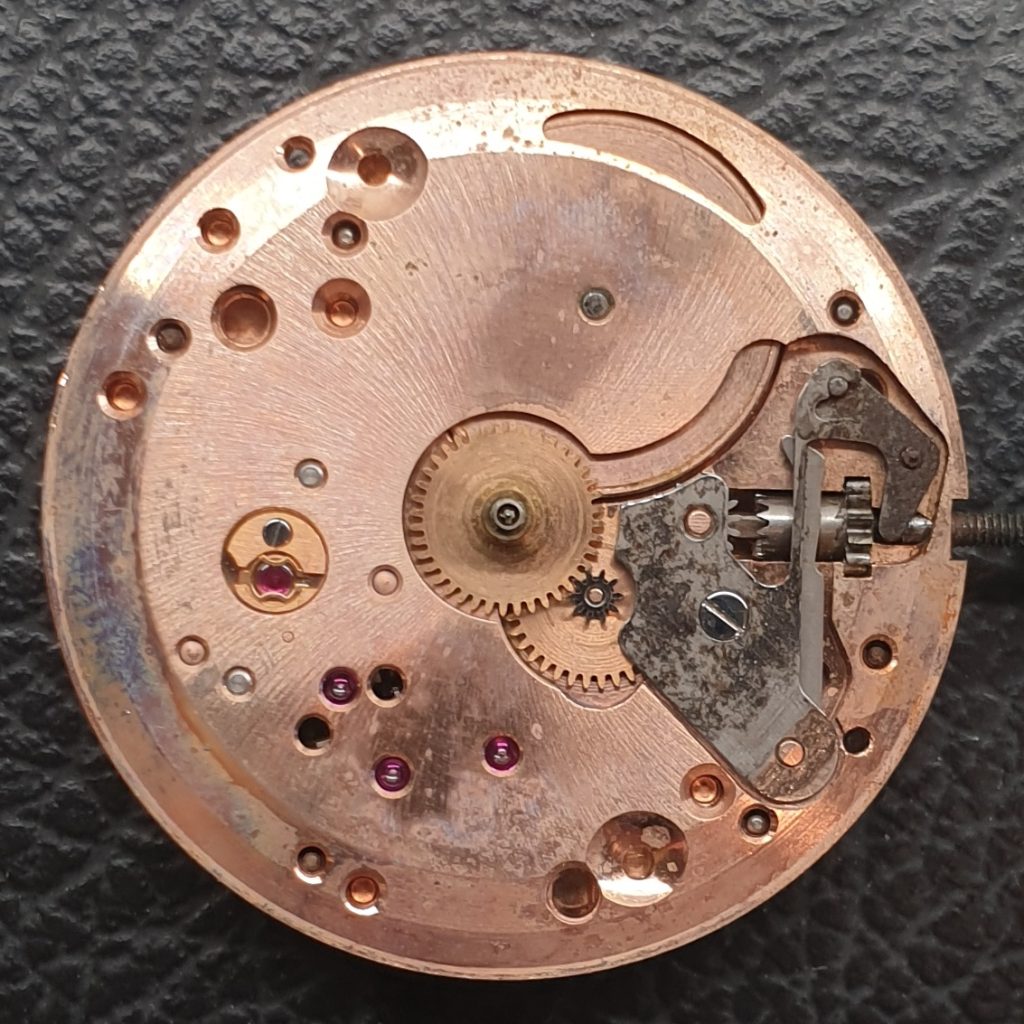
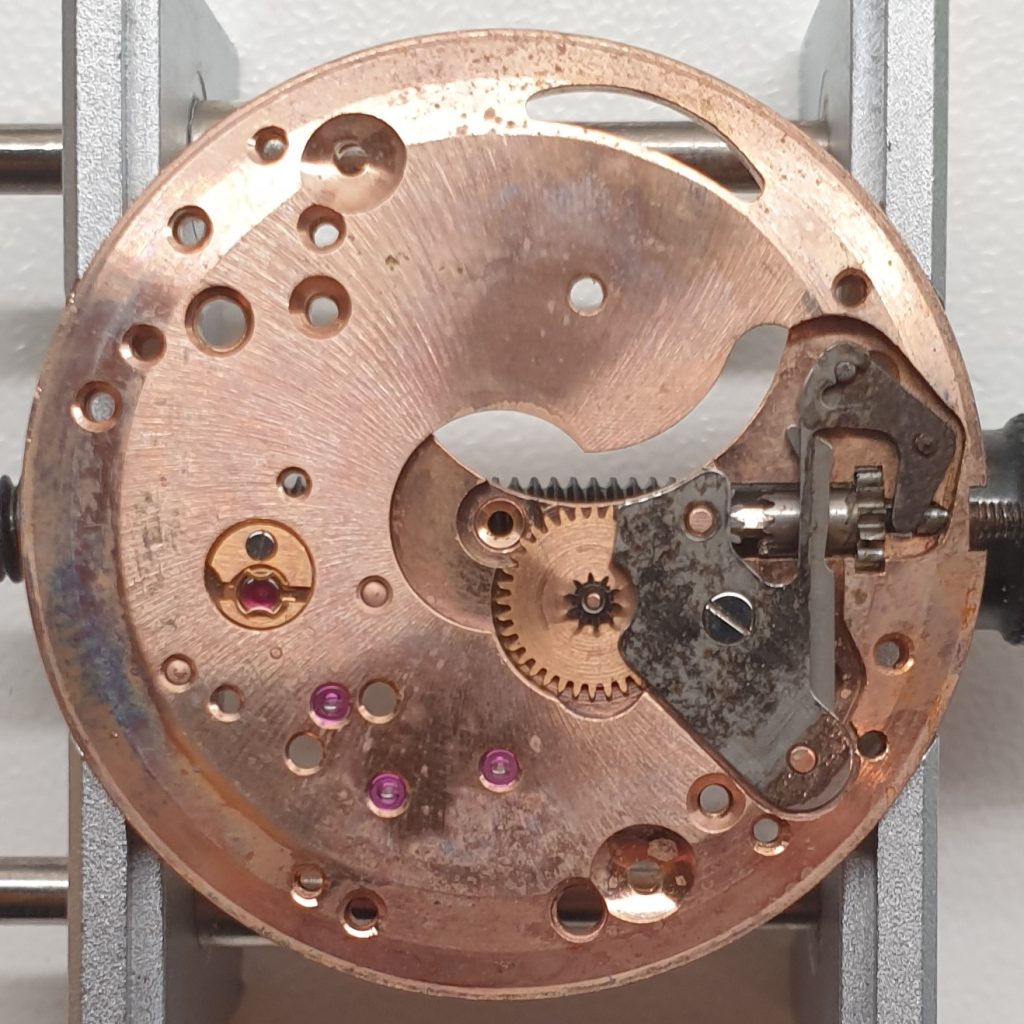
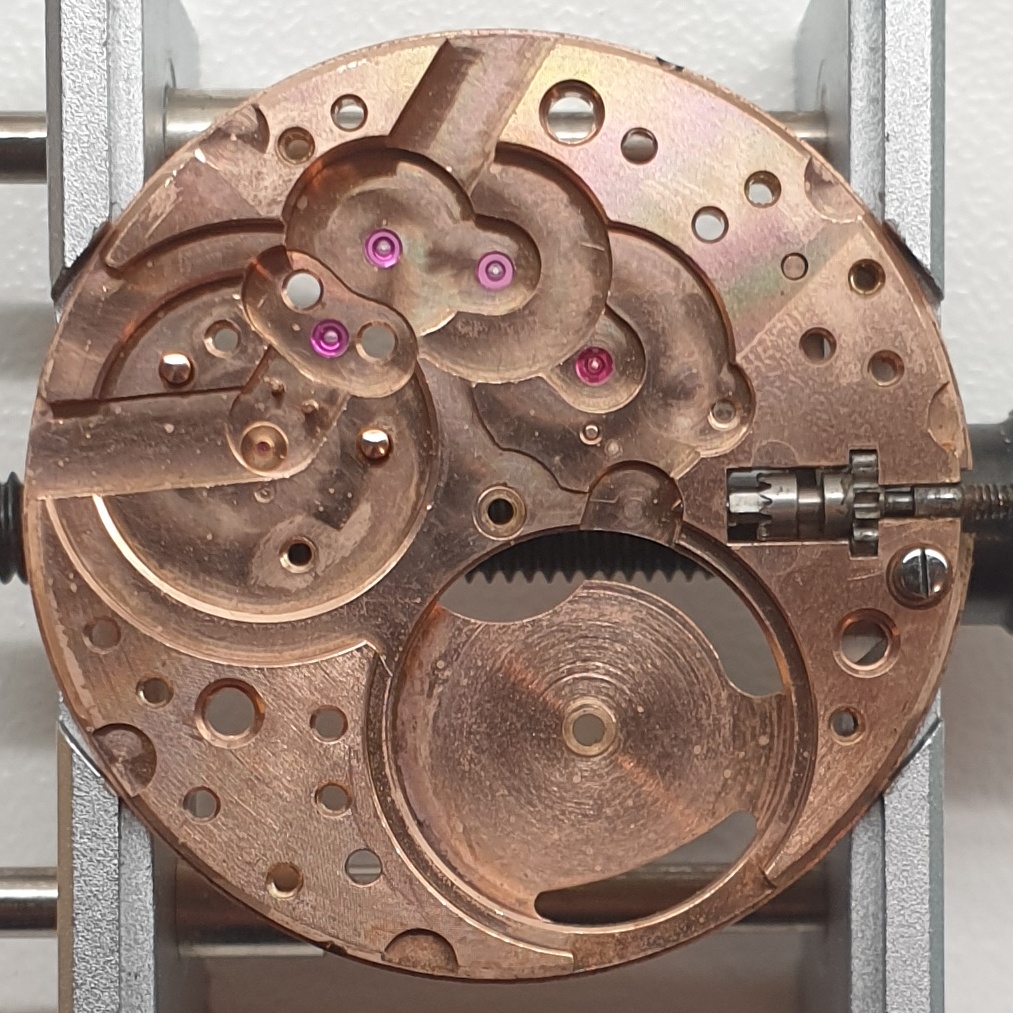
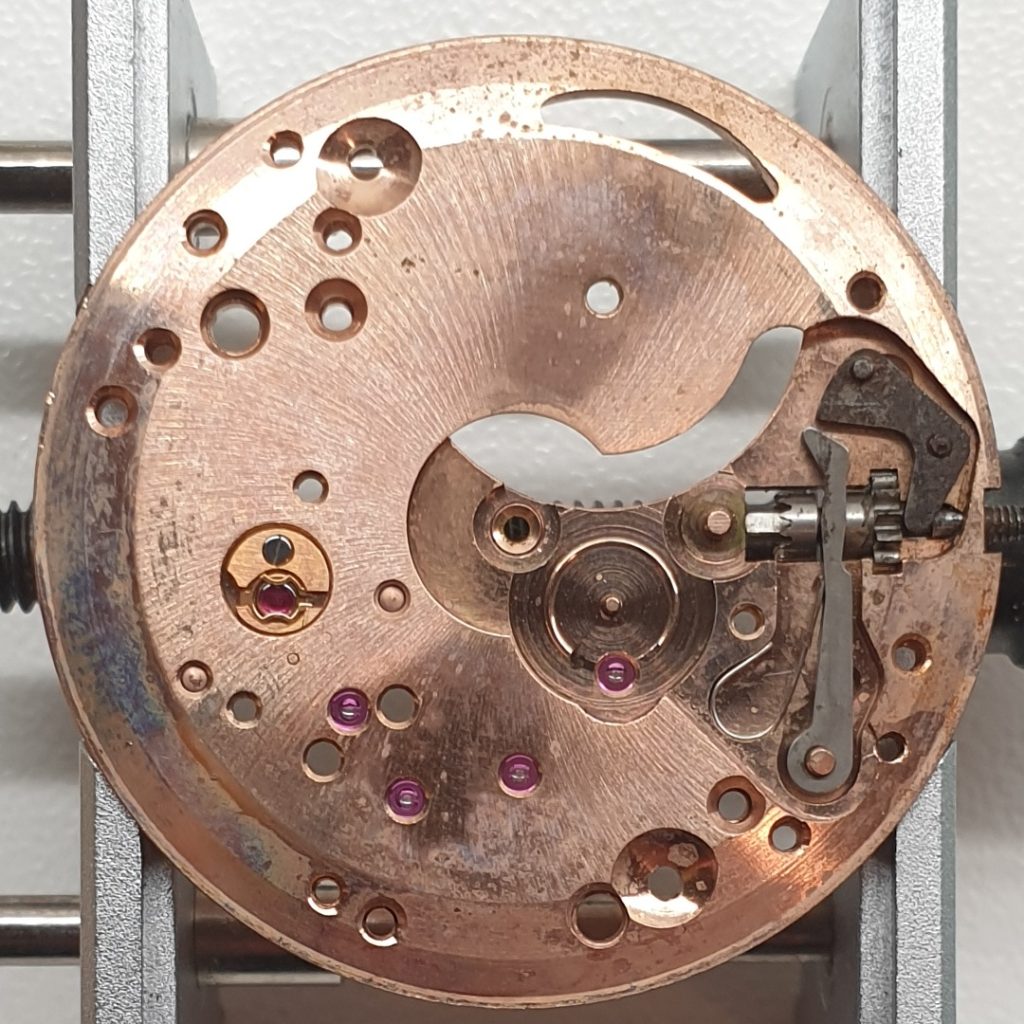
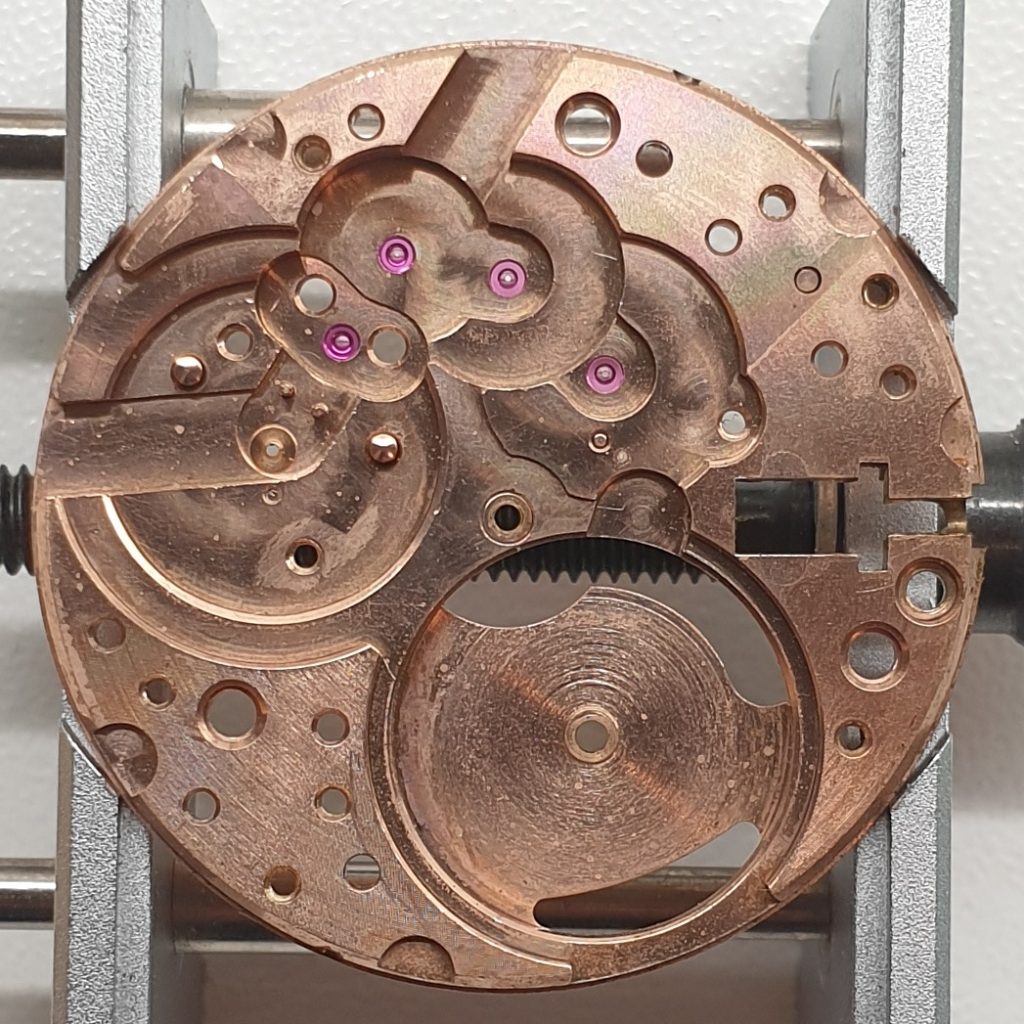
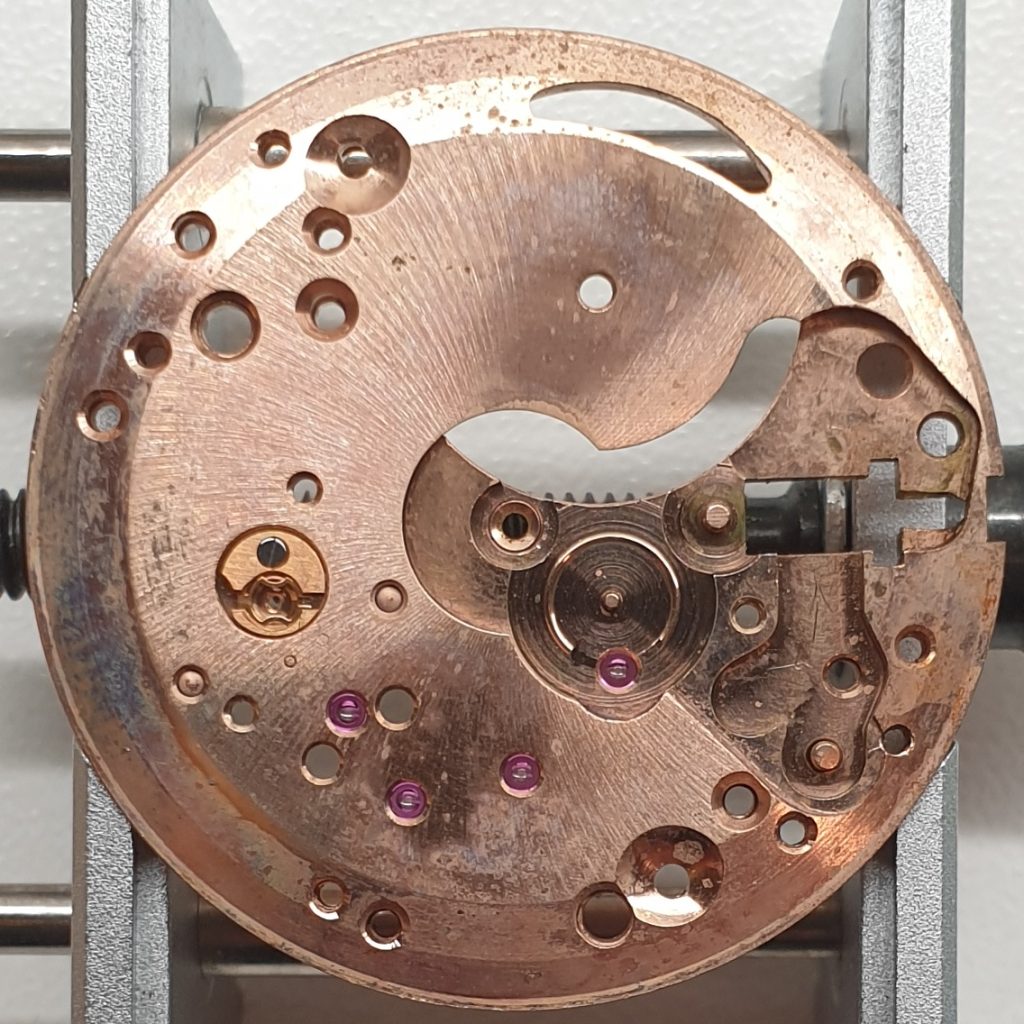
After cleaning, it was time to put the movement back together. And the first thing I always do is oil and install the jewels that act as bearing surfaces for the balance. Two on each side of the balance staff. Then I install the balance on an otherwise completely empty movement plate. This makes it so much easier to see what is going on because you can look at it from all angles. I check that the hairspring is straight and that it sits exactly between the regulator pins when the balance is at rest. I also check the endshake of the balance staff. That is how much vertical play the balance has between the cap jewels. And here I noticed that the hairspring wasn’t completely flat. It was also touching the spokes of the balance wheel. Clearly, one reason why the movement was running so poorly and why there was such a large difference between the different positions. I have a theory about how this happened. When removing the balance cock together with the balance wheel and hairspring, you must not simply lift by the cock. Because if the balance staff doesn’t release properly and you continue lifting the cock, you will deform the hairspring. That’s why I always give the balance wheel a little extra support with another tool underneath it, so that it comes up with the cock.
And now perhaps you’re starting to understand that servicing a watch doesn’t always mean “just” cleaning it and adding new oil. With old movements, it’s actually more often the opposite. You almost always find something else that needs to be dealt with in one way or another. There are so many things you check as a matter of routine, simply to get an understanding of how well the movement is actually doing. But these are the moments that make watchmaking that little bit more fun. Finding the faults, fixing them, and then seeing that it made a difference. That’s how you go to bed with a smile on your face. A good day’s work, simply put. And I hope that in the future, this watch gets the respect it deserves. And once the movement was assembled again, it performed exactly as it should. 285 degrees of amplitude and minimal variation between the different positions.
This was actually the first Railmaster I’ve ever serviced. But from a watchmaker’s perspective, there is no major difference compared with other Omegas from this period. The 284 movement has a solid history that goes all the way back to the 30T2. In 1949, Omega changed the naming of their movements, and the 30T2PC became the 260, which is the basis for this movement. And, of course, it only tells the time. No other features. So it’s pretty basic. But it is an early Railmaster from 1957, and that feels pretty special. The owner has got the watch back. But only temporarily. This will be an ongoing project for a while. There are a few things that still need to be fixed. Obviously, the 3D-printed ring that I installed temporarily will have to be replaced. Then there’s the crown. It might be correct. But I’m not entirely convinced. Apparently, the Railmaster was supposed to have a crown with an additional symbol inside the Omega logo. The symbol looks roughly like the center of the star on a Mercedes badge. It is supposed to indicate that the crown is of the Naiad type. But I’ve seen several Railmasters with crowns without this symbol. Sure, they could have been replaced at some point over the years. But it could also be that the design was changed during the production years.
The goal, in any case, is to restore as much as possible to the original specification. That’s what the owner wants. And I like that. Especially when it comes to real classics like this one. Omega Railmaster from 1957. Let that phrase sink in for a moment.