
I once had a Zodiac. It was a Glorious. But I gave it away to a really good friend of mine who’s a really good watchmaker. It used to bug me a little that he never wore a watch. At some point he mentioned he could see himself with a vintage Zodiac or Eterna. So the choice was easy. Next time we met, I pulled my Zodiac out of my bag and handed it to him, saying “now you’ve got no excuse not to wear a watch anymore”. And sure enough, he’s worn it ever since. And a few months later he gave me another Zodiac. A watch he once bought and serviced when he went to watchmaking school. It’s a Zodiac SST 36000. So it’s a real high beat movement. And of course I still have it.
Anywhos, let’s start with some Zodiac history. In 1882, Ariste Calame set up his workshop, which would later lead into Zodiac’s history. Ariste was a second-generation watchmaker in his family. In 1908 the name Zodiac was registered by Ariste’s son Louis, who by then had taken over the reins of the company. The name was first used on a very thin pocket watch called the Zodiac Triumph. I hope it didn’t leak as much oil as the English motorcycle of the same name. World War I was a turning point that pushed the market toward wristwatches — Zodiac included. Among other things, the company was quite early with self-winding movements. They were also early with a shock-protected balance wheel solution. In 1937 they even released a wristwatch with a full eight-day power reserve. What would you even need that for? I get it for a wall clock or mantel clock. But a wristwatch?
Let’s jump ahead now to 1953, when the first Sea Wolf showed up (or should I say, dove in?). Because this was in fact a watch aimed at divers. And it turned out the military would become a major user of it. It measured 34 mm in diameter, which by today’s standards is pretty small — especially for a dive watch. But I actually like that size. 34-36mm is perfect, in my opinion. Anything bigger starts feeling flashy and over the top. Sorry to all of you rocking 45 mm on your wrist, but it’s just not my style. The first Sea Wolf was rated to 100 meters. It was automatic and built around a movement from AS. Thanks to its fairly reasonable price, it became very popular among soldiers and sailors.
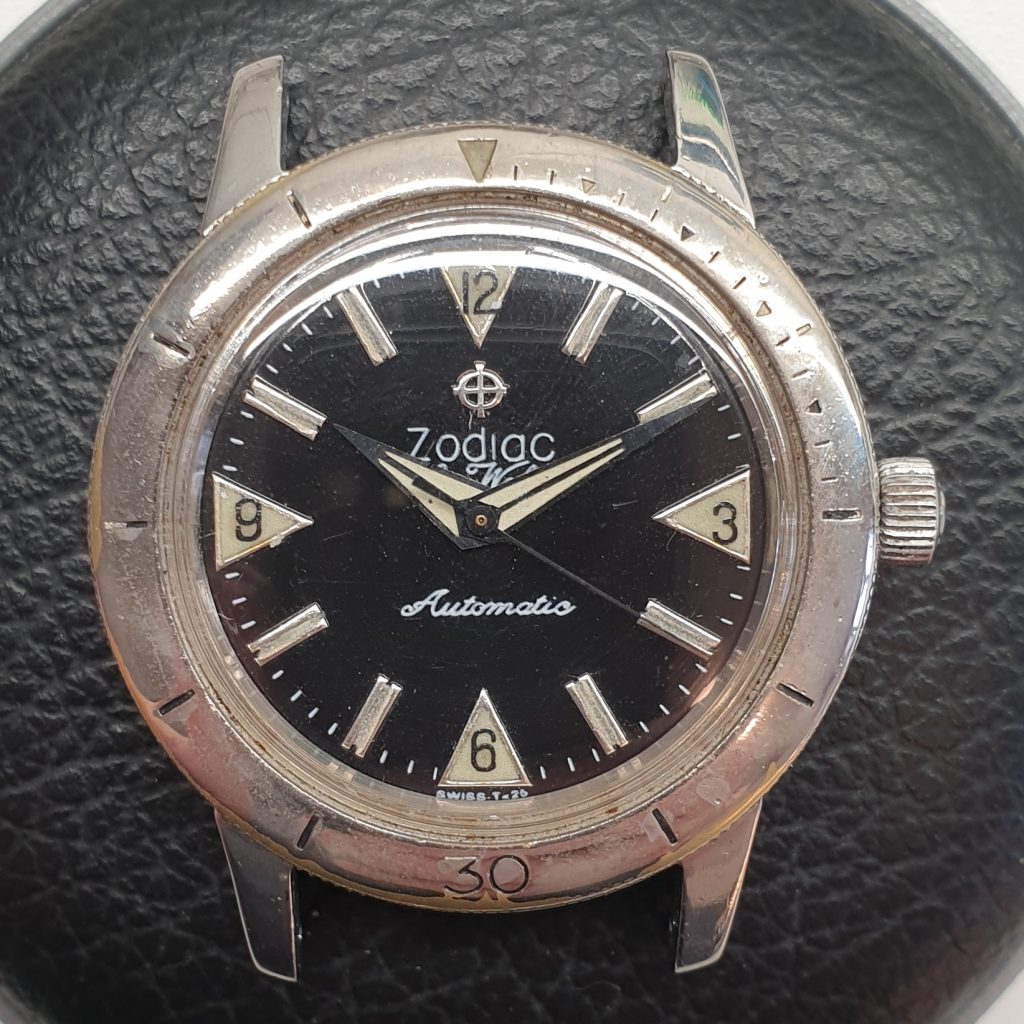
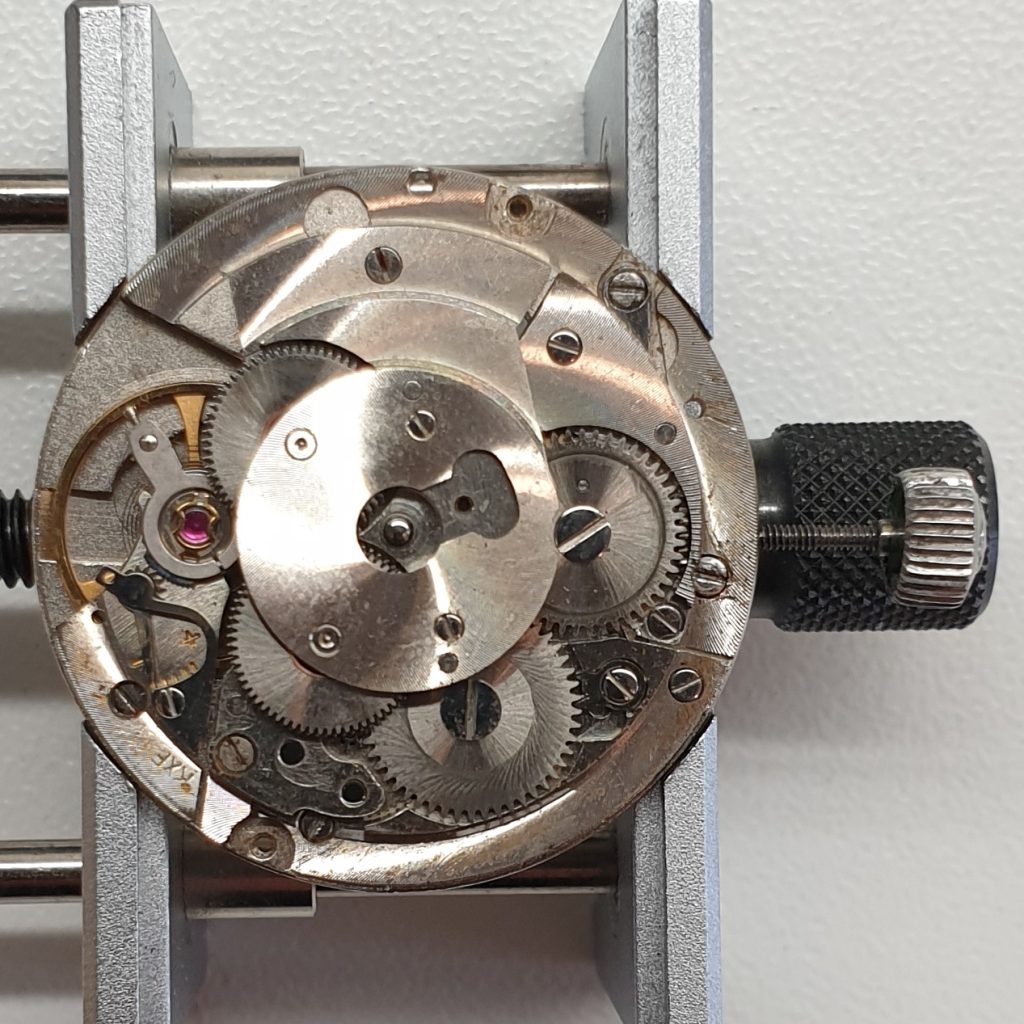
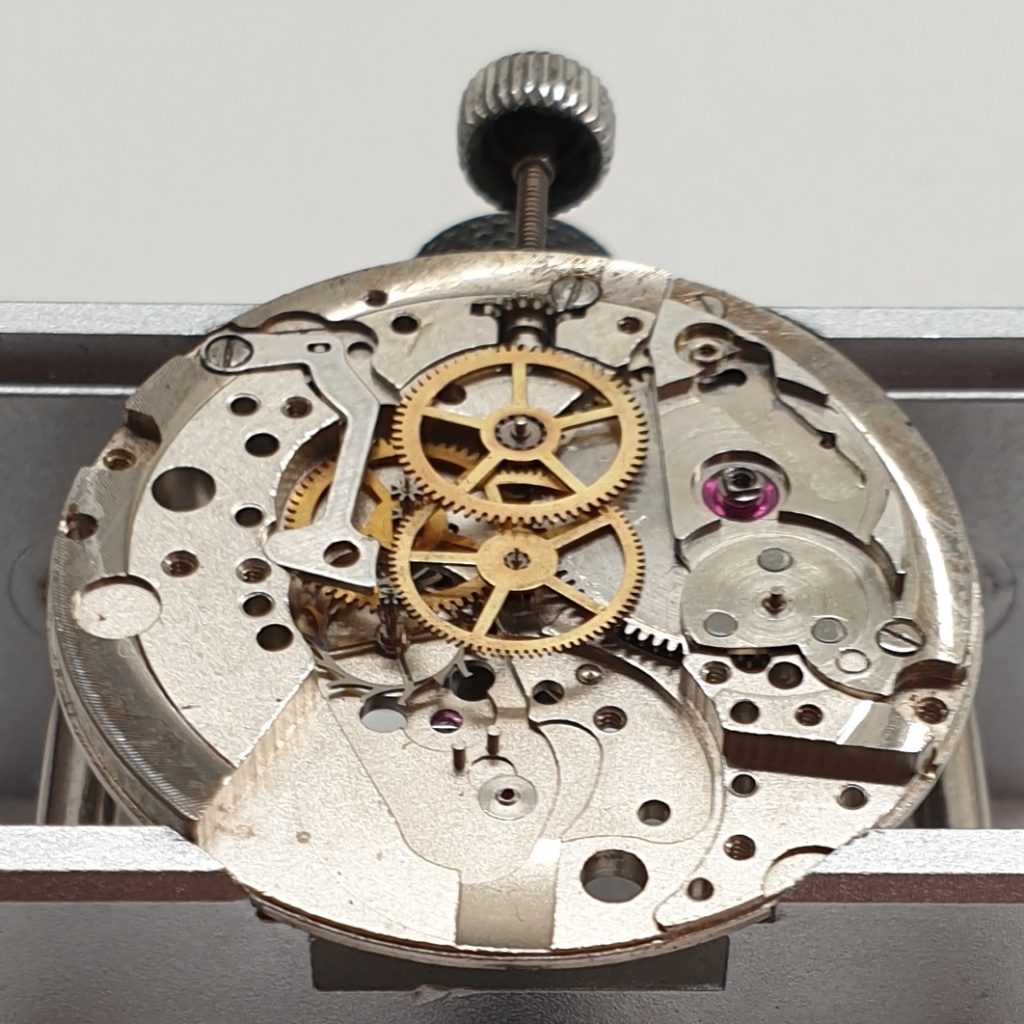
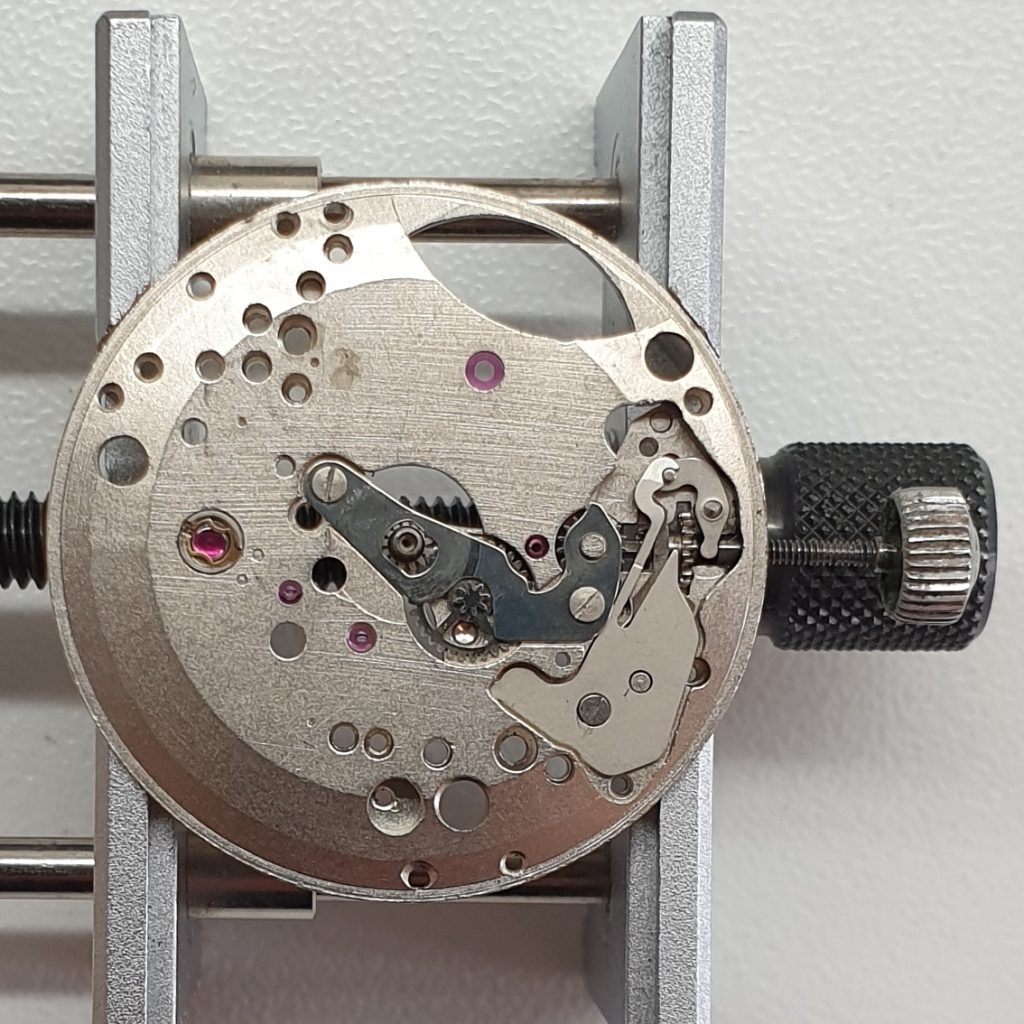
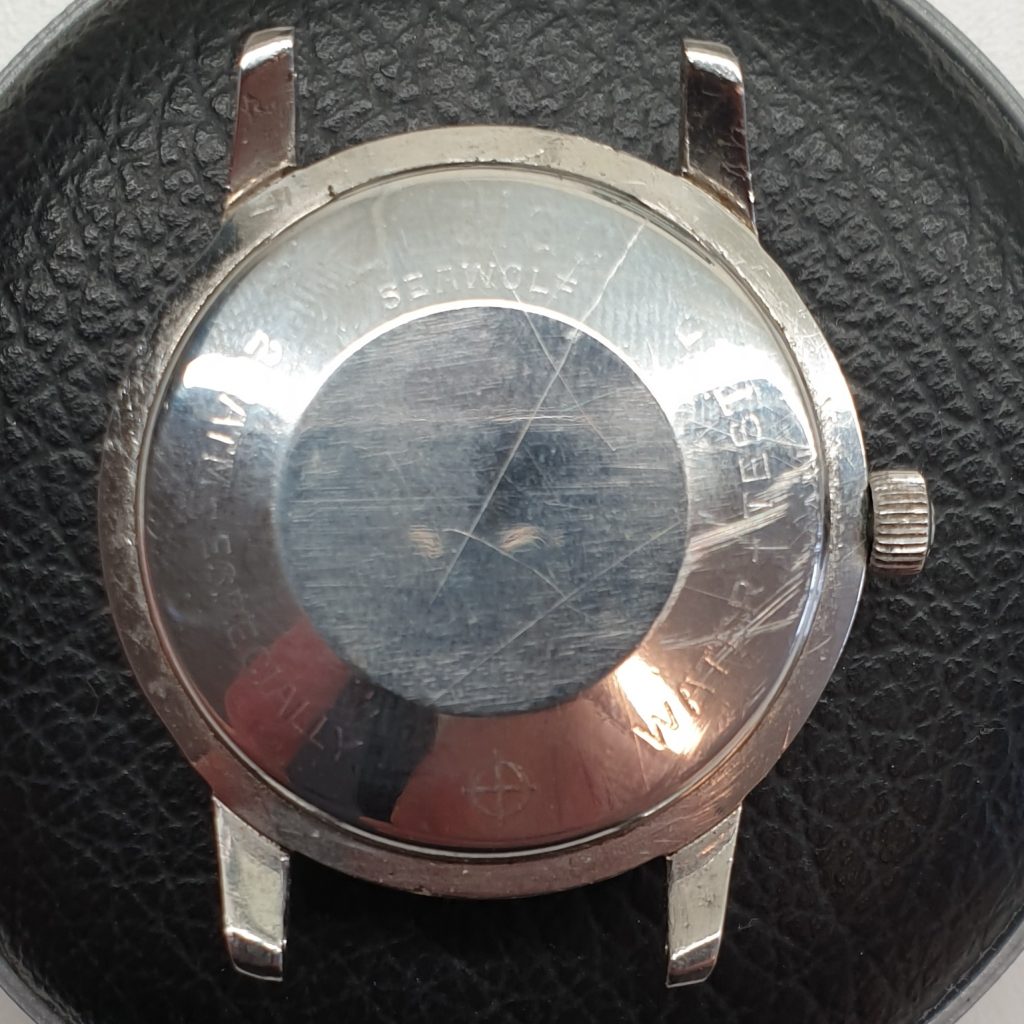
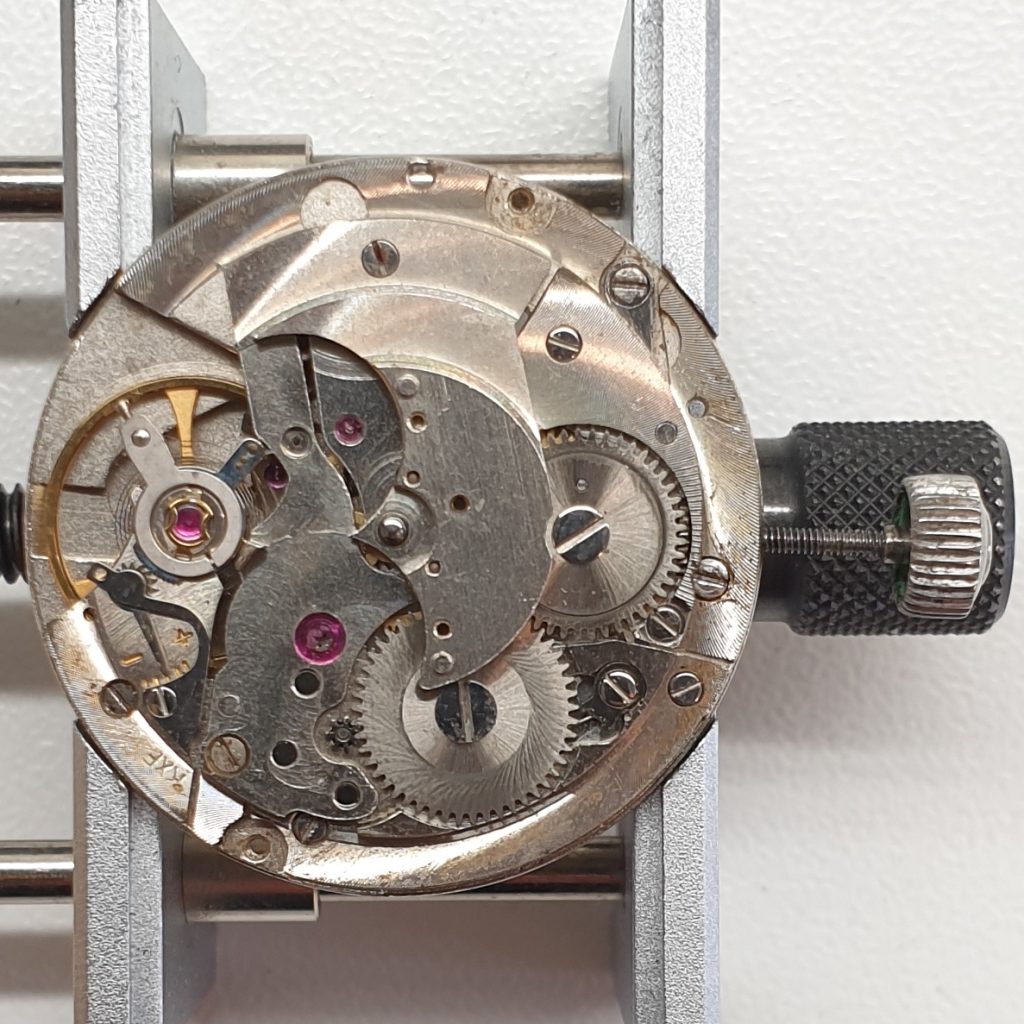
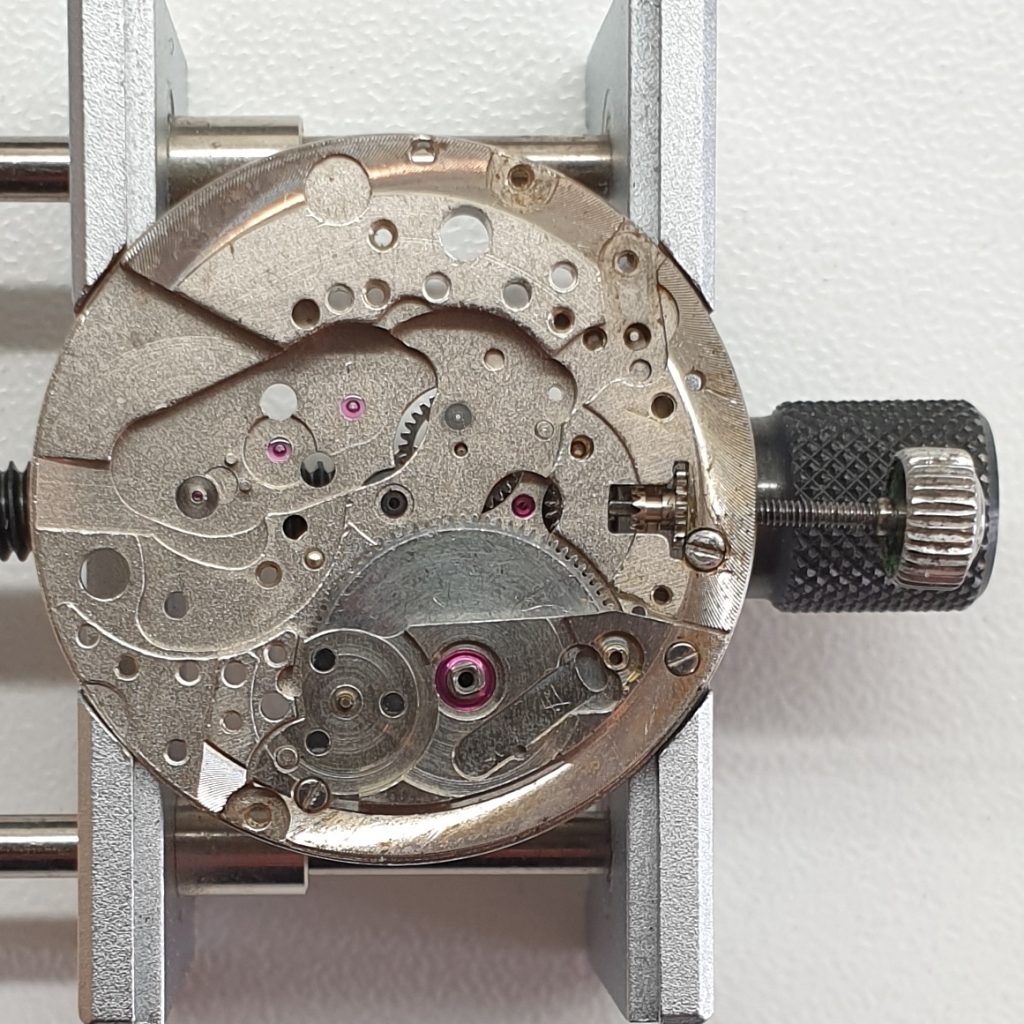
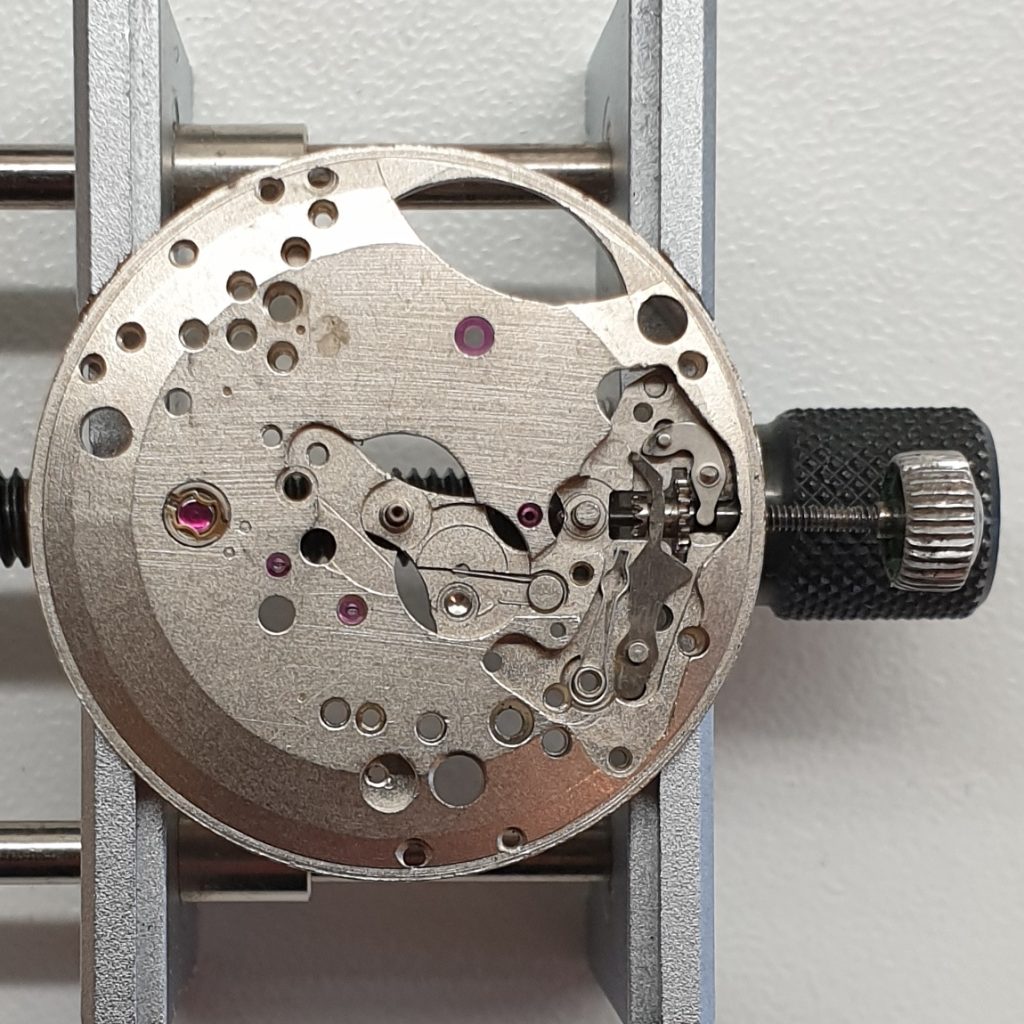
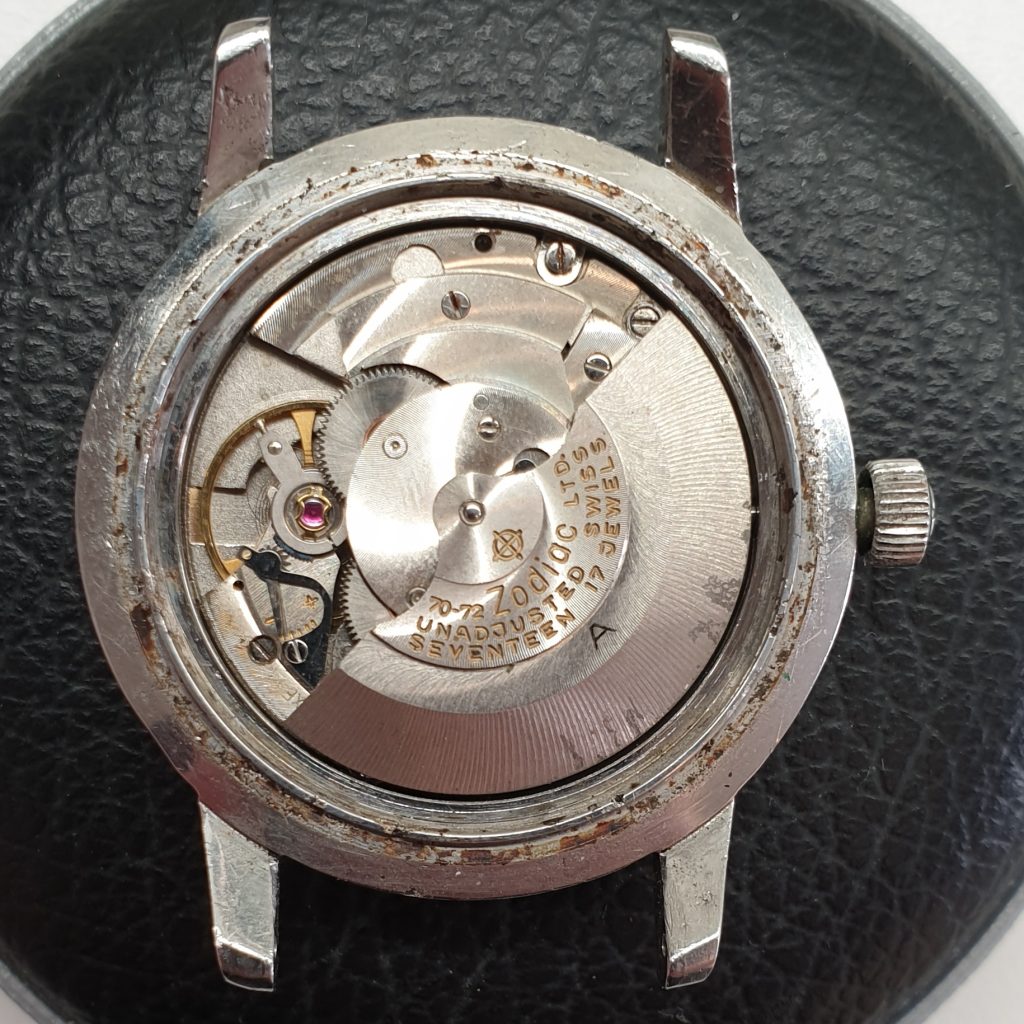
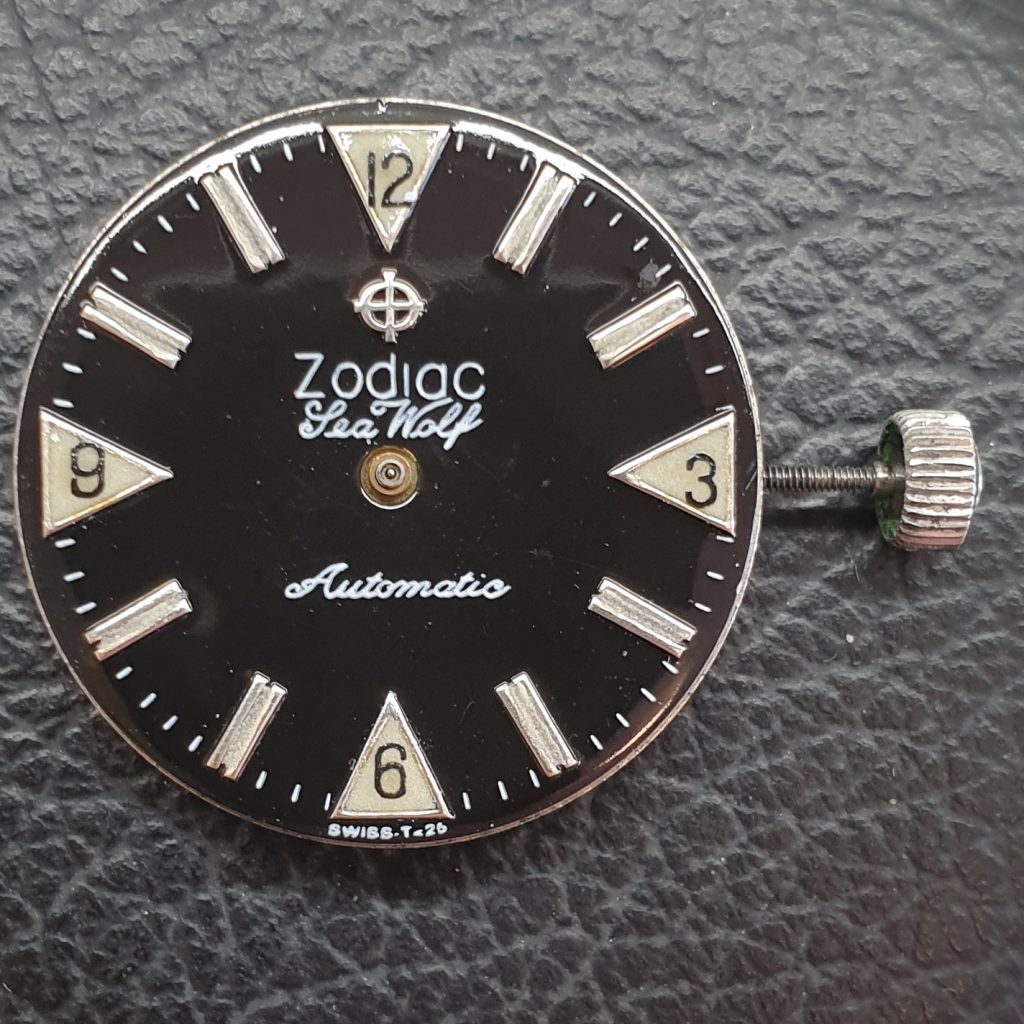
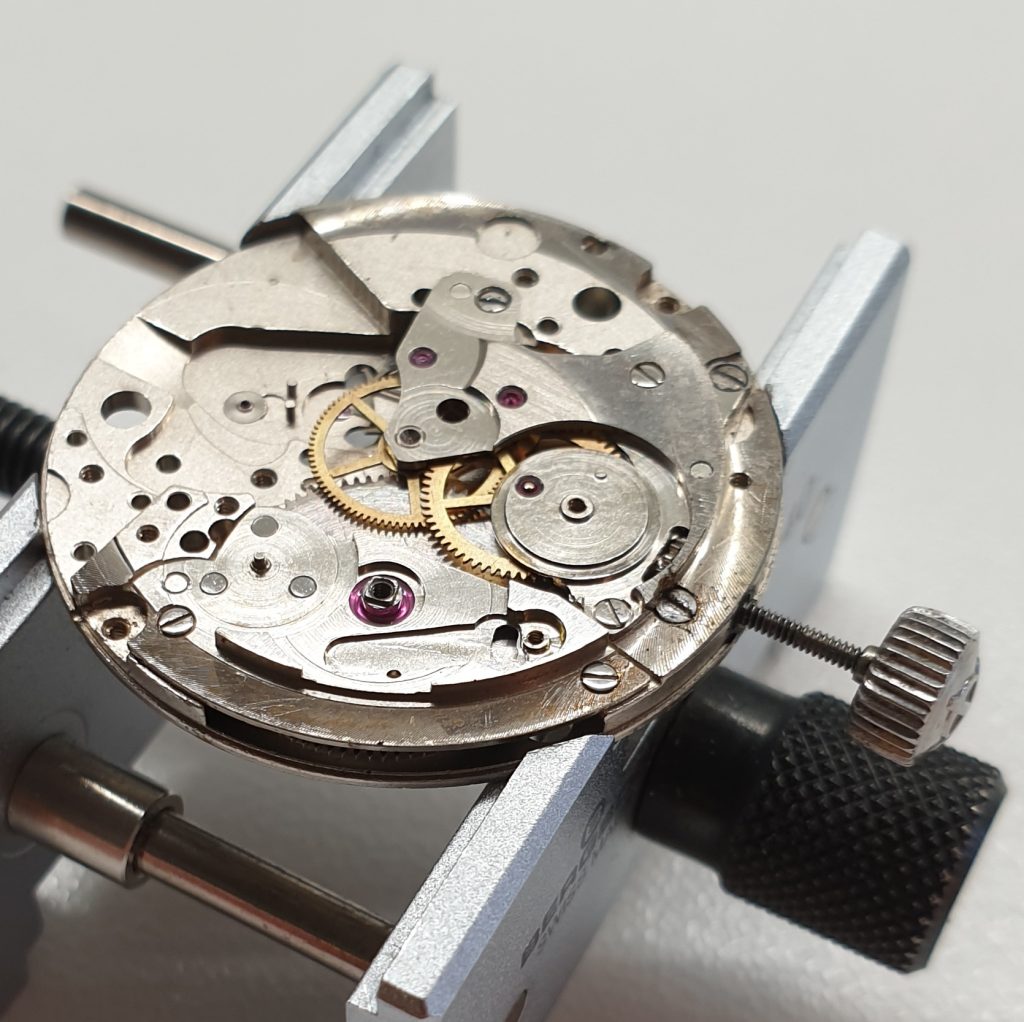
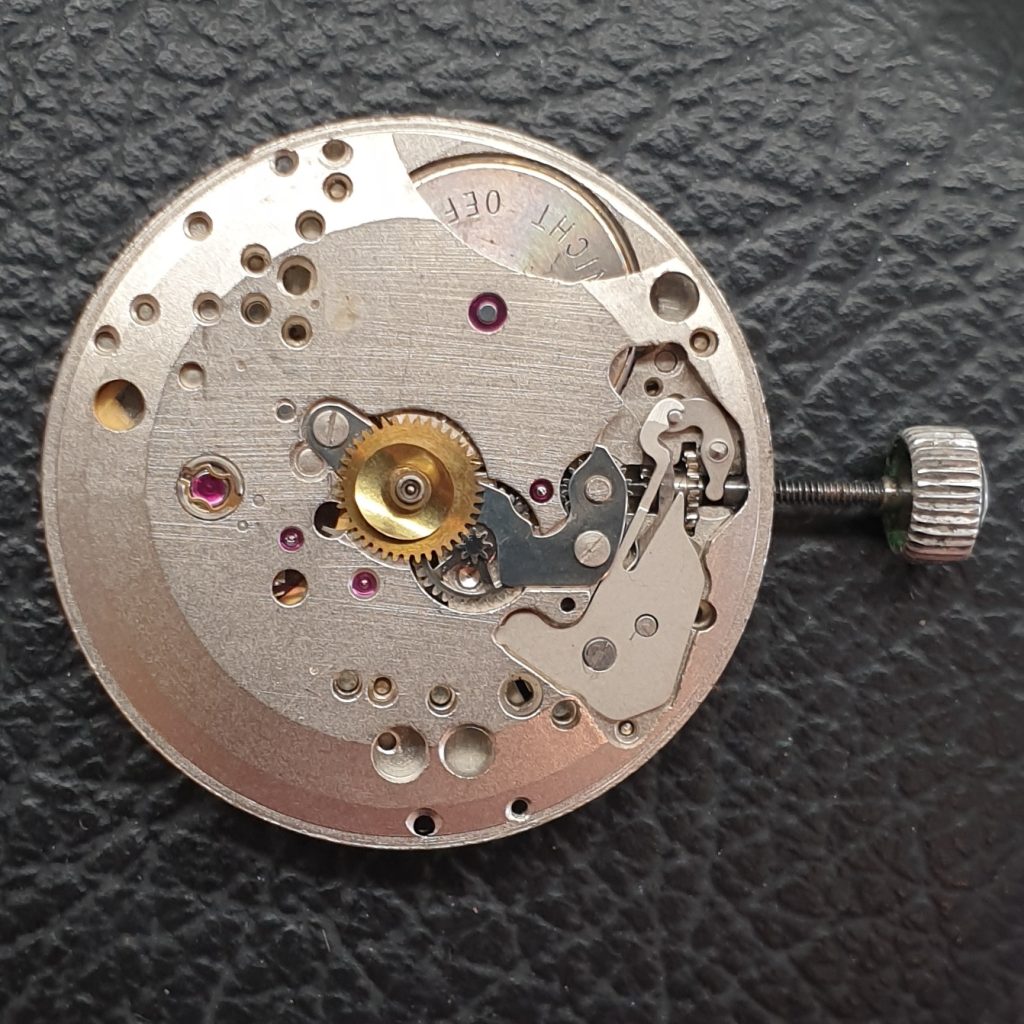
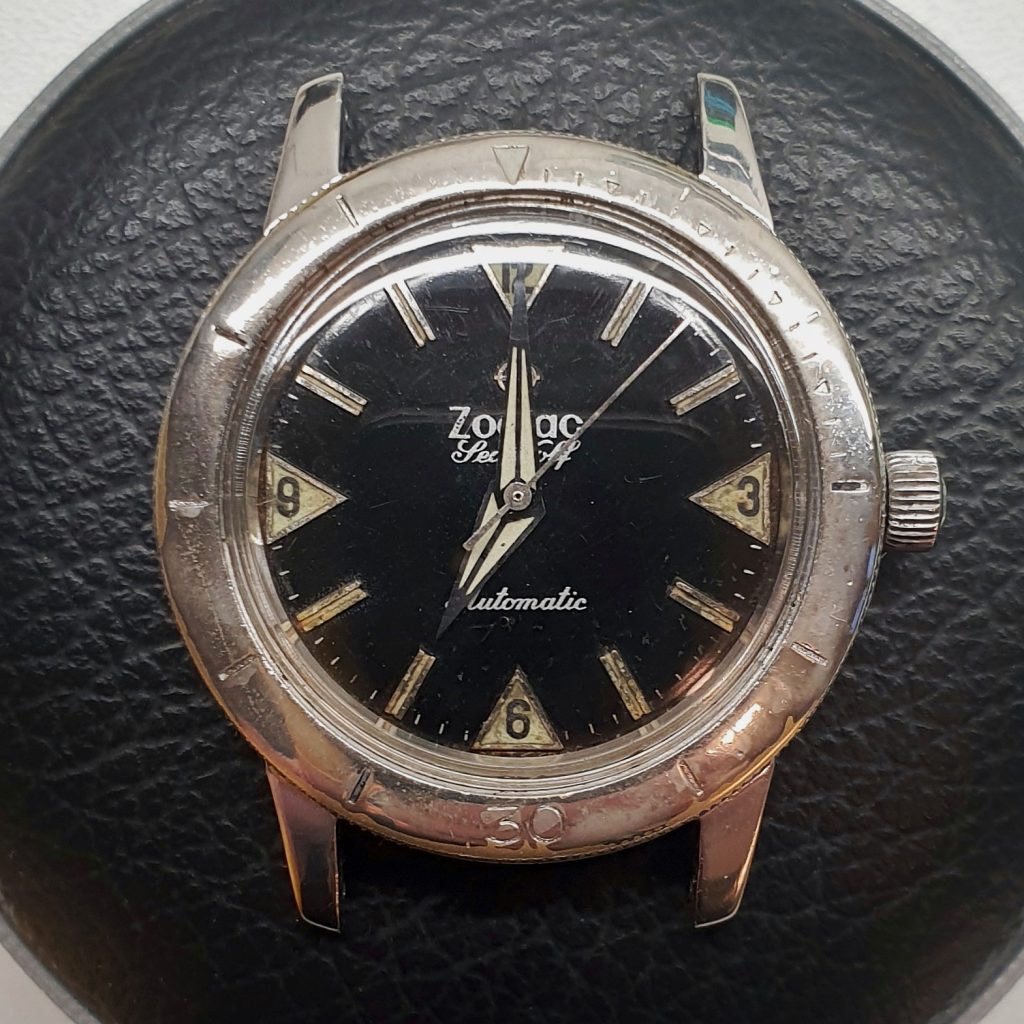
But now, onto this watch. It should date from the mid 60’s. The movement is a Zodiac 70, which is also based on a movement from AS. The owner bought it about ten years ago. But since he realized the dial had been repainted, and the watch wasn’t running well, it didn’t see much use. So I got the job of servicing it. The owner had also managed to hunt down an untouched, original dial. To quote him when I got the assignment: “One annoying thing about the watch was that the dial had been restored, which I’ve had a hard time coming to terms with.” And when I sent him a picture of the finished watch, with the new dial and second hand fitted, he said this: “It’ll be great to wear the watch with an original dial.” Take note of this, all of you who want an old watch to look brand new. In my opinion, you haven’t quite gotten what vintage watches are about. Hats off to the owner of this watch. He thinks exactly the way I do. It’s about the history behind a watch — what it’s been through. Sure, we swapped in a dial from a different watch. But at least it hasn’t fallen victim to some clown trying to repaint it. The dial I swapped in was worn, but above all, dirty. And dirt, in my book, is totally fine to remove. It was genuinely grimy, with big fingerprints all over it. Those you should try to remove. But you have to be very careful. In most cases I use lukewarm distilled water and small swabs, and even then you have to take it slow. It took me about half an hour to get it as clean as I dared to push it. Unfortunately I didn’t take a photo of the dial before I started. Sometimes you get a little too eager to dive into a job. Pun intended.
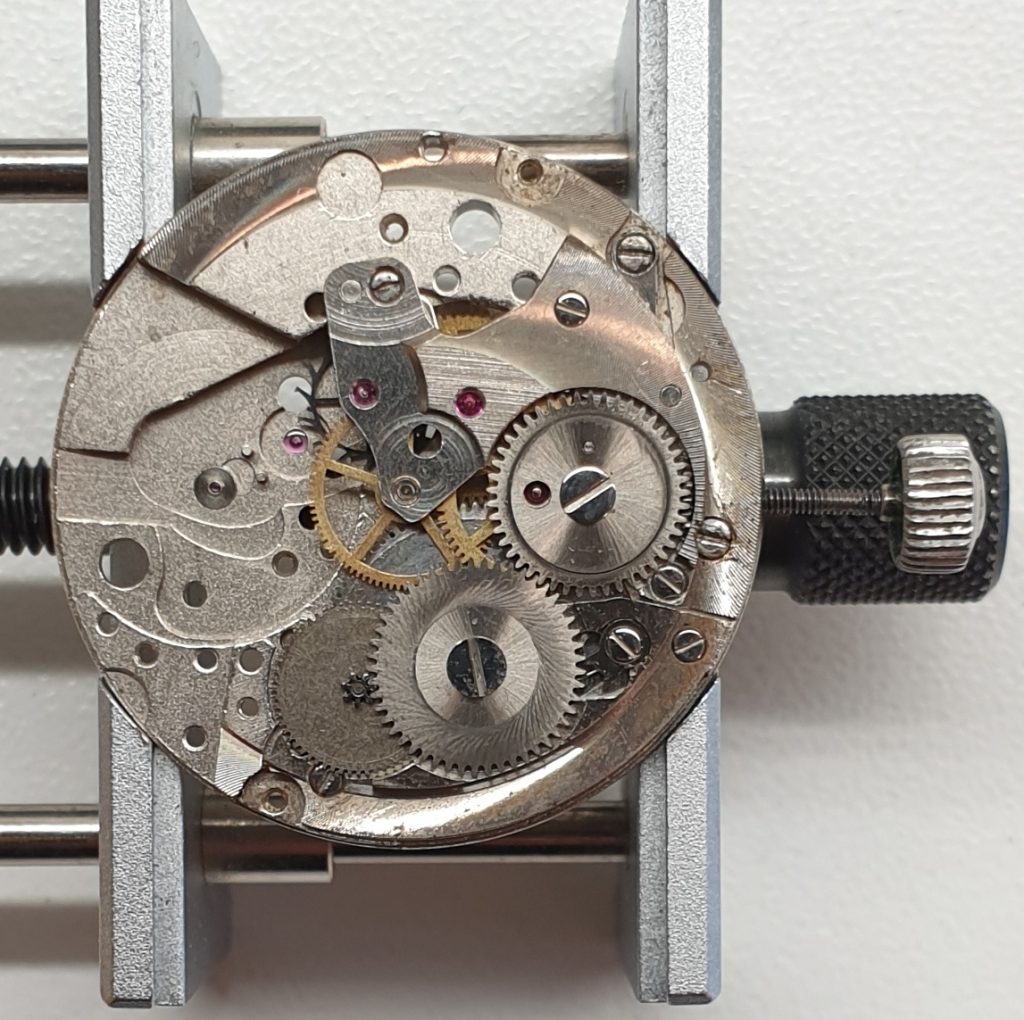
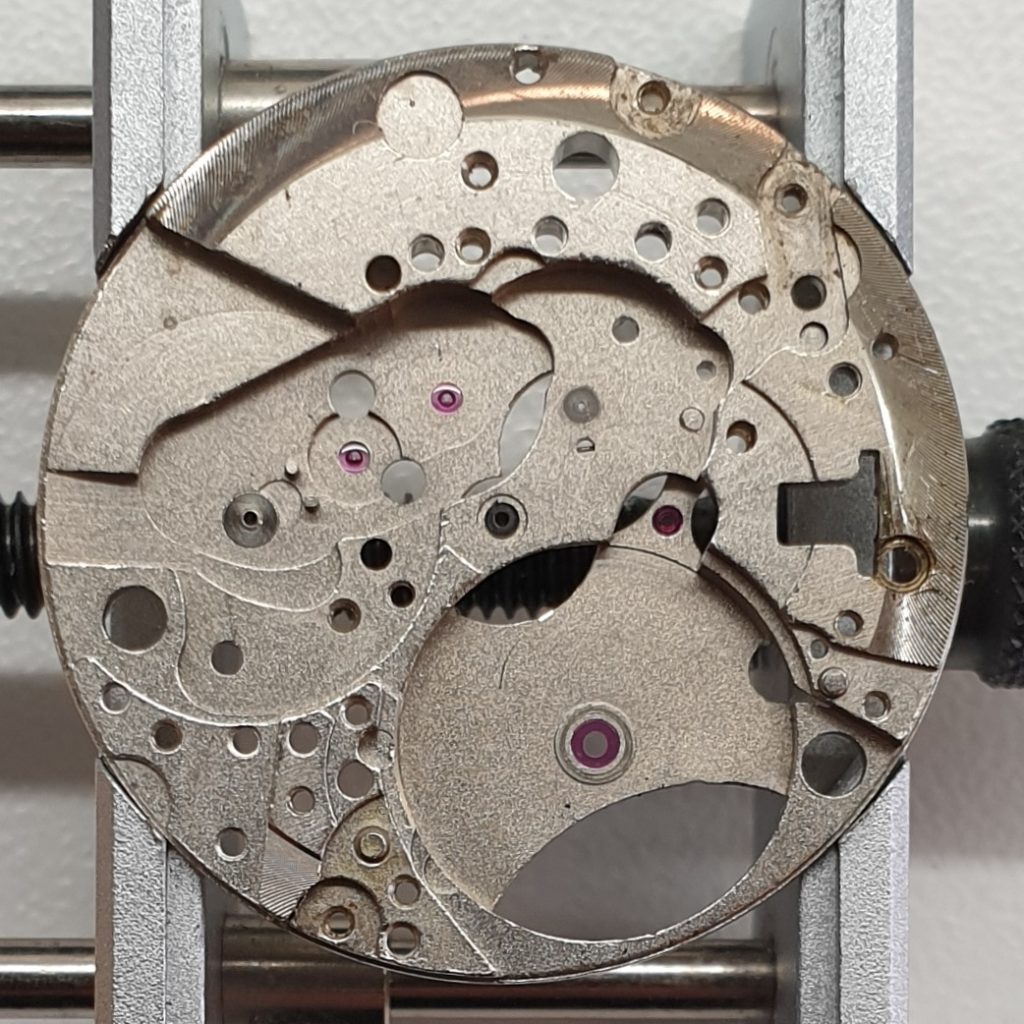
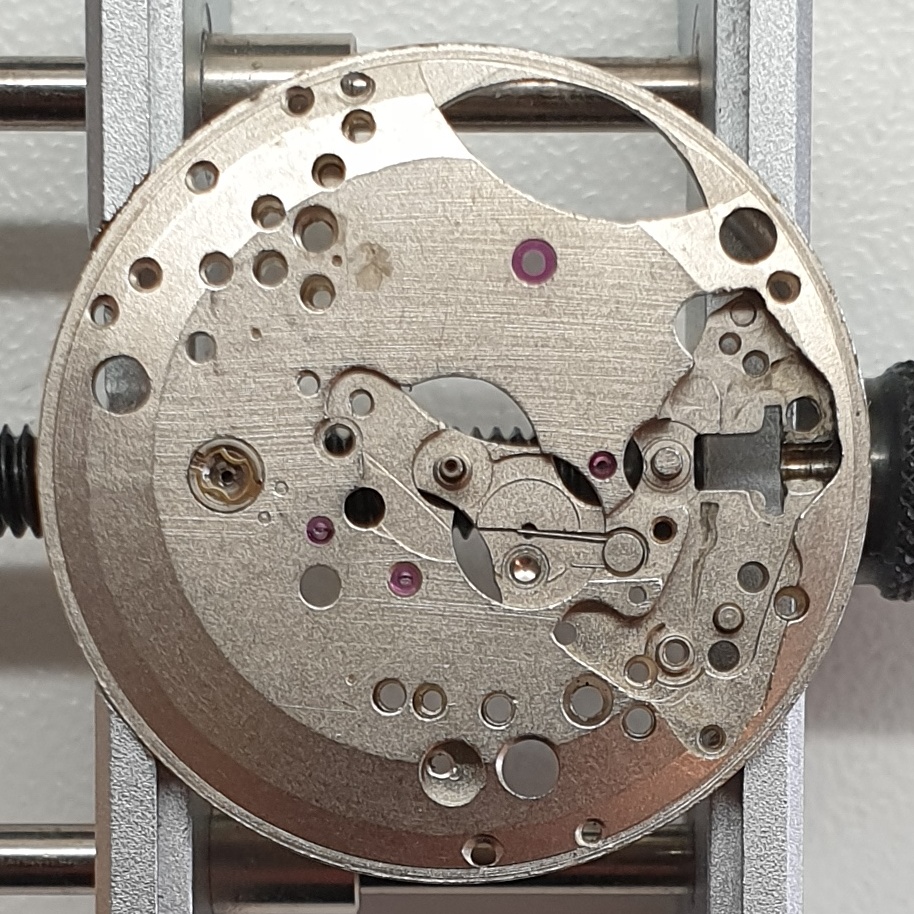
Otherwise, it was a pretty standard service, aside from the movement being over-oiled. You can see that in a few of the photos. The one snag was that this movement had a mainspring barrel stamped with “do not open.” Back in the day, the idea was sometimes that if the spring needed replacing, you’d just swap out the entire barrel. The lid was more or less riveted onto the barrel so it couldn’t be opened. If you opened it anyway, you’d have trouble getting the lid to sit right again. Sure, it’s doable. But it’s not exactly cooperative. So as long as the spring was intact, it was full steam ahead. And since the spring was in one piece, I just cleaned the arbor pivots and hoped for the best. And this time, that gambling paid off. The movement performs really well after the service.
This has been a genuinely fun project. The Sea Wolf is a bit of an iconic watch. You can tell this particular example has seen plenty of use and been through quite a lot. Exactly what you’d expect from a vintage watch.